Lateral thinking is about deconstructing what you have to embrace what is new. Practically speaking, it’s about generating new ideas while at the same time breaking old ideas. Similar to what Kermit the frog suggested, breaking the conventionals and embracing the unconventionals could lead to a better result in terms of creativity. Two other important things also came up in this chapter: Vertical and lateral thinking are complimentary & lateral thinking needs to be practiced. The meditation from yesterday re-emphasized the idea of how minds are uncontrollable. It might be easy to think about one alternative, but not ten. Being able to combine lateral thinking and vertical thinking constantly is a skill, a way that mind works, and an attitude to life.
Category: 2024
Sus particulares de Wandoo Avinto
Artículos de tema
Avinto Wandoo resulta una plataforma de préstamos en línea adonde suele reclamar desistido hasta 8.000 RON. Resulta una excelente manera sobre ocultar costes errores. También firma a los usuarios acerca de cómo administrar mejor sus finanzas. Continue reading “Sus particulares de Wandoo Avinto”
Assignment #1 Collage of Life – Mariam and Darko
For this assignment, we were asked to both of our little sketches into one big project or art piece, so we had the idea to make a collage.
Let’s start off with what we both drew:
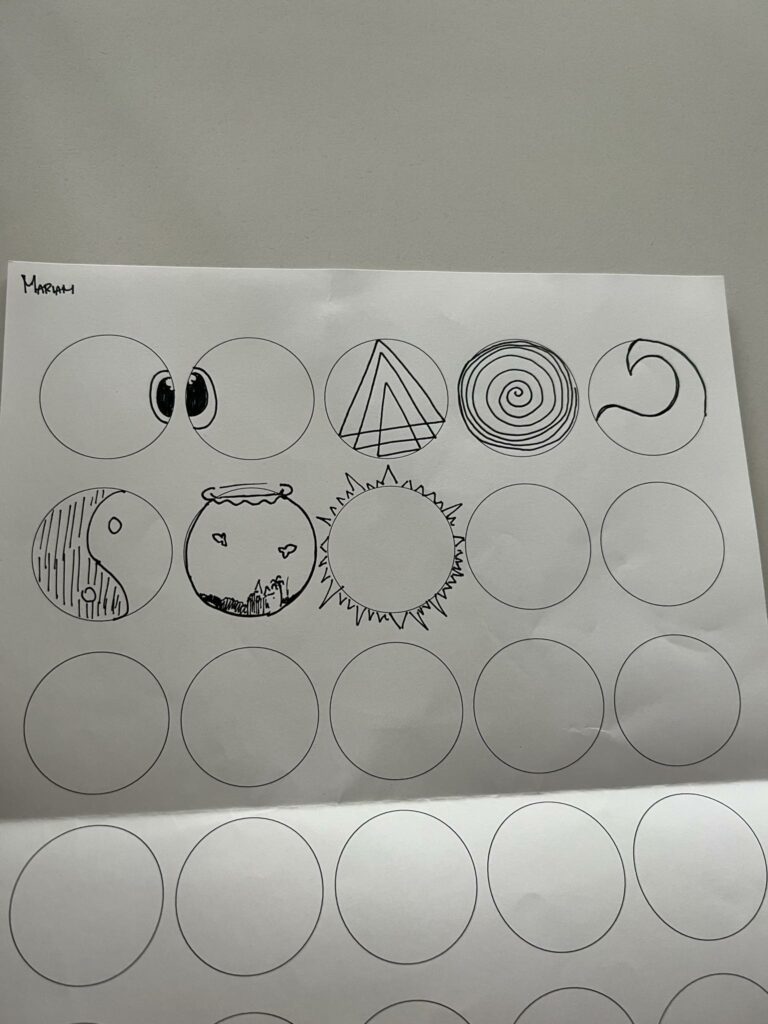
- These are Mariam’s sketches:
- These are Darko’s sketches:
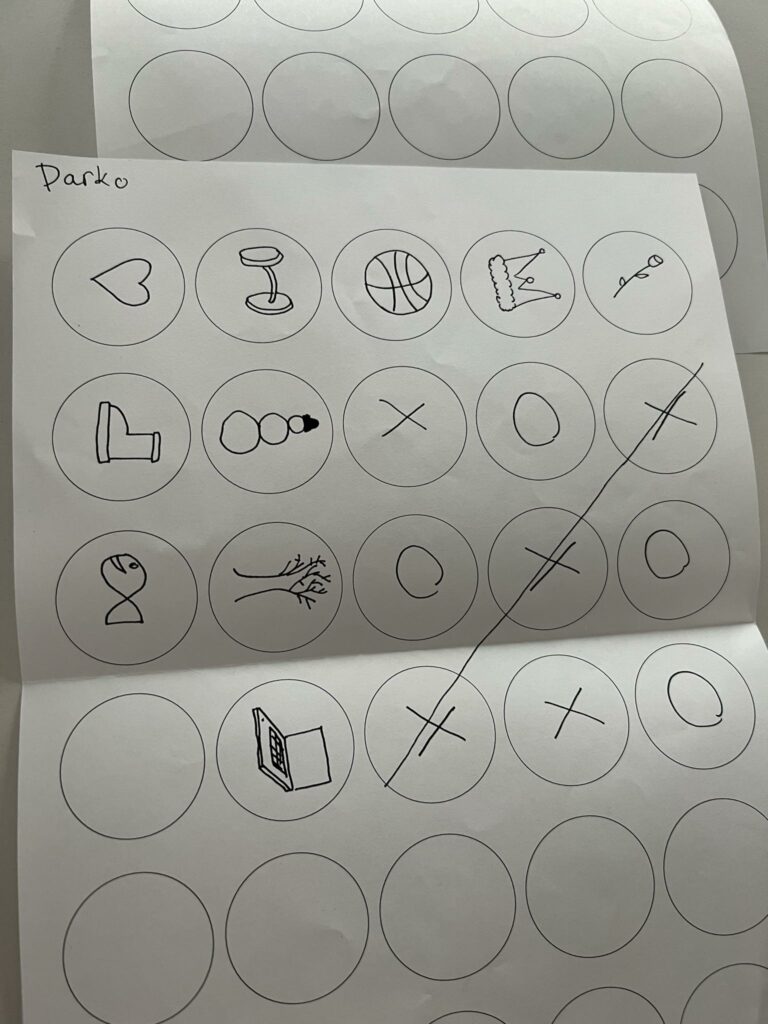
What we can see is that Darko focused more on things he loved, like basketball, fitness, nature, while also thinking outside the box with the Tic-Tac-Toe game.
On the other hand, Mariam focused more on abstract things and at the same time, nature, eyes, waves and the symbol of balance in life, The Jin and Jang.
In order to combine these things we implemented a couple of methods like the Round Robin method which makes out throw ideas in turns under a certain amount of time. With this method we pushed ourselves to explore our creative thinking and just say what comes to our mind first.
The first Concept we thought of is. What if we find some eyes which would look at us , that would represent all the people and also technology companies who are looking at us all the time (It’s no secret that they can access our cameras and microphones wherever we are). At the same time the game of Basketball is all about pushing ourselves as hard as we can, all about working hard and scoring a basket, so we decided to add Darko’s favorite Basketball player, Derrick Rose. Since we both had something connected to waves, water and fish, we decided to add some colorful waves which would represent the setbacks we always experience and are pushing us back. In the Tic-Tac-Toe game fashion, Basketball is a game and we also represent life as a game. We also added a little crown on the Player to add that Game-like look where you would win a crown if you win the game.
Here is how the final collage turned out:

Kermit Ted Talk response – Mariam
Sir Ken Robinson’s way of defining creativity really clicked for me. Instead of making it seem like this elite talent that only a few “artistic” people have access to, he positioned it as something we all naturally possess just by virtue of being intelligent humans. If creativity is fundamentally tied to how we use our minds and solve problems, that means it has the potential to be expressed through any activity or field we apply ourselves to.
I also appreciated his point about how even just observing a simple frog can involve creativity in how we perceive and make meaning from that experience. It’s a solid reminder that creativity doesn’t require creating some grand masterpiece. The creative spark is about seeing the world with fresh eyes and making novel connections, something that can arise from the most ordinary moments. Our unique lenses and perspectives shape the creativity we’re able to tap into.
While I get some of the criticisms about TED Talks sometimes feeling a bit insular or repetitive, I think talks like Sir Ken’s that dig into core concepts about fundamental human capacities like creativity can actually provide new frameworks for how we understand ourselves. Sure, he uses artistic examples as metaphors, but the core principles he lays out carry major implications for nurturing creativity across all disciplines and life realms.
Kermit TED talk response
Response 1
It isn’t easy not to put too much pressure on writing a response. You still have to analyze the video, think about what was said, what wasn’t said, and write something that isn’t a repetition of what we saw. This class encourages us to be creative, so this response can be a medium to try out a creative thinking process freely.
Let me start by summarizing what Kermit said. He talked about not being afraid to be creative and how it’s okay to go down less conventional paths for the sake of creativity. Even in our conventional jobs that don’t seem to allow room for creativity, we can find ways to think outside the box because creativity can be expressed in everything. He emphasized adopting a beginner’s mindset, like children, who see every idea as a path to many possibilities and inspiration. At least, this is what I understood.
He also mentioned that the people around us—friends and mentors—inspire us to be creative. Ideas don’t come from nothing; you need to start from someone else’s thoughts or ideas. Find your inspiration from a mentor, someone you know, or someone whose work you like.
I think this is all great, but it doesn’t really tell us how to think creatively. You can’t be afraid of something that you don’t even know you can do. I feel that these days, especially in university, there’s more fear of not being creative than of being creative. There is so much pressure to come up with something amazing, especially in things we barely know how to do or understand, that it makes us less creative. As you said in class, you need to release some pressure in order to be creative.
So, how do you be creative? By the end of the class, we should know that, but I would say that skills and knowledge are the most important part. There should be a buildup of information and stress, and then, when you release some of the pressure, you have enough information to come up with something interesting. At least, that is what I have experienced. Now realizing that this is to be posted where anyone can see it, I get what professor Sherwood meant by the fear of sharing what you’ve made.
U-Bahn Berlin-Making 1-Linda & Yasmine
Take a quick look at the picture below: do you notice anything different from what you remember seeing in a Google Maps screenshot?
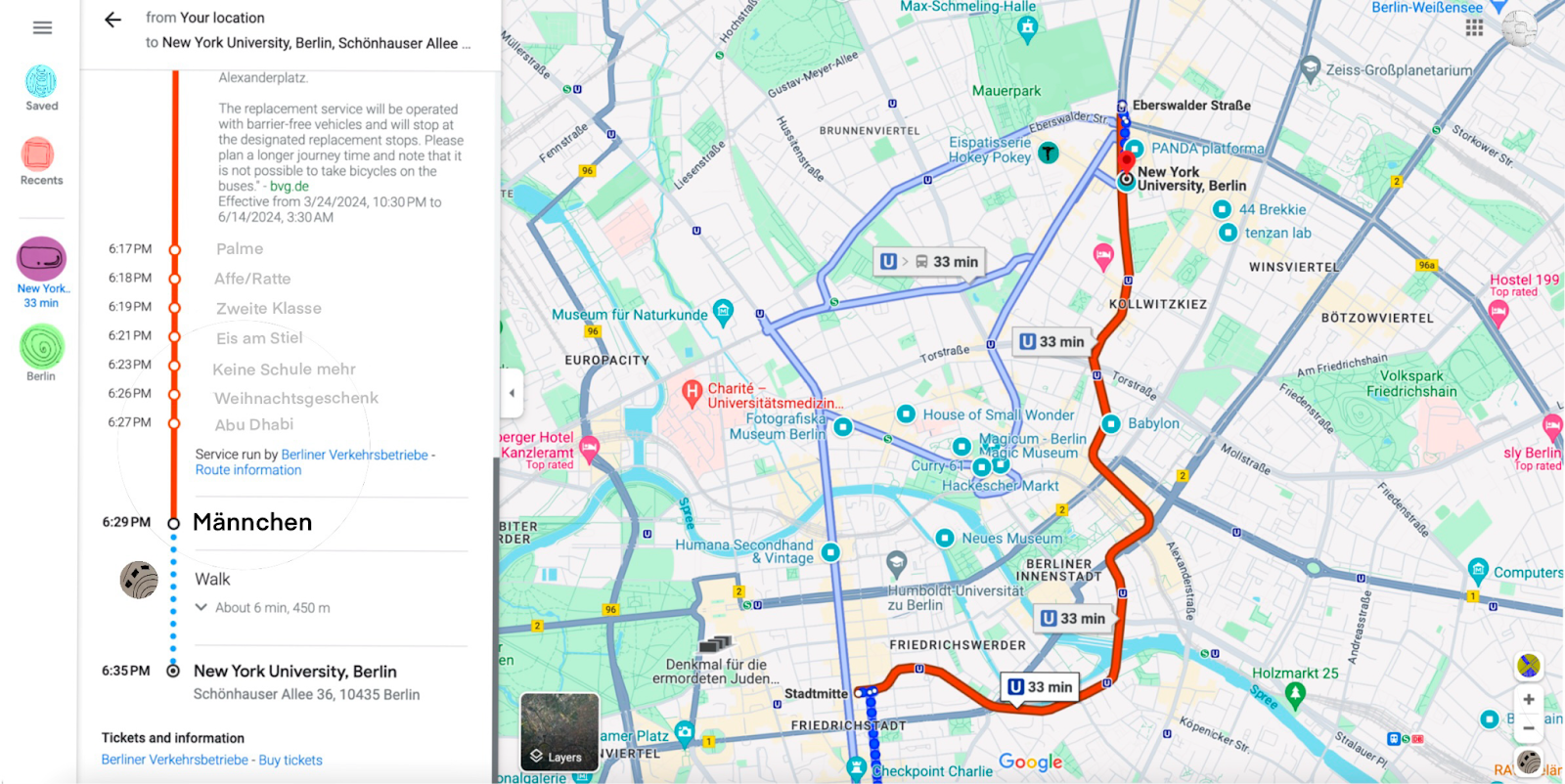
For this very first project, Linda and Yasmine, two newcomers to Berlin, transformed their 28 circles (14 each) on this map in various forms. Digital maps are essential for newcomers to a city. Their design, with icons simplifying real-life objects, follows a universal principle that resonates with people globally. We use maps so extensively that we often overlook the details. By altering the icons and text on this map screenshot, we place the unfamiliar in a familiar context. This reflects our experience of seeing Berlin as a new city we’ve never visited before but quickly adapt to. Moreover, placing the circle icons on the stations conveys a sense of agency and ownership of the city, which can be temporarily experienced by visitors during their short stay.
Our drawings
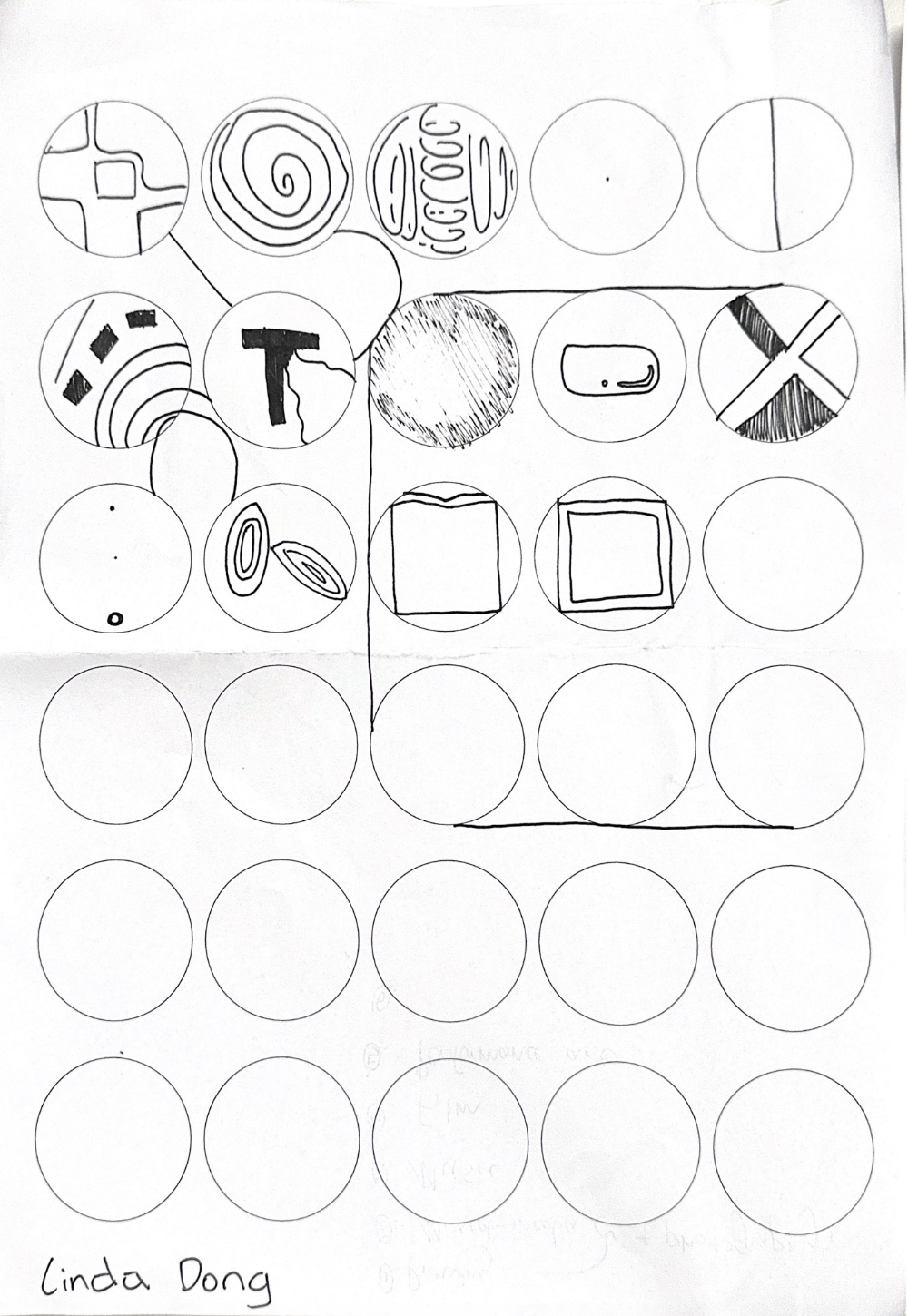
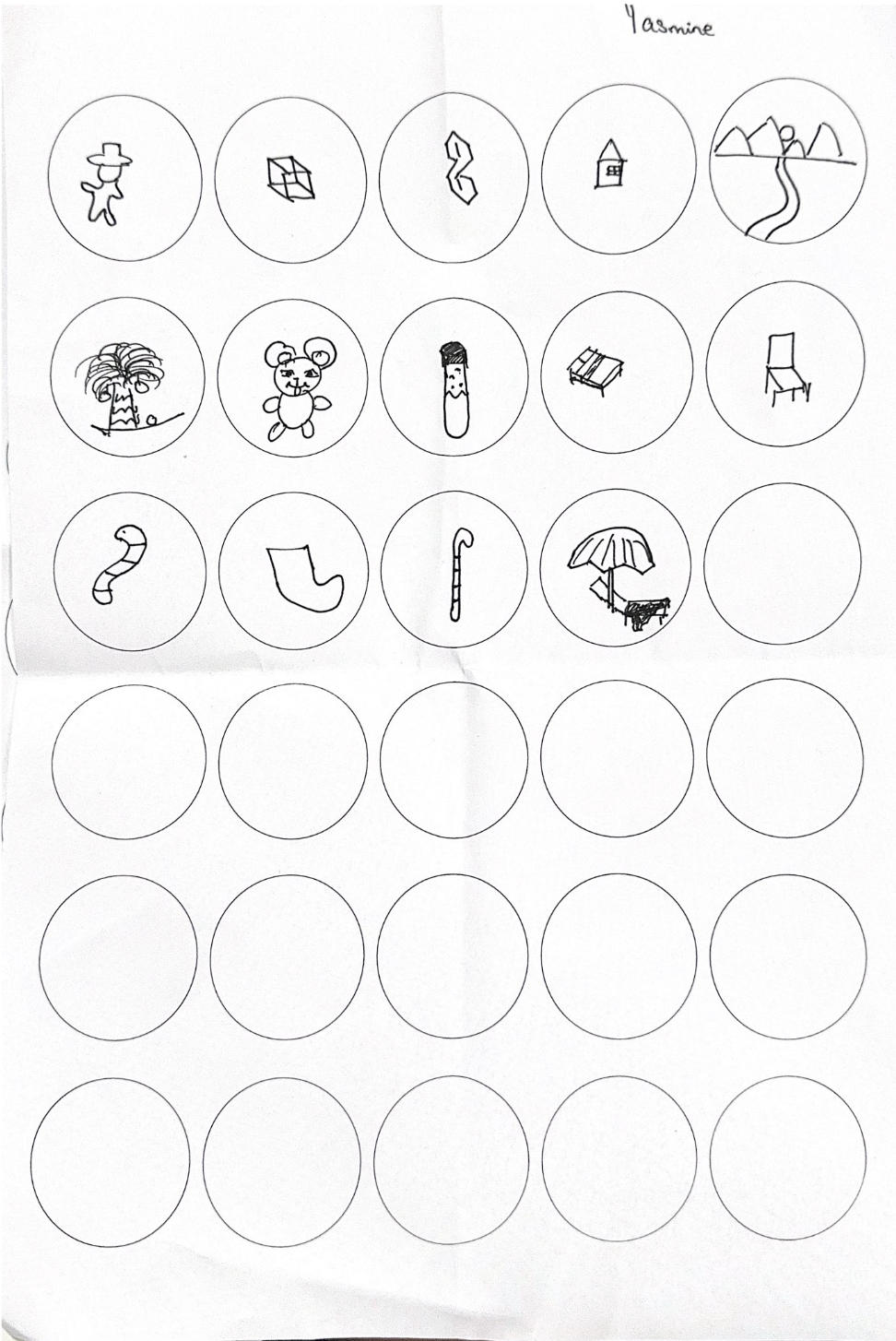
Abstraction and Representation
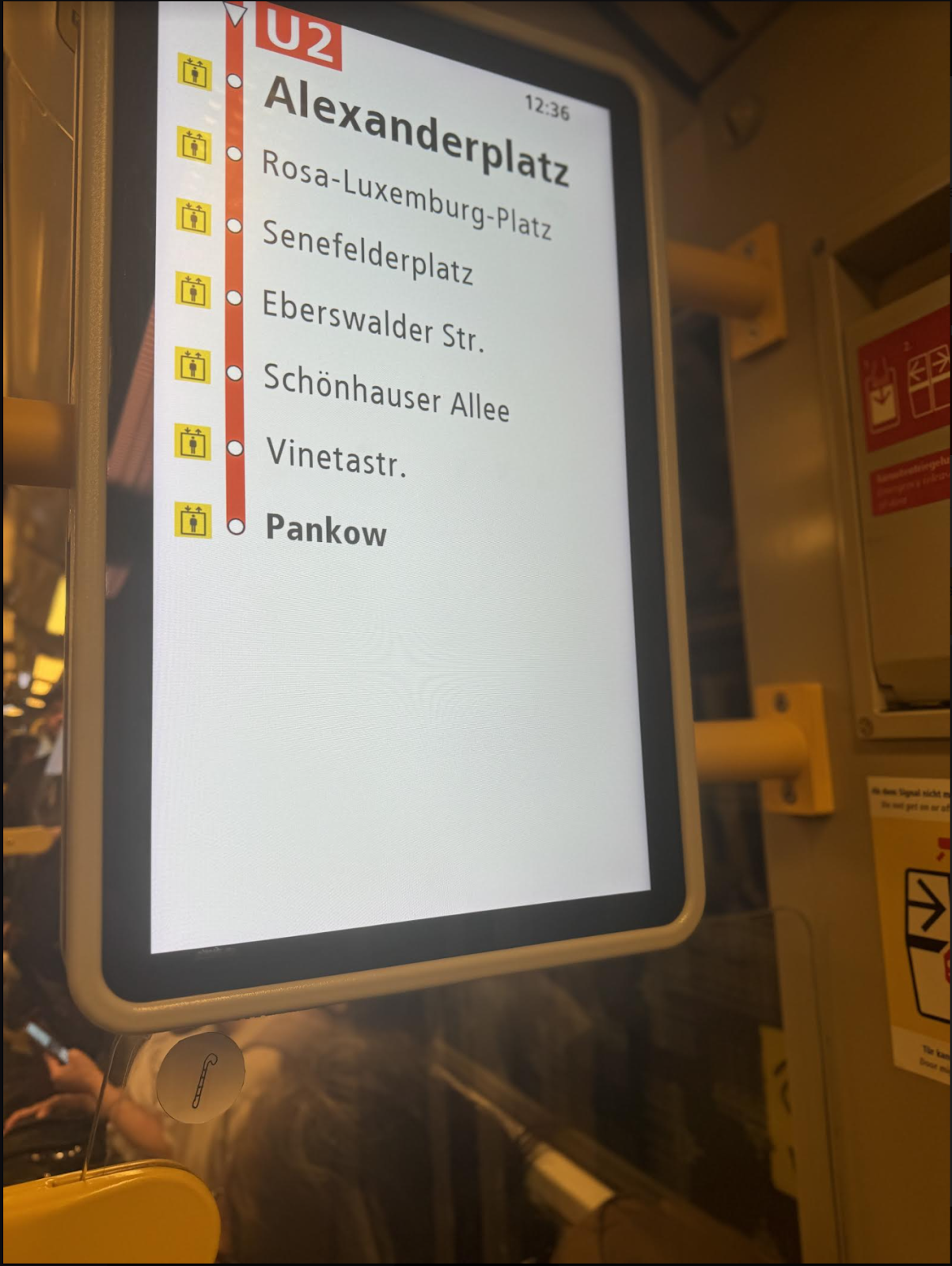
Linda’s abstract drawings reminded us of the tracks and metros of Berlin, so we decided to create a project related to the Berlin metro. We chose to redesign the stops we take to get from our residence to our university building, using inspiration from Yasmine’s drawings to name them. The names of the stops were based on Linda’s and Yasmine’s interpretation of the drawings, what they reminded us of, or what they looked like.
For example:
| Original name of the icons | Translate it to German |
| palm treemonkey/rat second grade popsicle no more school Christmas gift Abu Dhabi Little man | Palme Affe/Ratte zweite Klasse Eis am Stiel keine Schule mehr Weihnachtsgeschenk Abu Dhabi Kleiner Mann |
Implementation
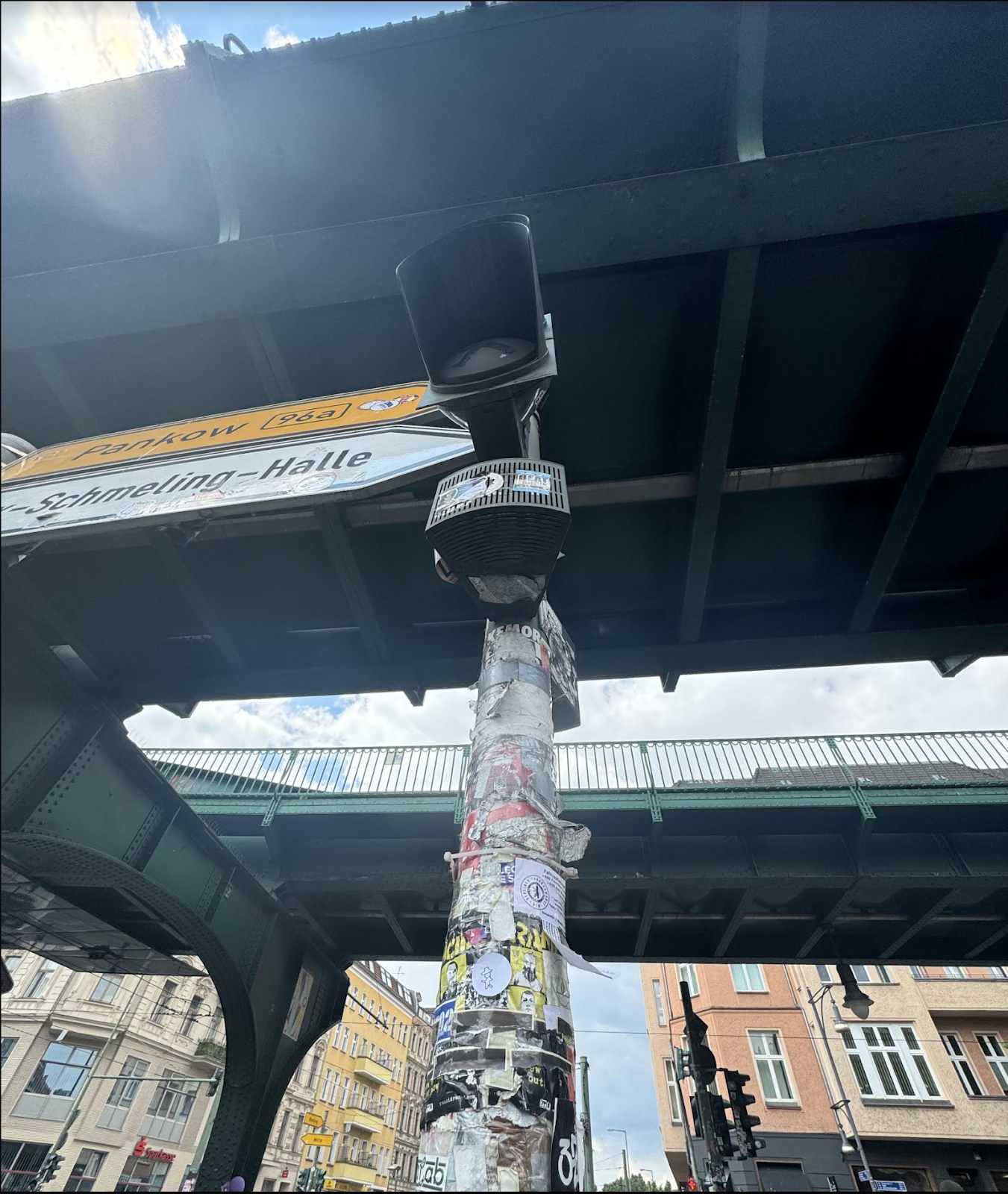
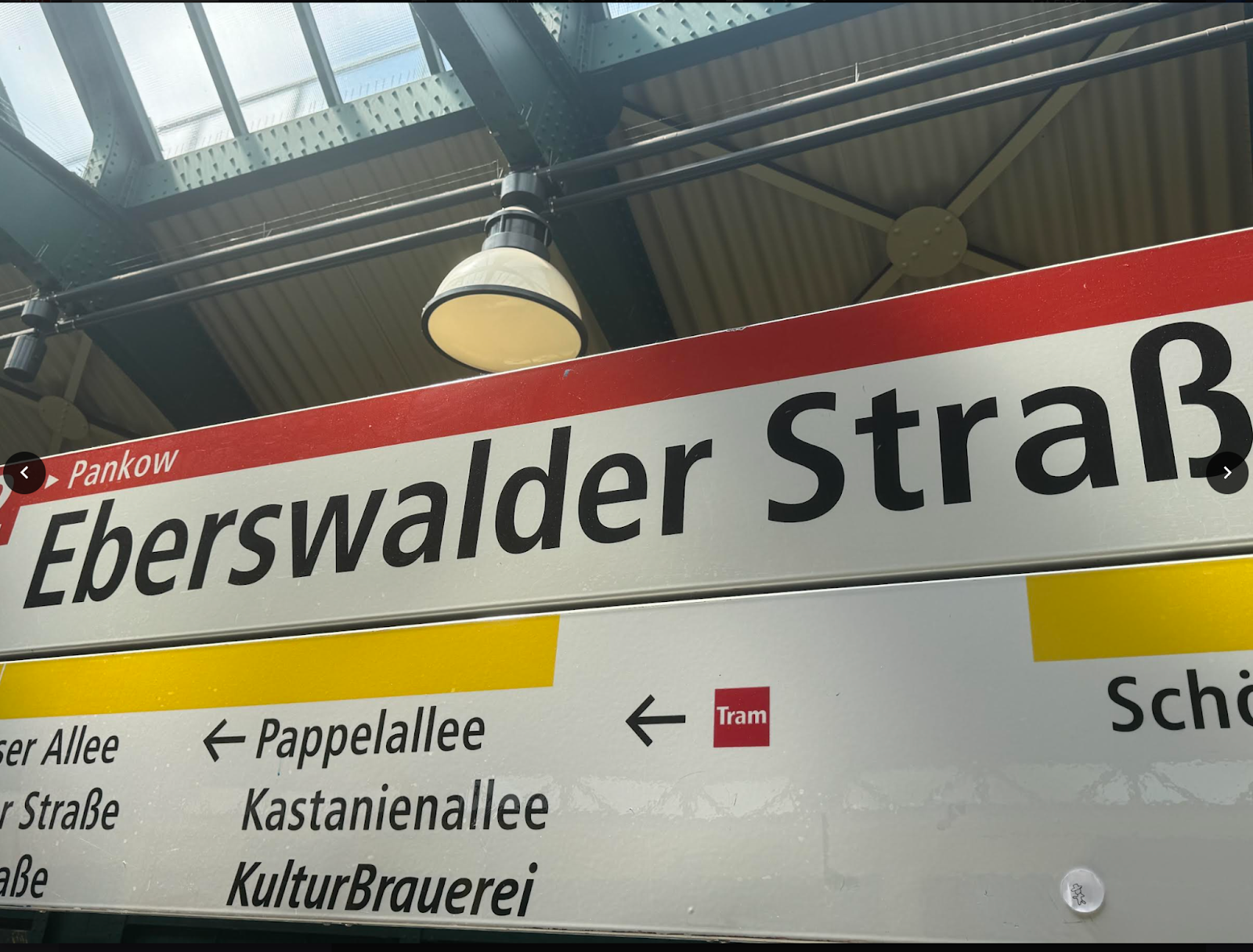
We edited an image from Google Maps that outlined the path to our university using the metro. We changed the names of the stations and used some of Linda’s drawings to create icons placed alongside the map to help interpret it. We translated the names of our made-up stations into German and replaced the real station names with them.
Bringing it to Life
To rename the stations at the metro, we stuck our icons onto random places at the stations.
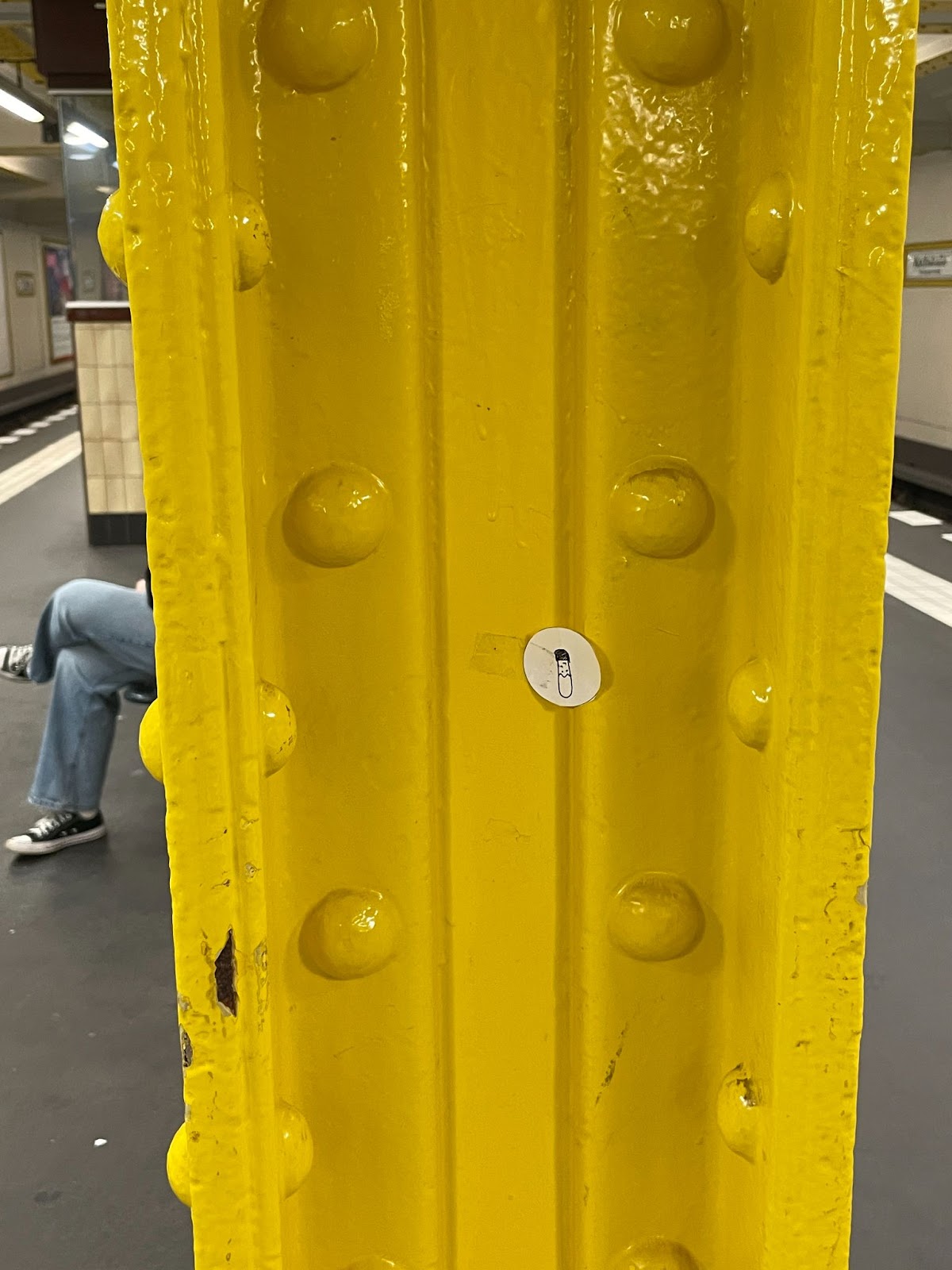
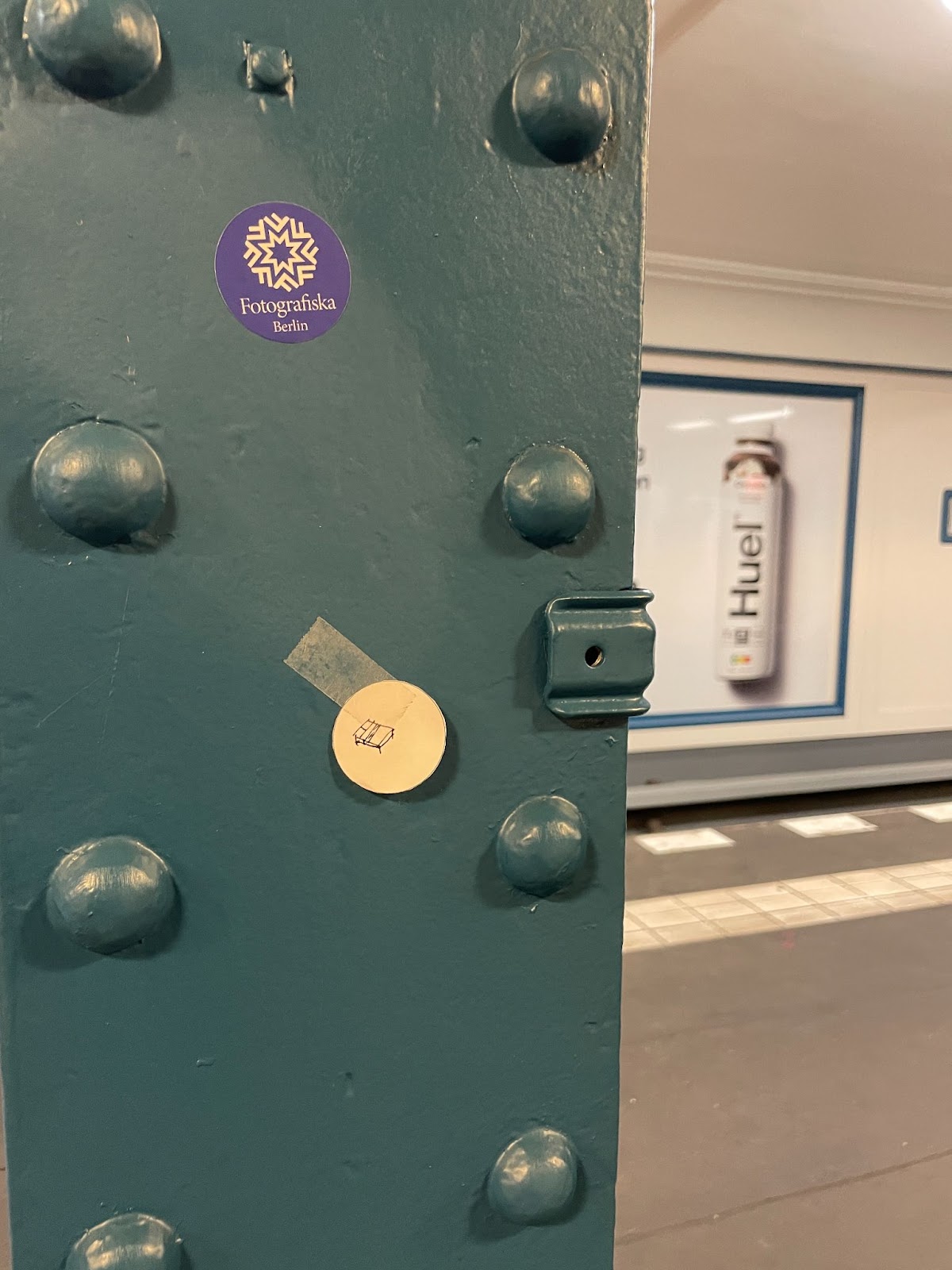
Rishan – Response on “Kermit The Frog”
I appreciate how Sir Ken defines creativity for all human beings: “Creativity is not a separate faculty that some people have and others do not. The truth is, we all possess varying creative capabilities because creativity is a function of intelligence. Therefore, creativity is possible in any activity that actively engages human intelligence.” I am drawn to the idea that creativity is not limited to the arts but can be applied to almost anything. Previously, I believed that creativity was a talent given by nature to only a select few. Now, I realize that creativity is not exclusive to specific individuals; it is for everyone in this world and can manifest in anything we do daily.
As Kermit the Frog said, “We literally create every single day for ourselves through our cultural perspectives and our belief systems.” This is indeed true. We live in a world that demands constant creation, and we craft our own worlds through our decisions and the paths we choose. I believe this ideology is perfect for understanding and making a difference in the world. I’ve come to realize that being creative is part of daily living and happens in everyday life. Moreover, we can start being creative anywhere.
Additionally, I really appreciate the notion that the best part of creativity involves collaboration with friends and colleagues. This is profoundly true. Such collaboration has a tremendous impact on the world and contributes to every aspect of life. By making friends and collaborating with colleagues, we can achieve the most effective and optimal points of a happy life and change in this world, which is a crucial aspect of creativity.
“Explore, experiment, make mistakes” – May.23.Linda
Kermit the Frog, with his amazing sense of humor and logical framework, tells us, the creators, an important acknowledgment of life: everyone are creating something every day. Creativity can be something grand, as the source of the Big Bang theory, or something tiny that you do daily. Instead of giving a concrete definition, Kermit the Frog here stresses the importance of always having creativity. Even his presence, the fact that they put up a Muppet character (not to insult him in any way) to give out a 30min TED talk is a creation that jumps out of the box and actually leaves a deeper impression for the listeners than just having a real human being on board. Not to compare it to all the great inventions in the world, but all these creations have a similarity: they are not scared of failure. It reminds me a lot of why Jazz improvisation is so fascinating.
Reflection: The Bizarre Convincing Nature of Kermit’s TED Talk
I was definitely not expecting our first reading assignment to be a TED talk from Kermit, but I really enjoyed the bizarre nature of this talk. Kermit made a lot of great points I think some friends of mine need to hear.
I have a good friend who frequently praises me for my ideation process. She says she can’t fathom how I just come up with such impressive ideas, at the speed I do it as well. To that I can only ever humbly tell her that creativity is a skill I honed, but it’s a skill anyone can pick up.
I’ve been drawing, designing, and creating things since I was a kid. Unlike other uni students my age, I just never stopped. Because I’e always been in this healthy mindset towards creative works, I design fast and come up with ideas fast. Unfortunately my friend doesn’t believe she has it in her to do what I do, she thinks it’s just a magical talent of mine.
One of my favorite lines from Mr. Kermit here is “We think (creativity) is for artists. Imagination and inspiration? Well those are just words we use around kids, but for grown-ups? Well those are just nice words in some corporate mission statement. Our real job is to make a living. Well folks I say that is wrong!”
I think Kermit has given me a great video for me to pass around. I would love to see more amphibian muppet representation in TED talks.
Making 1 (Hubert & Ronal)
Attached is the documentation for the 30 Circles making activity and the final design.