
Midterm Essay Response

The creative piece that I chose is this animation short film by Osro:

The video encapsulates the essence of art by effectively portraying a universal feeling. It captures the struggle that everyone can relate to but struggle to articulate. The animation portrays the heaviness one feels when battling fatigue, and it does so excellently. The teacher in the animation is a standout character for me. Despite only one student remaining awake, he continues teaching. Instead, when that student falls asleep, he sits down and joins in. This showcases his care for his students and reveals his exhaustion, although he never lets it show in front of the class. It accurately captures a feeling that can only be truly understood through experience.

A particularly impactful moment is when the teacher removes his glasses, revealing his eyes and shedding his previously stoic expression. This signifies that it’s not just the students who are tired; teachers also experience burnout. However, both students and teachers feel trapped in this cycle as it reflects the societal norms we’re accustomed to. We fear to change and seek structure, adapting to this lifestyle subconsciously. Yet, in this fleeting moment, nothing else matters. As they drift off to sleep, they find peace, free from societal expectations and the world’s chaos.

At 2:11 in the video, there’s a striking black-background sequence where the main character imagines or hallucinates running around, desperately attempting to awaken various versions of himself. However, as the sequence intensifies, he encounters a peacefully sleeping baby version of himself and an aging, dying version who shakes his head, indicating that it’s not worth continuing the futile pursuit. This breakthrough snaps him out of his dream state, and he chooses to allow himself to rest finally. It’s a touching reminder to treat ourselves with gentleness and to stop fighting and punishing ourselves for our natural needs.

The video is a beautiful expression of art. The colors, artwork, expressions, and atmosphere are realistic and relatable. The use of color captures the essence of the depicted emotions in a truly impactful and meaningful way. The classroom is adorned with shades of blue, creating a serene ambiance. The walls are painted a soft, pastel blue, symbolizing a sense of calmness and tranquility. The color blue is known to promote focus and concentration. Black color has been used to create a strong contrast against other colors, making them appear more vibrant and prominent(1:42). Black is also used to create silhouettes, where the absence of color defines the form(2:17-3:02). This technique also adds a sense of drama and intrigue to the characters, leaving room for interpretation and imagination. The level of detail of the artwork is amazing, showing intricate texture for a classroom setup. This attention to detail brings the animation to life.

Midterm Paper – Timekeeper (2016)

Sarah Sze – Timekeeper from Fly’s Eye Films on Vimeo.

Timekeeper (2016) is a multimedia sculpture currently on exhibition at Guggenheim Museum NYC by New York-based artist Sarah Sze. This artwork is unconventional considered both from its name and its nature. As a “Timekeeper”, it does not track or suggest the linear flow of time. As a sculpture, it does not have a clear boundary between the artwork and its surroundings and looks like some kind of post-apocalyptic, mechanical punk machine that evolves unnaturally at first sight. However, the unconventionality: both the nonlinear time flow and the chaotic look, echos with and moves me as they represent how we our perception of time and information distorts in the overwhelming modern world. It also sparked within me some philosophical discussion on the nature of time.

First and foremost, I feel that the whole set, when observed from a distance, is a representation of our memory. The projectors and screens playing back videos are set upon everyday objects, symbolizing the emerging memories from the vast sea of consciousness we perceive every day. Our consciousness is also something quite mystical, which we harness but do not fully understand it. This piece suggests so as well: its chaotic, amorphous, and sprawling rendering of everyday objects combined with the beeping sounds in the background of different periods adds a layer of eeriness and mystery upon that, sparking the audience’s urge to investigate deeper.

Time hence also flows differently in this subjective perception setting. For instance, the scene showing the demolition of a building includes intermittent flashbacks to the pre-demolition state, reminding me of the flashbacks and nostalgia frequently triggered in the course of my life. Another scene showing the still images of different animals moving at their relative speeds also reminds me of we perceive the speed of time flow differently based on current circumstances. This feeling is emphasized further by the actual nonlinearly counting “clocks” in the installation. They are either traditional timekeeping devices or other objects that follow time. For example, there is a metronome swinging at random speeds. Observing this, I felt a strong sense of uneasiness and eeriness by such a direct and materialistic representation of the distortion of time, one of the quantities we treat as the eternal constant, under most conditions.

Inevitably coming with the flow of time is the modern deluge of time-sensitive, fractured information. The video and images shown from screens and projectors include different scenes worldwide, fractured by mirrors or torn papers, surrounding the sculpture. Random images overwhelm the main installation, which, observed in detail, turned out to be a studio setup with office chairs, desks, and computers.

I can also feel a sense of detachment of modern life from nature. As an artist, the centerpiece, the studio, obviously symbolizes the main life of the creator Sarah Sze. However, it can also mean the wider concept of one’s career. Hence, generalizing to the audience like myself, I felt that the fast-paced, overwhelming modern life drags us into a dark room like this, detached from nature. Being in a dark room, one can no longer feel the rise and fall of the sun and the change in seasons, which can also be another interpretation of the distorted time.

As somebody who is interested in science, this piece also let me think about the philosophy behind the nature of “time” beyond the probably intended interpretation of this piece with respect to memory and modern life. Just like how we interact with other physical quantities in the world, we perceive time using our senses. But different from quantities such as mass and fundamental forces whose objectivity can be deduced from the model fundamental particles, time is still highly sensory. Although Einstein’s general relativity can quantify time distortion under extreme circumstances, exploiting the interpretation of time’s effects to the degree of reverting space and time in black holes, we still have not reached its nature or its cause. What causes time? What is time’s link to the law of cause and effect? If everything is still, does time still flows? From my very own inventory of limited knowledge, some of these questions may have been solved or taken forward by physicists and can thus become unnecessary. But reflecting upon the fact that these questions and thoughts spawned from my viewing of this piece, I can say that it may have also inspired other audiences to ponder these philosophical questions and set on a quest to solve them. Maybe one day, the inventor of the long-anticipated time machine will speak in front of the press, “I was inspired by this piece I saw in Guggenheim decades ago and I thought ‘my time has come'”.

Class Visit – Ephemeral Tomorrow

Very unique

I really liked the piece where used satellites to mimic constellations. Although, unlike stars where the brightness (magnitude) can be useful for different purposes, the brightness of satellites doesn’t have any significant use, I really liked the lateral thinking they used to make such a link and create a piece that depict galaxies as constellations.

I liked how they base their art on new scientific findings and datasets.

Midterm Paper

Mother Ethiopia by Afewerk Tekle

Afewerk Tekle (22 October 1932 – 10 April 2012) was an Ethiopian artist known for his paintings on African and Ethiopian themes. One of his most remarkable works of art, “Mother Ethiopia” (1963) captivates the viewer with its profound symbolism. The artist makes use of some lateral thinking to creatively depict the mother figure in the shape of Ethiopia. Upon closer examination, the symbolism within the painting becomes evident. The mother’s flowing attire, made of hand-woven cotton known as shemma, mirrors the contours of Ethiopia’s valleys, mountains, and the untapped wealth that lies within its borders. The intricate folds and drapes symbolize the diverse topography of the land, a testament to its beauty and potential. A dominant element in the artwork is the color blue, which serves a dual purpose. On one level, it represents the aspirations of a nation longing for stability and prosperity. The tranquil blue hue is elegantly reflected in the mother’s garment, emphasizing her role as a guardian of peace and provider to her people. The child symbolizes the future, embodying the hopes and dreams of millions of Ethiopian citizens. It can be seen that the mother’s gaze extends beyond the baby. She looks towards the future, casting her eyes on the possibilities that lie ahead for her nation.

The traditional attire showcased in the painting, known as “habesha kemis,” holds great significance for Ethiopians. This long, white chiffon dress, often paired with a “netela” shawl, is worn at formal events, symbolizing pride, identity, and cultural heritage. It embodies the elegance and timeless traditions of Ethiopia, connecting individuals to their past and fostering a sense of unity. The intricate patterns and colors adorning the garments symbolize the richness and diversity of our cultural heritage. As I gaze upon this artwork, I feel an overwhelming sense of patriotism and pride, reminding me of the countless contributions Ethiopia has made to the world’s tapestry of traditions.

Beyond its patriotic significance, the painting carries a profound nostalgic weight, transporting me back to the cherished days of my youth. The mere sight of this artwork evokes a flood of memories from those joyful times when my heart would bounce in anticipation of gathering with family and friends for holidays. National and religious holidays held a special place in my heart, as they offered an opportunity for us to come together as a community, celebrating our shared values and deep-rooted customs. The painting serves as a vivid portal, granting me access to those treasured moments spent in the company of loved ones. Whether it was the aroma of traditional dishes, the echo of vibrant melodies, or the warmth of heartfelt conversations, those occasions filled me with a profound sense of belonging and connection.

“Mother Ethiopia” depicts the artist’s profound message of love, hope, and resilience. It serves as a visual testament to the enduring spirit of Ethiopia and her people. Through this masterpiece, Afewerk Tekle captures the essence of a nation, its aspirations, and its strong will to create a better future for the next generations.

Class Visit – Ephemeral Tomorrow

Majid Ibrahim
Ephemeral Tomorrow’s work consists of making the world’s invisible phenomena visible while injecting their own artistic flair into the visualization of these phenomena.

Their use of datasets is a highly interesting concept for transforming real-world happenings into something that catches people’s attention. It makes me wonder about all the other things that can be visualized in a unique way.

Despite the fact that none of the team members are scientists, there appears to be a lot of research that goes into understanding these scientific processes before beginning work on any art project, which is also consistent with what we saw at Field.  

From my capstone work, I discovered that researchers are usually open to having their findings used in other projects; it is interesting to have this confirmed by the visitor as well.

Reading Response #5

Art & Fear Chapter 3

First of all I wanted to say that I really like this book. Now, regarding the third chapter, it was interesting to notice that I feel or have felt all of these fears in my still brief journey of making art.

Perhaps I would add an additional fear that is not directly related to being an artist, but that, once solved (I believe), makes life a lot easier. That is the fear of dealing with our flaws, and things that haunt us. As the book says, we all have what we need to make our best work, which for me involves a lot of self awareness and acceptance that, to be honest, I am still taking baby steps towards. I have had many ideas for artistic work that got overlooked because I did not want to deal with the emotional baggage that they spark on me, like some family relationships, the weird aspects of our sexual lives, the body, ugliness, and so on. Still, I noticed that when I embrace new parts of myself, my artwork turns out better and more interesting for me.

Midterm Paper


See, you got do stuff till you gotta go sleep at night.
Cause the glory is… is in you

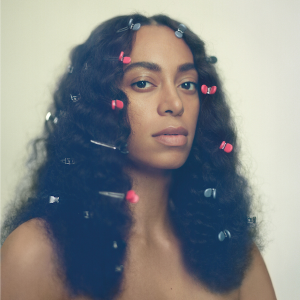
I go back to the album A Seat at the Table (Apple Music, Spotify) every now and then when I need to reconnect with myself. When I first stumbled upon the album, though, I thought that I was only projecting my life onto Solange’s words. But somehow, around four years later, their meaning has been slightly shifting over time only to eventually achieve their final effect: bring me peace. I feel like the songs have become part of me. Or maybe I am still projecting. 

And we have to show them the evolution of where we come from.
I'm about to send a message to the world, like...

One of the main things that attracts me to A Seat at the Table is that I don’t understand it completely. Solange’s way of prolonging syllables and merging her voice with the melody, as well as the metaphors, make the songs quite opaque. That was especially relevant for C1-Level-English-learner-16-year-old me who struggled to comprehend R&B lyrics in general. However, over time, my playing of the “English is my second language” card did not make sense anymore, and only now I realize that, instead, the problem is that it took me many months to finally read the songs’ lyrics. In a very unusual fashion for me, I enjoyed the songs without the need to know every exact word. Perhaps that is not surprising at all in this case because, as I mentioned before, Solange’s songs are about the melody, where hearing eighty percent of the lyrics and ninety percent of the (many) instruments will certainly do the job. And by “job” I mean: completely immersing myself in a semi-meditative state for forty minutes. 

One of the funny consequences of this ambiguity is that in almost every listening I learn something new. Just today, as I was reviewing the album for this essay, I realized that the chorus of “Don’t You Wait” is, as the name suggests, “Don’t you wait for me,” and not “Don’t you wake up me.” I know that my years-old interpretation does not even make sense on a grammatical level, but I guess I connected the sleep-like ambience of the song to its meaning. This dreamy melody, that is present in much of the album, interacts with self-reflective themes to create an internal monologue that is very easy to relate to. I feel it when Solange sings: 

I traveled 70 states
Thought moving 'round make me feel better

I tried to let go my lover
Thought if I was alone then maybe I could recover
To write it away or cry it away (don't you cry, baby)
Away

“Cranes in the Sky,” which is my favorite song of the album, reminds me that I am not the only one making weird decisions like moving to another country at 18 to run away from the real or imaginary metal clouds.

In this album, Solange sings about confusion, self-doubt, fear, isolation, and mistakes – things that I find hard to articulate myself, but that become a bit easier to reflect upon once merged into a nice composition.

My grandfather, he said, 'Why you gon' call it "No Limit"?" 
I said, "Because I don't have no limit to what I could do."


Songs cited:

  1. Interlude: The Glory is in You
  2. Interlude: This Moment
  3. Cranes in the Sky
  4. Interlude: No Limits

I also wanted to discuss the aspect of race that permeates most of the album, but unfortunately I already reached the word count. The songs “Mad,” “…Don’t Touch My Hair,” and “F.U.B.U.” are great in that sense. I resonate I lot with them even though my experience is very different from that of a Black American woman. I think she sings beautifully about the indescribable sensation of being stigmatized on whatever basis, like race or gender.

Class Visit- Maxime (Ephermeral Tomorrow)

  • Sensing the invisible
  • Global and local data
  • Space projects vs nature projects
  • Speculum, solaris
  • Solar wind?
  • Satellarium II
  • Satellarium II first started off with video projections and their latest projects include laser projections.
  • For the environment projects there were modules placed on trees with lights, gas, smoke, etc.
  • Uses polycarbonate
  • Underground communication w trees.

Art and fear(pg23-36) reading response.

As an individual who appreciates art and has personal experience as a creative, I find the author’s discussion on the fears and misconceptions artists face to be highly thought-provoking. Doubting one’s abilities is something that many artists have encountered at some point in their artistic journey. It is comforting to know that these doubts and insecurities are not uncommon.

I believe that creativity is a fluid and collaborative process influenced by various external factors and that embracing the accidental nature of artistic creations is okay. Recognizing that art is subjective and open to audience interpretation can help alleviate the pressure to conform to a particular standard.

The author’s emphasis on commitment, learning from mistakes, and continual improvement resonates deeply with me. It reinforces the notion that talent alone does not guarantee artistic success. Perfectionism, in my opinion, can hinder artistic growth, as it limits exploration and experimentation. Taking risks and venturing into new directions are essential for personal and artistic development.

Class visit Thoughts

Ephemeral Tomorrow-Translating nature with sound and light.
Visual arts
Scientific background inspiration
Generative visual
Sensing the invisible
Solaris-Monitoring solar wind. Combining video projection and laser projection.
Boon transfusers for sound.
Satellarium III
Epiphytes- Using polycarbonate panels, lasers and speaker pointers.