Reading Response – Art and Fear (pp37-47)

Majid Ibrahim

This chapter delves into topics that I have never thought about before as a person not pursuing art as a profession. The author shows how society doesn’t always make it easy for artists to make art. Artists must make work that is both new and easy to understand hence earning society’s approval. It’s a tricky balance, and feeling like you have to meet these standards can stop you from being creative while not conforming to them will get you weird looks.

This ties into the difference between acceptance and approval. I found it interesting the way he describes these 2. I understood acceptance as essentially a “green flag” from the already established artists while approval is whether or not the general public likes it. When the author explained the difference between them I was instantly reminded of the rotten tomatoes rating system for movies where there would be a rating from hardcore critics and a rating from the public. Artists will try to find their own unique balance between acceptance and approval, hoping to make work that speaks to both the artistic community and the general public.
MAKE – Creativity Meter

Here is the p5js sketch: https://editor.p5js.org/mi1171/full/I–yjbMkJ

For my MAKE assignment today I came up with a “Creativity Meter”. It is an interactive art piece in which the shapes located at the cursor become increasingly erratic and random the longer the mouse is pressed. The bar at the top also fills up and starts shaking to match the increasing erratic movement of the shapes as well as the background darkening. When the mouse button is released, all of the effects previously listed gradually revert to their initial “calm and collected” state.

This was inspired by the concepts of lateral thinking that we heard about, in which we would let the chaos of our minds run wild by suspending judgment of our ideas. The higher the “Creativity Meter” rises, the more erratic the forms become, which symbolizes our ideas.

Studio Visit – Field.io

I really enjoyed the talk we had with the people at field. The work that they do seems very professional and to the point. They broke down the process of creating each project in a very intriguing way. With each project, they seem to do a lot of research first to align themselves and get onto the same page as their clients.

It was interesting to also hear about the frustrations of producing a product that they are proud of but are then rejected by the client. Occasionally this also happens in some of my uni assignments so I resonated with that feeling of frustration.

I also really appreciated the posters they distributed to the class. Overall they did a great job of conveying how their design process works.

MAKE – Apple Picker/Storage – Majid, Enock, Ahsen

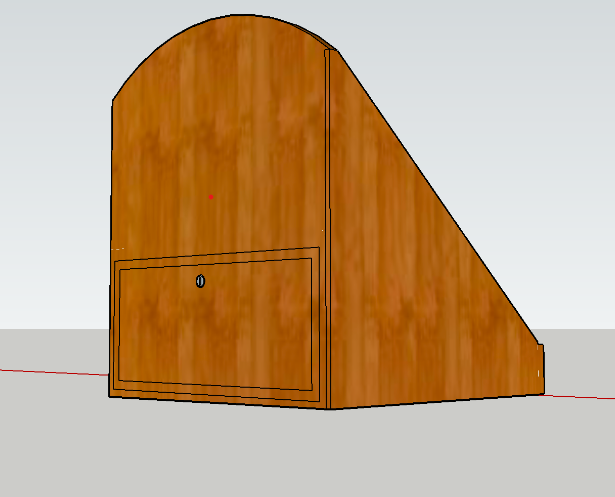
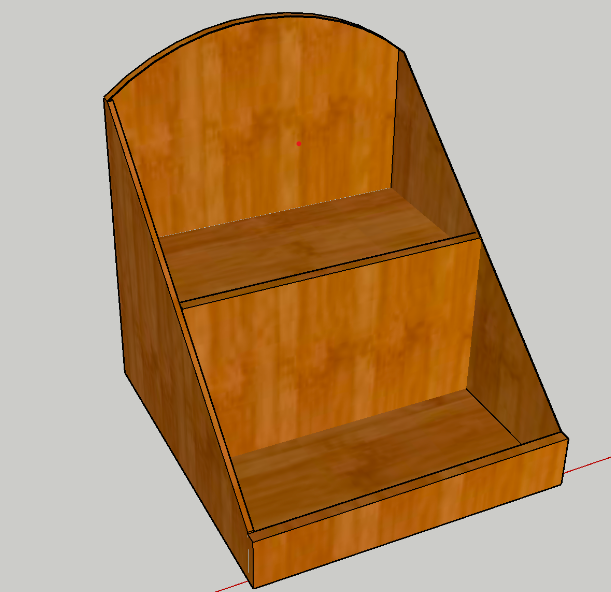
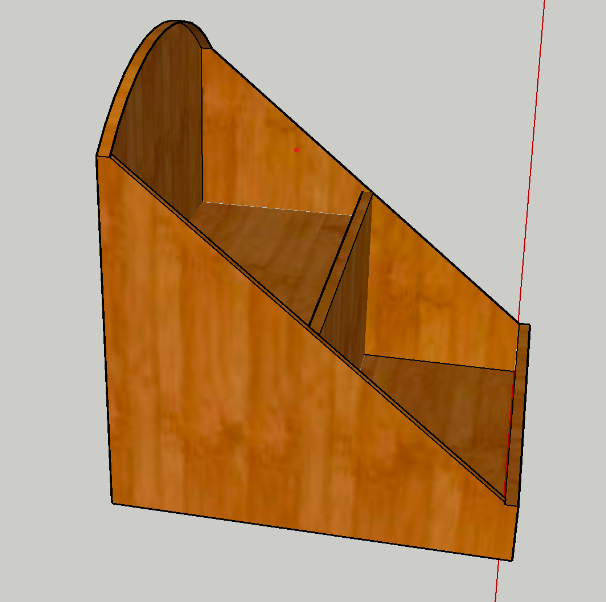
For this project, Enock designed an airing rack that doubled as apple storage. Recognizing the importance of proper ventilation and exposure to sunlight after washing, he aimed to develop a solution that fulfilled these requirements efficiently. He utilised SketchUp to create the 3D model to aid in the design process. This allowed him to visualize and refine the design. The rack was specifically designed to facilitate optimum airflow, ensuring the apples would dry thoroughly while exposed to the sun’s rays.

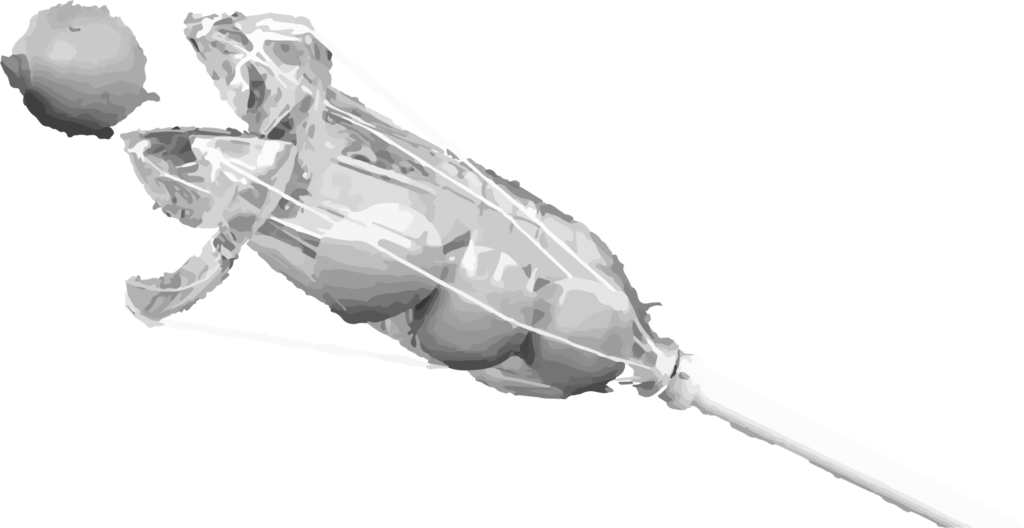
Ahsen worked on a sketch for out apple picker product. He created this on illustrator which was then exported to Majid.

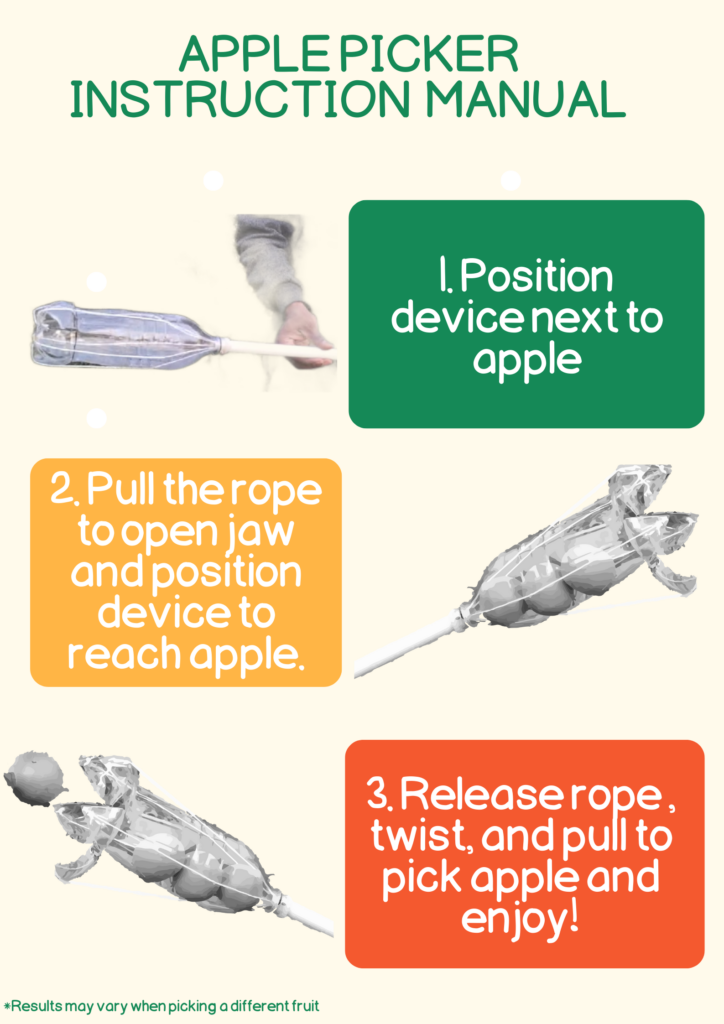
Every tool needs an instruction manual, so Majid decided to create one for the apple picker. He used images from Ahsen’s sketches and put it all together on Canva

Reading Response – Art and Fear (pp23-36)

Majid Ibrahim

I think that this chapter heavily ties into the previous one with regard to the suspension of judgment. We are innately perfectionists, that is what has allowed us to develop as a species. However, now we are paying the price for this ability we possess through the constant inner critic criticizing our every move. This leads us to have a fear of making mistakes which will inevitably hinder our ability to explore all the possibilities our minds can conjure.

Instead, an artist should focus on what is possible within his current capabilities and actually lean into the imperfections in their work to learn and grow from them. Each mistake helps us get better at what we do and how we see art. Accepting our flaws can help us become more open and willing to take risks. This method lets us use our imaginations instead of letting it drag us down.

Reading Response – Art and Fear (pp1-7)

Majid Ibrahim

The author criticizes the notion of talent being the sole determining factor to an artist’s success. I wholeheartedly agree with that point. I think that believing in that mantra, even though it may seem to be true, is ultimately self-limiting presumption. There is no benefit or utility in adopting such a mindset and discourages a person from pursuing an endeavor before he/she even begins. 

The author’s point about self-doubt is also something that resonates with me. When pursuing an endeavor it is often our own inner critic that shuts us down rather than other people. The never-ending need to achieve perfection will always be an innate part of human nature, however, we need to learn to embrace the fact that we are imperfect beings and as a result produce imperfect work. Our inner voices often criticize us for just being the way we are meant to be. We need to learn to ignore/subdue this discouraging inner voice.

Artmaking, like any other skill in life, can be improved upon. Repetitive and unyielding consistency in practice is what yields significant results in the long run. Having that fatalistic mindset would achieve nothing but dissuade a person from putting in the hours of practice that could have turned them into great artists. While in practice, it is also important to not pass judgment on yourself as it is in the process not the destination.

Reading Response – Lateral thinking (pp105-111)

I can relate a lot to what Bono is saying in this chapter with regard to the education system. The education system truly does “standardize” thinking by forcing all its students to follow specific procedures to achieve the correct answers/grades. This leaves little to no room for any creative or “outside the box” thinking. I think that education should also emphasize the importance of unorthodox approaches and also allow students more opportunities to collaborate with one another to nurture their lateral thinking skills. 

Another interesting point he makes in this chapter is the concept of suspension of judgment. By doing this, people can be open to creative thought, new ideas, and different points of view and follow trains of thought that may have seemed initially wrong. Even if the train of thought does not lead to anything fruitful, there is a chance that the person would have gained more insight on the problem he is facing which could eventually lead to a correct solution.

Suspended judgment means keeping an open mind, trying new things, and realizing that both good and bad ideas are worth something. By changing the education system to promote different types of thinking future generations will consist of people that will be better able to think of new and innovative solutions instead of just being able to score well on tests.

MAKE – Thought Camera

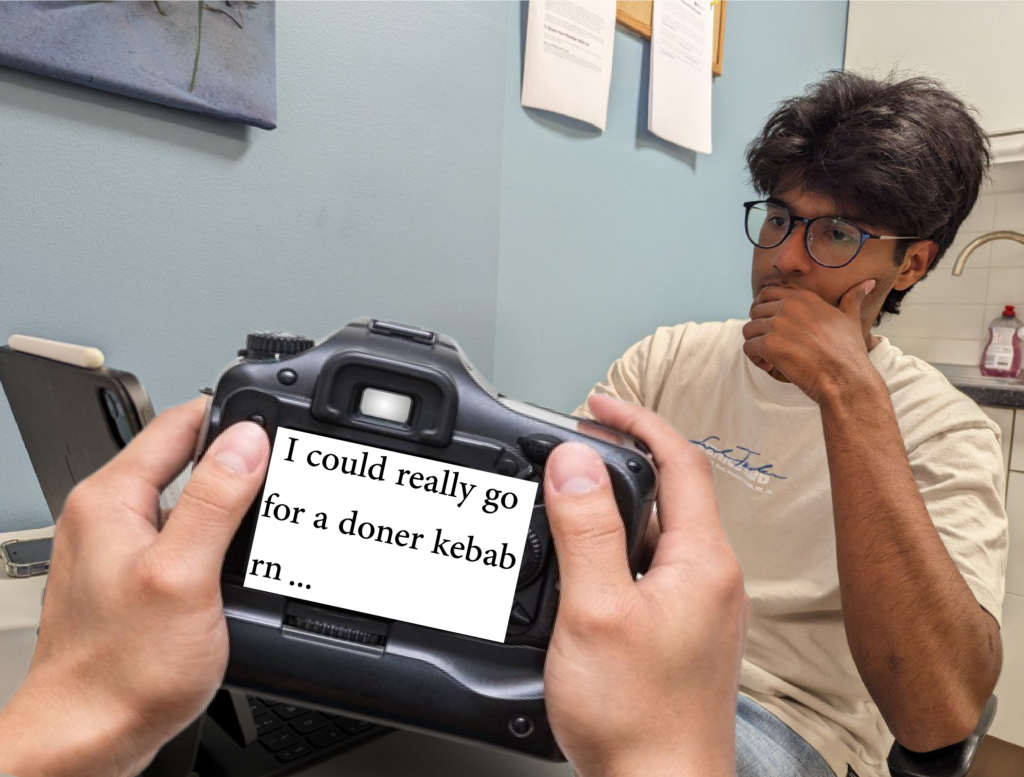
So when I was working on my last assignment, the thought crossed my mind of a camera that could take a picture of a person, however, instead of it generating an image of their external appearance it would show what thought the person is thinking at that moment. If such a camera existed, it would be a fun and fascinating way to peek into someone’s thoughts. It makes me wonder what would it show when a person is meditating.

Class Visit– Robert Seidel

One thing that stood out to me was how long each piece was. It amazed me that something so abstract and without a storyline could keep my attention for so long. It was like getting lost in a world of colors, shapes, and feelings. 

Since his work is very abstract, it was interesting to hear about all the different interpretations and emotions that viewers of his art were experiencing. Each person viewing his art comes out with something different to say about it.

Seeing how the art has changed over the years was another thing that struck me about the visit. As he moved from one piece to the next, I could see how his style changed but the general feel stayed the same.

It was also interesting seeing his projection work. It made me think about how art when mixed with other senses may leave a stronger impression\ on the viewer.

I would have liked to see him speak more about his creative process of actually coming up with these works.

Reading Response – Lateral Thinking (pp25-38)

De Bono’s emphasis on the need to foster an environment conducive to lateral thinking is interesting to me. Looking back on my own education, I can see how De Bono’s claim that an emphasis on vertical thought makes it difficult to develop lateral thinking is supported by my own experience. I often felt like there was little place for creative expression or asking challenging questions in the classrooms I attended which limited my creativity in general.

I agree with what De Bono said, that humor can strike unpredictably. From my own observations, I’ve learned that the most successful jokes and humorous remarks are those that present an unusual viewpoint on a common situation. It seems that in those circumstances, I use lateral thinking instinctively to generate funny thoughts. These examples show the value of lateral thinking even in things such as humor.