Lateral Thinking Chapter 9&10 Reflection.

I agree with the author’s perspective on embracing new ideas and being open to exploration. Traditional vertical thinking that always emphasises being right can hinder creativity and progress. By suspending judgement, we can create an environment that encourages the generation of diverse ideas and promotes innovative thinking.

I also agree with the author that education often focuses on correctness and established facts, which can limit creative thinking. Encouraging the generation of multiple ideas, even if some are wrong, can lead to breakthroughs and new insights that would not have been possible otherwise.

The author’s emphasis on the value of being wrong at times and the potential for valuable discoveries that may arise from erroneous ideas is a critical perspective. It highlights the need to embrace uncertainty and not be afraid of making mistakes in pursuing innovation.

The concept of delayed judgement and the outlined stages at which judgement can be applied provide a framework for fostering creativity and collaboration. Suspending judgement allows ideas to develop, encourages contributions from others, and challenges existing frames of reference, leading to the potential for breakthrough solutions.

Regarding the practical application of suspended judgement, I agree with not rushing to evaluate ideas and valuing exploration over immediate judgement. Extracting value from seemingly incorrect ideas before discarding them is crucial, as even flawed ideas can offer unique insights or serve a purpose.

I agree with the author’s emphasis on embracing a mindset that supports the generation of new ideas, the exploration of unorthodox perspectives, and the deferral of judgement to foster creativity and drive progress.
Reading Response – Lateral thinking (pp105-111)

I can relate a lot to what Bono is saying in this chapter with regard to the education system. The education system truly does “standardize” thinking by forcing all its students to follow specific procedures to achieve the correct answers/grades. This leaves little to no room for any creative or “outside the box” thinking. I think that education should also emphasize the importance of unorthodox approaches and also allow students more opportunities to collaborate with one another to nurture their lateral thinking skills. 

Another interesting point he makes in this chapter is the concept of suspension of judgment. By doing this, people can be open to creative thought, new ideas, and different points of view and follow trains of thought that may have seemed initially wrong. Even if the train of thought does not lead to anything fruitful, there is a chance that the person would have gained more insight on the problem he is facing which could eventually lead to a correct solution.

Suspended judgment means keeping an open mind, trying new things, and realizing that both good and bad ideas are worth something. By changing the education system to promote different types of thinking future generations will consist of people that will be better able to think of new and innovative solutions instead of just being able to score well on tests.

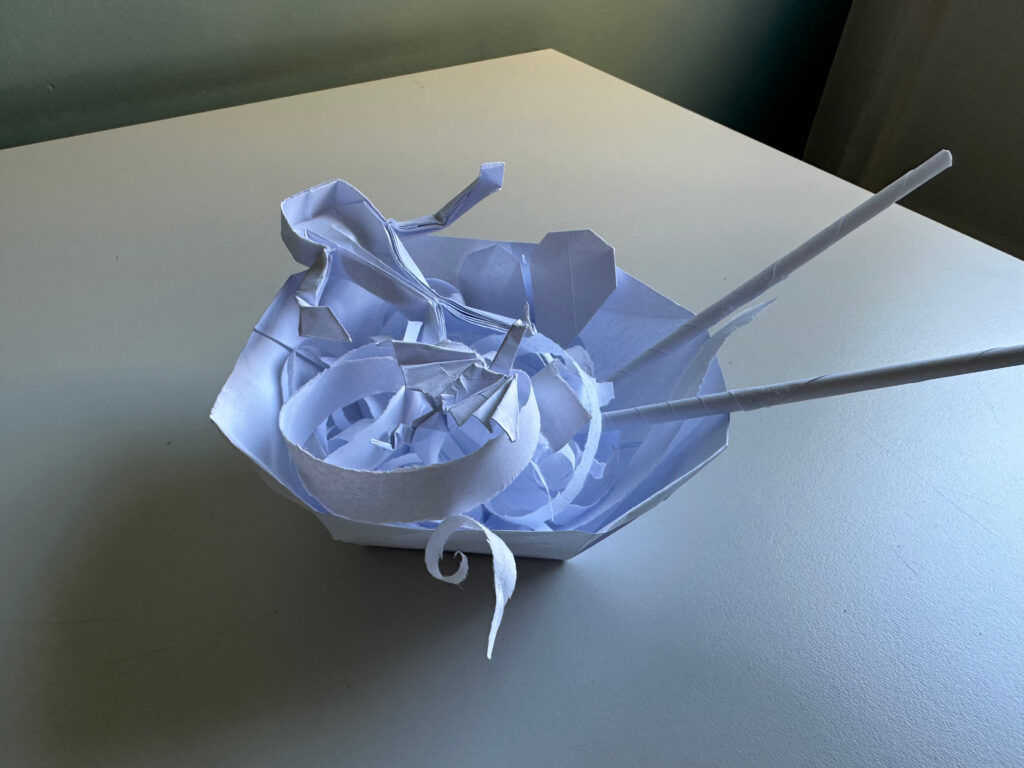
Making #4 – The noodle bowl of hopes and dreams.

I remember that I was hungry while making the last project. I was craving a noodle bowl. So I made a noodle bowl, with origami.

I thought about what else a person can be hungry for? adventure and fantasy, perhaps love, maybe they crave to be seen? So I added some extra toppings in my bowl to crave these hungers: a heart, a dragon, a person, and of course noodles and a pair of chopsticks.

Art and Fear reading response

The author’s viewpoint on the challenges artists face in their creative process makes a lot of sense to me. They talk about how artists often struggle with self-doubt, uncertainty, and doing the same things over and over again. I think many artists can relate to these difficulties. The author also asks why some art is left unfinished, which makes us think about the obstacles that can get in the way of creativity.

It’s interesting that the author mentions how artists in the past may have had more support from institutions. Nowadays, artists often have to find motivation within themselves because they don’t always get external validation. I agree with the author that it’s important for artists to find fulfillment in their own work.

The author criticizes the idea that talent is the only thing that determines artistic success. They believe that art involves skills that can be learned and improved through hard work. I think this is an important point because it encourages artists to believe in themselves and keep going.

I also like how the author talks about the difference between making art and looking at art. They say that making art can be a transformative process that helps artists grow personally. It can be a lonely journey, but the author emphasizes that creating art for oneself is valuable, even if others don’t appreciate it.

Finally, the author challenges the idea that art is just about expressing oneself. They suggest that art has different purposes and meanings throughout history. This allows artists to explore different paths and find their own unique style.

Robert Seidel – In-class visit – Rough notes

  • Visual artist, amazing transitions, and sounds to pair the movement with the music. Very in sync
  • Very detail-oriented (Color, shape, sounds, movement)
  • The art piece is done sometimes a few instances before his show starts, and he might modify them based on the reactions of people there. (V exciting and rare to hear about this type of art, as usual, with things exhibited, they don’t tend to change.)

Class Visit – Robert Seidel

Very dedicated and interested in his own work

Mysterious 

Open minded and willing to change his mind at any moment

An optimistic person who created something amazing out of chaos

Neither pressure nor underestimate your audience.

Very cool and captivating projections

Why ?- Continued

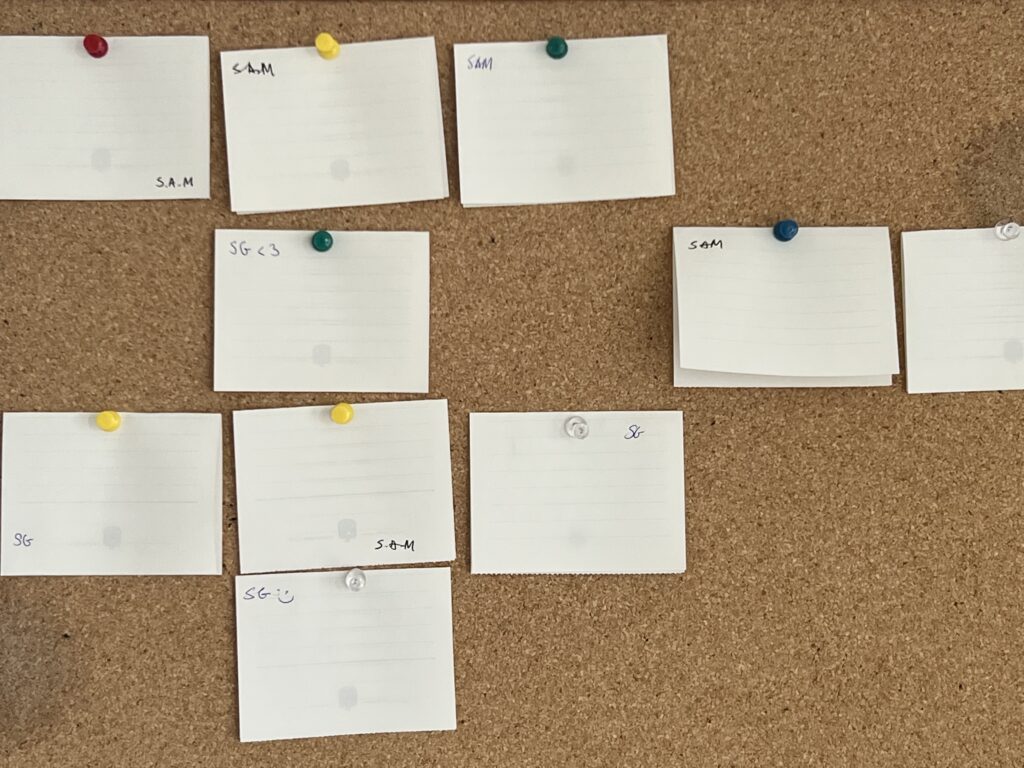
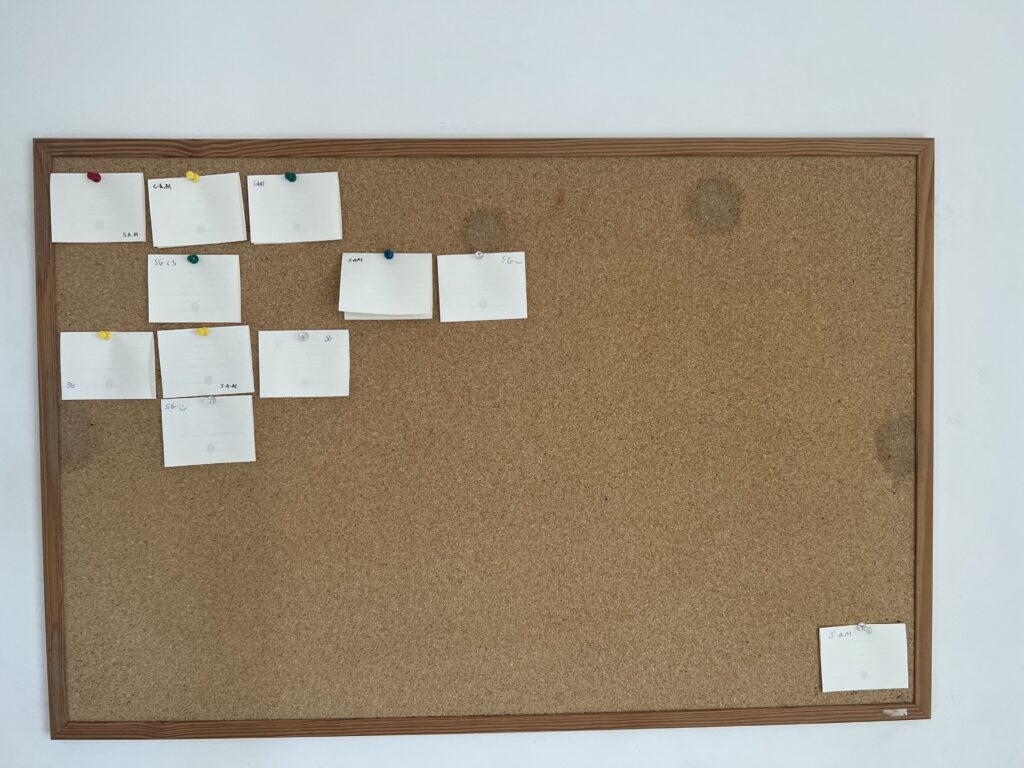
For my extension on our “Why?” assignment, my initial plan before creating a Berlin diary was to create a wall/hanger with “funny sentences” said throughout the trip and stay by my friends and me so that I could specifically remember the laughter and the good memories in general.

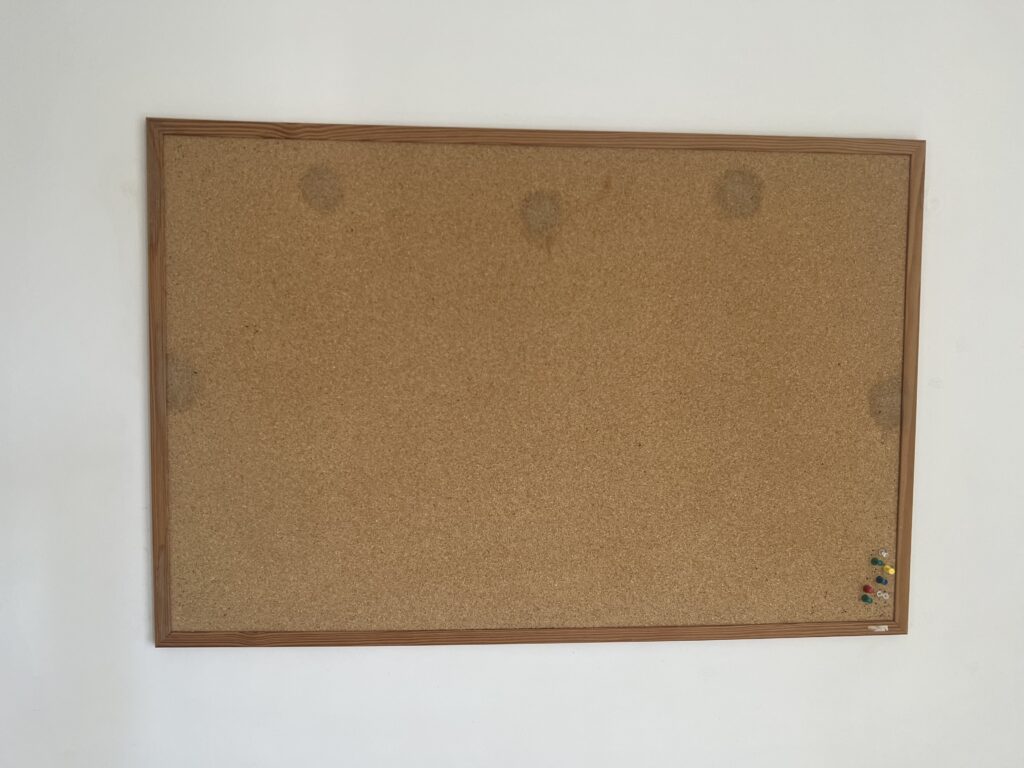
I got inspired to create this tradition in our suite as well as have an empty wall that felt like it needed more life and something going around it, which meant that I needed to bring some life and meaning to my dear blank board:

So now, every time someone says something funny when we are out, we write it on our notes app; when we get back to our dorm, we take a piece of paper, write down the funny thing on it, and then write the initial of the person that said it. Our wall/hanger stays in the kitchen, so we can access it whenever and add/remove things at any moment.

I chose simplicity as creativity should not always be complex; it can also be this fun and silly idea you have with your roommate now and then and do it out of pure joy and entertainment. But then, looking back at it, on June 10th, this little silly idea we had will have a sentimental and nostalgic value.

Just do not get too caught up in this little tradition, as it can cloud your thoughts all day with the pressure for you to write something down each day, but it’s okay; some days are less funny than other days, and some days are less adventurous, and that is okay. 🙂

This is how full the wall has gotten over this weekend:

MAKE – Thought Camera

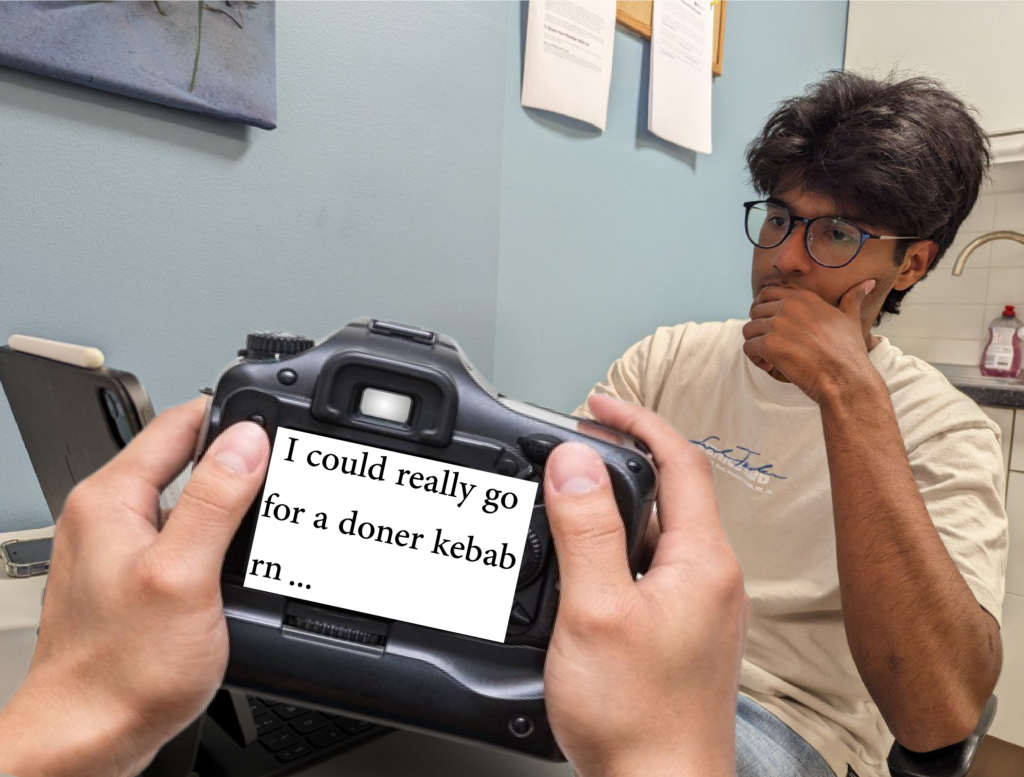
So when I was working on my last assignment, the thought crossed my mind of a camera that could take a picture of a person, however, instead of it generating an image of their external appearance it would show what thought the person is thinking at that moment. If such a camera existed, it would be a fun and fascinating way to peek into someone’s thoughts. It makes me wonder what would it show when a person is meditating.