Midterm Paper

To talk about some creative works that move me is a rough topic. It’s big—it can be a movie, music, drawings, books, etc.—and it’s also small—it has to be creative and it has to move me. After giving careful thought, I decided to talk about one of the first twist movies I watched: Witness for the Prosecution.

Overall, the plot of this movie is about a court defense. The man Leonard Vole is suspected of murdering Emily French, a wealthy, childless widow who has become enamored of him and has named him as the main beneficiary in her will. Strong circumstantial evidence points to Vole as the killer, but Sir Wilfrid, who serves as the defense for Vole, believes Vole to be innocent. The only witness that could verify Vole’s innocence is Vole’s wife, Christine, but a loving wife’s alibi cannot be used. However, it is surprising to see that Christine is actually summoned as a witness for the prosecution, and she testifies that Vole has committed the murder. Before the court is about to close, Sir Wilfrid is contacted by a mysterious lady who provides evidence that shows Christine’s testimony is perjury. Therefore, the court declares Vole innocent. Then comes the twist. The mysterious lady is actually Christine herself. She deliberately perjures so that the court would trust Vole because she loves him too much. Eventually, it turns out that Vole has an affair and leaves Christine, causing Christine to angrily kill Vole.

Certainly, the part of the movie that moved me was the twist. The strongest feeling I had when I first saw the twist was shock. I even sensed some cold sweat, since the twist came so unexpectedly. While it’s not the only twist movie I’ve watched, the reason this movie leaves such an impression is that I never expected a twist. Throughout the movie, I was in the shoes of Sir Wilfrid. From the way Sir Wilfrid talked, I sensed that he’s very experienced, knowledgeable, and smart. His method of using the reflection of the monocle to check Vole’s innocence, along with some clumsy behaviors of Vole, fooled me into thinking that Vole is just an unlucky but innocent person. Until the last 10 minutes of the movie, the setting was somewhat relaxing, if not like a comedy. The various conversations Sir Wilfrid had with Miss Plimsoll, his private nurse, as well as the part where the maid could not hear clearly in court, brought a humorous tone to the whole movie. I admit, the fact that the movie was black-and-white also played a huge role in assuring myself that the plot would go as I expected (I didn’t know Agatha Christie at that time!). In recall, I was thinking exactly the same way the director wanted the audience to. The initial implication of Vole being innocent lies in implicit details, making the audience believe that it’s their smartness that discovers Vole’s innocence. Ironically, although Sir Wilfrid insisted many times in the court on the importance of evidence, his, as well as the audience’s, trust in Vole lies completely not in evidence. Vole’s act in the court of such despair and agony also resonated with people getting wronged. Christine’s pretense as a cold and self-possessed lady successfully deceived most people as well. Overall, the reason why it moved me was clear: it made me feel like I was the smart person knowing the truth, whereas the ending showed that all my ideas were manipulated by the director. Probably due to the influence of chess, I’m really afraid of letting others know what I’m really thinking about. Therefore, mindreading me is as terrifying to me as stripping me. So, in the last ten minutes of the movie, I felt shocked, excited, but at the same time, a little bit scared.
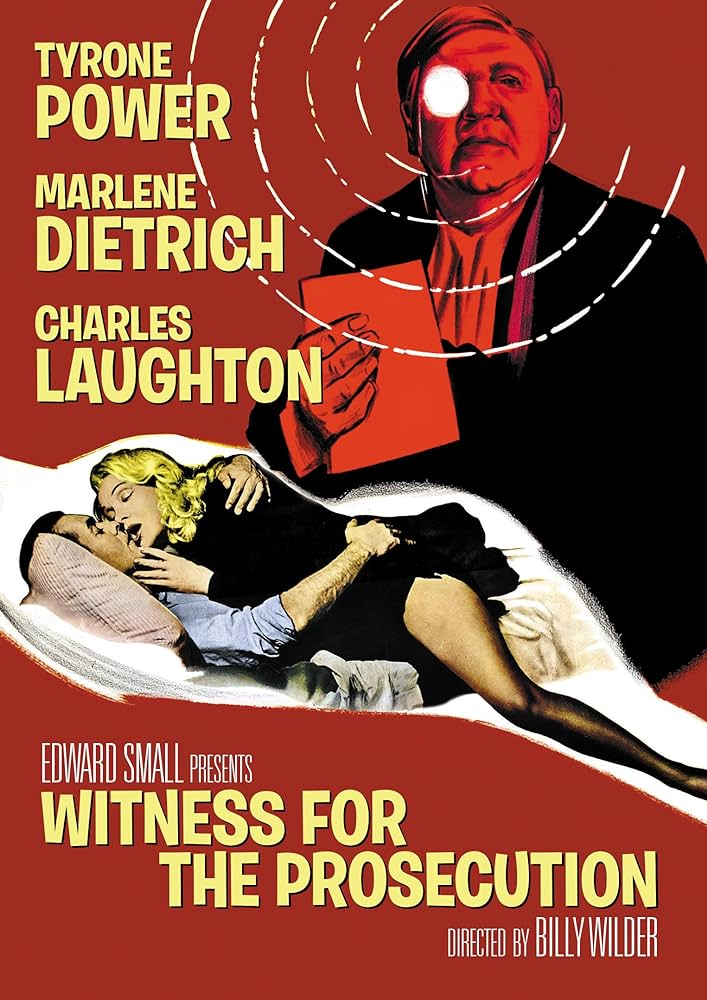
A poster I found
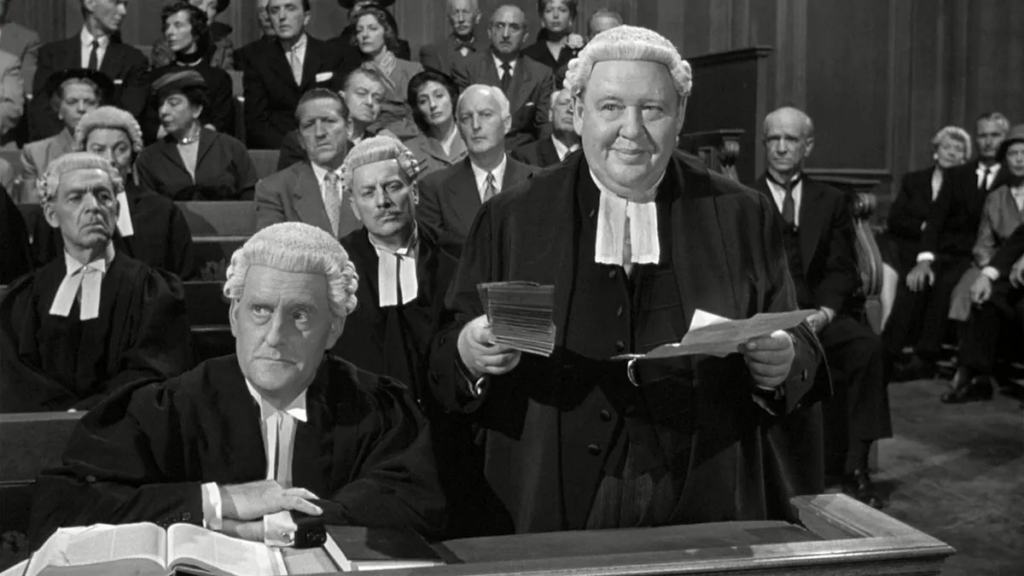
Look how confident Sir Wilfrid (me as well) is at this point.
Visit Reflection #5: Harshini J. Karunaratne

Today I learned about the concept of eye portraits. I loved the way Harshini was like “yeah you give one based on your eye to your secret lover, and some parents used to keep one of their kid’s eyes.” 

Here are some of the key takeaways I jotted down in my notes along with my thoughts on them

“Go to Arts Center shows, never let work be an excuse.”

> This was something I really forced myself to do in the first semester last year but I just couldn’t keep it up. I also feel like there’s so much opportunity around me that it’s almost impossible to not miss out occasionally.

“Take more free workshops, don’t take them for granted.”

> I actually really regret not attending more random workshops this past year. There was even a workshop on working as a game designer that I unfortunately couldn’t attend because of other plans I made.

“No one cares about my CV, my degree from NYUAD says enough”

> This one felt extra affirmed by what my design professor, Professor Goffredo, said to me during my final exam interview. He told me that the university needs to hold its students to high regards so that having a degree from NYUAD has a lot of weight.

I realized I had a question I wanted to ask Harshini but I totally spaced out and forgot on the spot, but I remember now. I wanted to get Harshini’s opinion on whether she brings up being neurodivergent to employers. As an art student with ADHD, I’ve been curious on whether other fellow artists bring up the topic at all in a professional setting.

Back home in East Asia, there’s always a stigma against even the smallest disorders. If you were born with an attention disorder then you should be fixed, if you can’t be fixed then you have less value. I wonder how Harshini feels about the topic.

Overall, Harshini was a great guest that gave me plenty of food for thought considering how she was an alumni.

Artist visit Harshini J. Karunaratne

I think it was interesting that Harshini was saying that the art in your head will never materialize in front of you the way you envisioned it, so you just have to keep making art even if it’s not the outcome you imagined. In Art & Fear, the reading assigned to us the day before, the author was discussing the same thing. So far, her work was probably my favorite, it was more focused on the final result rather than the experimentation that gave these results, and I think that it’s more satisfying to create art this way, whereas some of the other visitor’s art was the experiment or the process itself. 

Midterm Paper – Yasmine

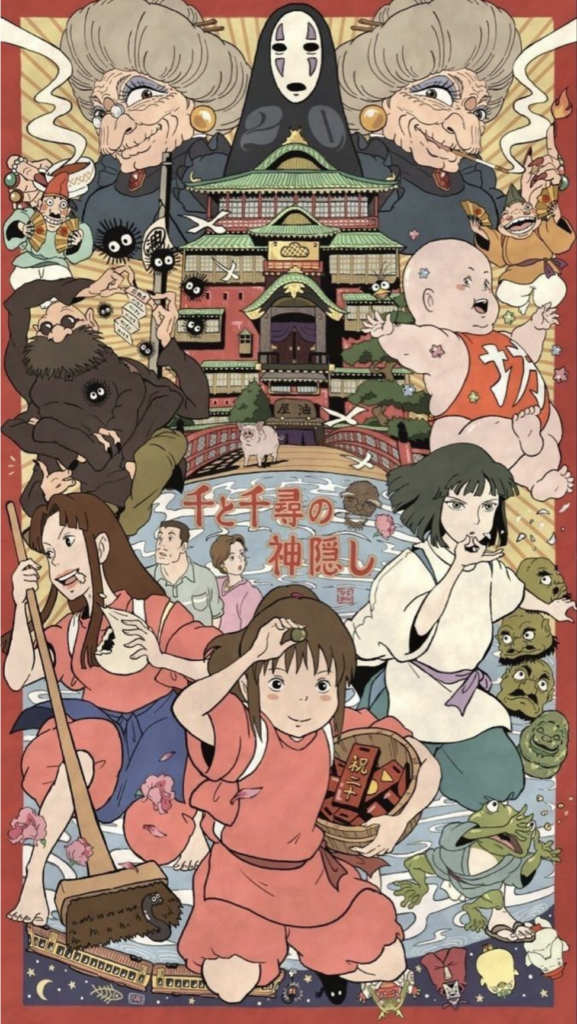
The story begins with a family moving to a new place. The main character, Chihiro, is afraid of the change. They stumble upon an abandoned amusement park and find some food. The parents, tempted by the delicious-looking food, start eating. As night falls, spirits fill the space, and the parents turn into pigs. Lost and confused, Chihiro tries to leave but finds herself stuck in the spirit world.

On a random weekend, I was, as usual, looking through a list of hundreds of children’s movies saved on a hard disk, trying to find something I hadn’t seen in a while. Then I found a file I hadn’t noticed before, labeled Spirited Away. Maybe that’s why this movie was so memorable to me—it saved me from drowning in boredom. I watched it for the first time, and by the end, I had no idea what I had just experienced. The movie was long and eventful, yet slow and not intense. It didn’t build up suspense but instead pulled you into the story.

Perhaps it was how different it was from what I usually watched, movies with a clear structure, a villain, a goal, a hero. The first time I watched it, I couldn’t tell you what the movie was about, maybe because I was nine and didn’t understand it. It left me pleasantly confused, and every time I watched it, it felt like a different movie. I processed more of it each time, making it a film you watch repeatedly and always find interesting.

I wouldn’t say it was something I loved immediately, but I’ve found that things that take time to grow on you also take longer to become things you used to like. This happens often with the music I listen to; sometimes I find songs on my playlist that I wasn’t very into at the time but started liking slowly. Those songs stuck with me longer. I think taking your time liking something gives you space to discover new aspects you enjoy, so you like it more every time. Otis Sandsjö said something similar about sometimes listening to his old music and finding that he enjoys it more now than he did back then, which I found very relatable. I think I’ve seen the movie enough times by now, but it brings a sense of comfort and nostalgia whenever I play it.

So why is the movie great? It did win several awards, after all. The characters, I think, make it so interesting. No one is really good or bad; they are just people/spirits that, like in the real world, can present negative traits like greed and spite and also positive ones like generosity and growth. In the 2 hours and 5 minutes, all the characters seemed to develop subtly. Subtlety is an important component of Ghibli movies (the animation studio). They add so much in a small space, representing changes that happens over a long period time in a short amount of time. The changes and messages aren’t in your face, making it more meaningful every time you watch.

I would describe Spirited Away (and all Ghibli movies) as art. Even if you don’t find the story captivating or have seen it so many times it’s gotten boring, the character designs, the setting, and the art style are like looking at a series of portraits.

A poster I found on Pinterest that I think is a good represenation

Midterm: What Moves Me – The Weight of “It Takes Two”

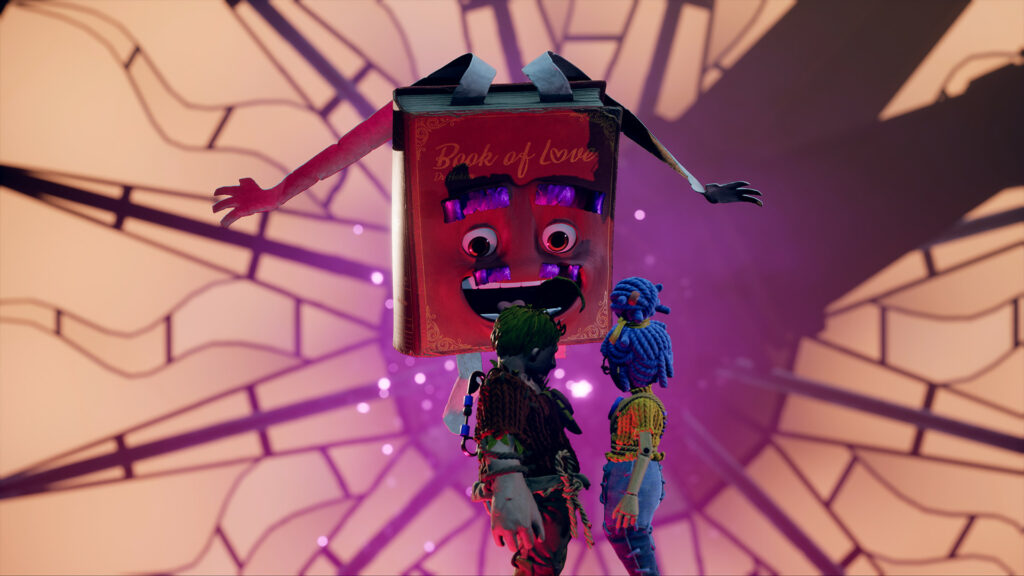
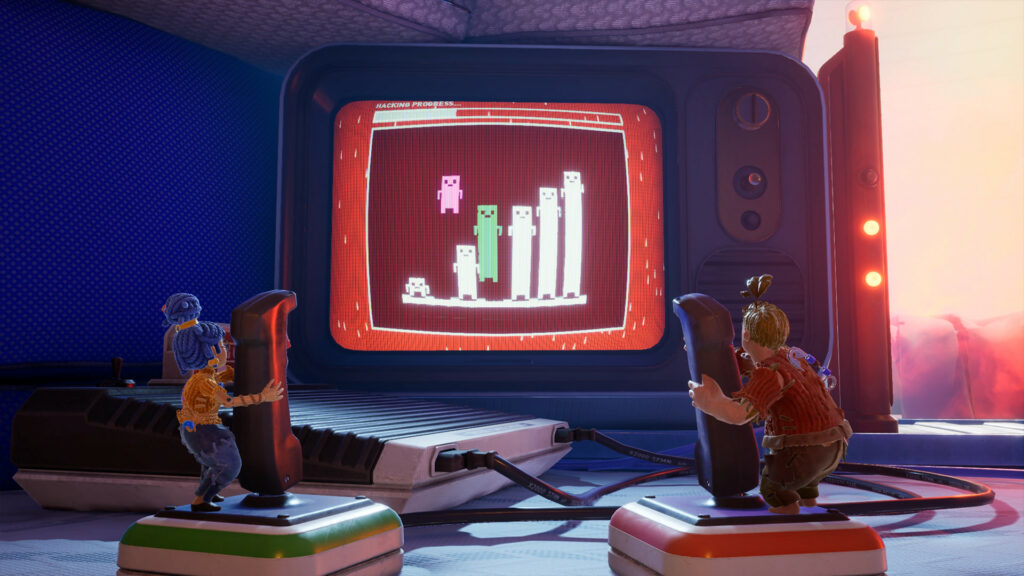
Video games – as often greatly misunderstood and underappreciated by non-gamers, they mean everything to me. In my 19 years on this planet, my fondest life memories might just have been playing games with friends. Games connect people like no other experience. However, despite greatly treasuring multiplayer experiences, I have always categorized them differently from single-player experiences like Elden Ring or Persona 4. These games are meant to be immersive experiences for me to sink into, completely different from the multiplayer games I would use as a means of socializing and bonding. That’s why I never could have imagined the weight that Hazelights Studio’s “It Takes Two” could have on the industry, only proven by their accolades and winning Game of the Year in 2021. “It Takes Two” has the quality and immersion of the best single player franchises, but serves as so much more between you and your partner.

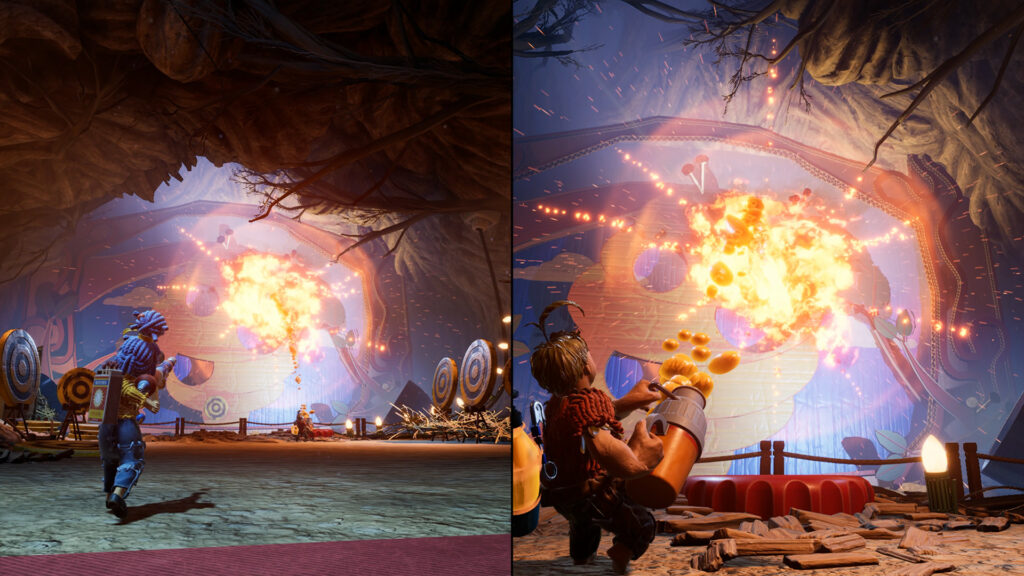
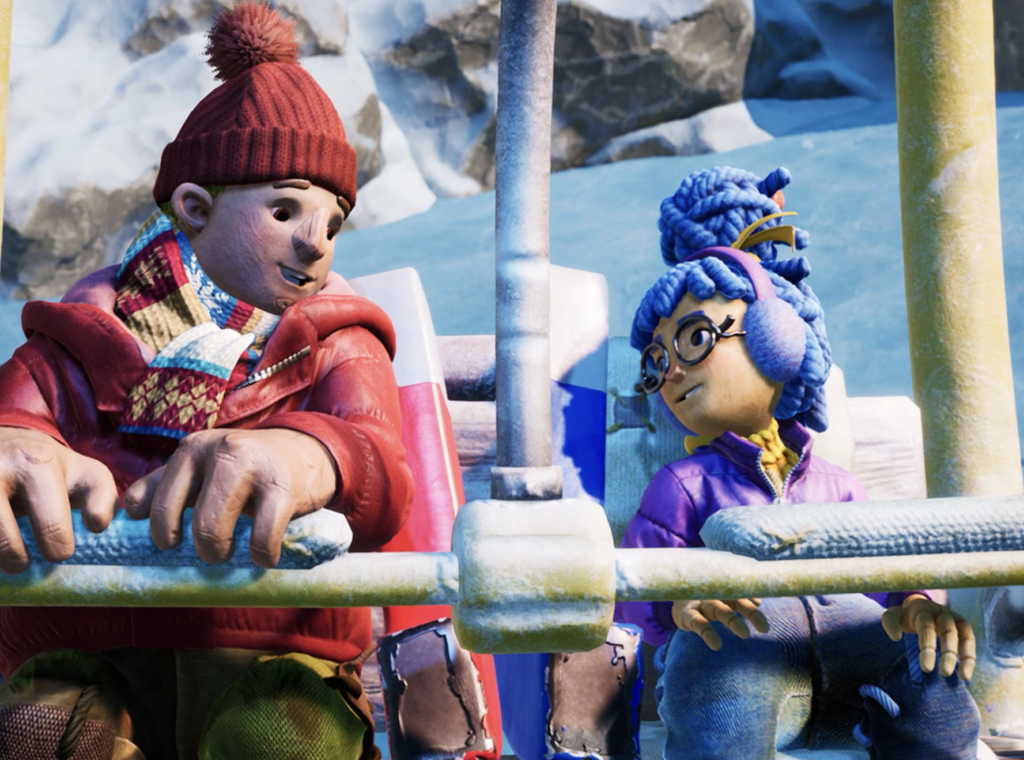
“It Takes Two” is a story that stars a small family of three: the father and husband – Cody, the mother and wife – May, and their precious daughter – Rose. Cody and May have recently decided to file for divorce. This takes a toll on the couple, but especially their daughter, who just wants to see her parents get along again. Her teardrops enchant the dolls and give them life, the minds of Cody and May. “It Takes Two” is a game that requires exactly two people to play the game, no more, no less. You and your partner solve puzzles as Rose’s handmade dolls in order to turn back into real humans again. On this journey, you and your partner slowly uncover the reasons behind Cody and May filing for divorce with every chapter you clear. The gameplay requires you to cooperate, but it also nudges you subconsciously to trust and rely on each other. It all ties back to the name of the game: “It Takes Two.”

Relationships are hard. Anyone who has been in one knows they are, and I’m sure everyone has heard that the number one reason why relationships don’t work out is a lack of communication. “It Takes Two” forces Cody and May to help each other to not necessarily re-ignite their love, but to nudge them into talking about their relationship. Of course this also prompts the couple holding the controllers to think about their own relationship, regardless of whether it’s rough, good, or even amazing. I don’t think this is a game you can truly feel the weight of unless you play it with your partner.

As my girlfriend and I experienced Cody and May’s story, we reflected on ourselves and were inspired to rely on each other more, to give ourselves more “us” time, to apologize for things we never got to, and to ultimately let the other person know they mattered. Maybe playing other games with her is good fun, but witnessing Cody and May’s story really moved us. Their story is one where you can gradually see that they clearly loved each other, but lost the strength they needed to tell themselves that they can make it work. I wish I could do the feelings the game invokes in you justice, but it really is something you have to experience, not read or listen to.

P.S. It’s actually my girlfriend’s 19th birthday as of writing this! So a special shoutout to her. I am forever grateful for her playing games with me.

Mid Term

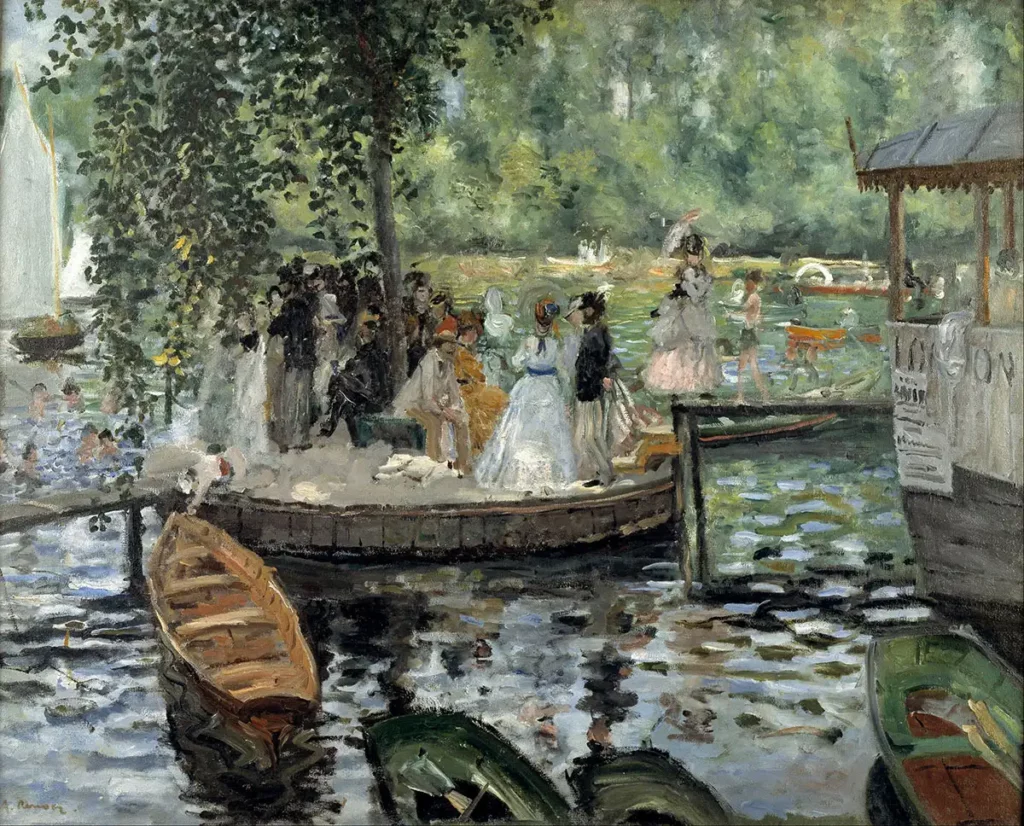
Whenever I’m in a museum I notice myself looking for a specific type of art; Impressionism paintings. 

I never knew what to call what I look for, but when I find it I know. And I can look for so long; admiring the little details up close that look like weird colored blobs, the expressions on the faces, the wind on the trees, the movement of water, or the depiction of humans doing human things. They all tell a story; not a political one, but a life like story. Like a scene that you see in the real world recreated. That makes you feel good and in awe. They’re not trying to paint a reflection of real life, but an impression of it. To me its like romanticizing our reality.  

When I see these paintings I don’t see just a static image. In my head it moves (not a hallucination), there’s a narrative with characters and backgrounds and conversations, a life, a story to be told. I especially love when there’s a lot of details. Since the more you look the more you see. This art style includes quick brush strokes, and soft blended edges, which I find visually appealing and makes certain details be easily overlooked. It’s as if the more attention and time your willing to give the more it will unfold. You might be thinking how can an old painting by an old dead man move you. But it does. What I see, hear, and imagine when I admire them, is created. Its not there.

I don’t have a favorite painter, or a favorite piece. I don’t have favorites for anything, I’ve never though of why this is, but maybe that’s the case because choosing a favorite is some type of commitment I don’t want. It’s a limitation, it limits me to preferring one thing over another. Not having a “one” allows me to choose a different favorite based on how I feel, what I want to feel and so on, without having the burden to label it. So no, I’m not choosing a specific creative work that moves me because there is none. This art style doesn’t move me in a magical, spiritual way. I think its beautiful. And beauty inspires me, stories, people, and nature do as-well and that’s what I think all Impressionism works have in common. 

However, what I like is not limited to Impressionism, some works of realism and expressionism move me. Because its not the style or the painter that makes me pause and truly attempt to look and understand the painting, the painting itself does. I like them because they aren’t loud, obnoxious or colorful. They’re subtle, detailed and poetic. That is what draws my attention. 

Midterm

To talk about my chosen art piece I have to give a quick backstory about my life. In 2011, Egyptians started a revolution to demand the end of Hosni Mubarak’s 30-year presidency, which was notoriously marked by corruption and political oppression. I was 6 years old at the time and had no understanding of the political situation whatsoever. However what I saw was that in the span of a few days, our lives were completely turned upside down; we went from living a relatively normal life to hearing the sounds of gunshots, helicopters and protesters’ chants on a regular basis. My brothers and I weren’t allowed to leave our apartment for weeks because the streets weren’t safe anymore; protesters were sprayed with teargas and shot, buildings were bombed, innocent people were killed and a countrywide curfew was imposed. I recall going to bed every day in fear that things will only keep getting worse. It was during that time that I sought solace in music, but instead of listening to nursery rhymes like a normal 6 year old, I started listening to protest songs, even though I didn’t really understand their meaning. This was what sparked my passion for music.

A lot of protestors and underground artists made music to raise awareness about the situation and express their feelings during the revolution. As I grew up, I was mainly captivated by the narrative of the music, but there is one song in particular I felt deeply connected to and it’s what I chose to center my midterm paper around. 

“Sout el Horeya” by Cairokee (The Voice of freedom) was one of the very first songs made during the revolution. I am not so sure why I am so attached to this song, but it always stirs a variety of feelings inside me. It’s been 13 years since the revolution but whenever I listen to this song, I get goosebumps and my heart rate elevates. I feel my lungs constrict and my throat close up. I feel rage and anger about all the brutality, oppression and discrimination Egyptians faced. I feel empowered and inspired that we have each other’s backs. I feel happy and proud that Egyptians were able to overrule the oppressor, but I also feel disappointed and heartbroken about all the hopes and dreams that were crushed and have faded into distant memories since then. We had so much hope for our future rulers and yet, the situation right now is considered worse than prior to the revolution and there’s nothing we can do about it. The song reminds me of all the fear, uncertainty and confusion I had as a kid during the revolution, it seemed like it was never ending, especially not understanding what was going on. It reminds me of how small and fragile I felt as a kid in Egypt at the time and how in a way, my life has been permanently affected by it. It seems so long ago and yet I remember it like it was yesterday. Listening to the song, I am reminded of the happiness and pride I saw in my parent’s eyes the day Hosni Mubarak stepped down, yet the song leaves me heavy-hearted for all the people that lost their lives fighting for a better future for our generation, and yet we still suffer. I’m always left feeling unsettled and queasy after listening to this one song. I am not sure if it is the lyrics, the videos, or the memories associated with it that hit me the most, but I am so moved by the song every time I hear it.

Thoughts about Harshini’s visit

One thing I liked about Harshini is that she started off the same way most of us did. She didn’t start studying her art when she was little and she didn’t get her education at a specialized school in the arts and yet she ended up doing all these super cool things. It makes it seem more realistic and achievable for us too. I really liked her capstone project where she projected on fog. Additionally, I admire her for taking a stand, accepting the consequences of it and nevertheless still achieving great things despite the difficulties of it. She’s not shaping her opinions based on what others think and I think that this is amazing.

Thoughts on Harshini  Visit

I really admire Harshini for her confidence in her artwork. All of her pieces are fascinating, but her capstone project, in particular, was truly astounding. It was a vivid showcase of her skill. Additionally, I appreciate her unique perspective and the way she carries herself. She clearly knows what she is doing and what she needs to do. Lastly, I value her openness and the advice she shared with us. Even though I am not an art major, I found her guidance helpful.