I found the author’s exploration of these common struggles among artists to be enlightening. He identifies two primary fears: the fear of not being a genuine artist and the fear of pursuing perfection. These fears often stem from unrealistic expectations and comparisons, which can hinder artistic creativity and productivity.
One fear that resonates with most artists is the fear of not being a real artist. Even I’ve often questioned the authenticity of my own work and compared it to the works of others and found myself in self-doubt. The author suggests a practical solution to combat this fear by producing a large volume of work and learning from the mistakes made along the way. This approach allows artists to focus on their growth rather than being fixated on the notion of being “talented.” I agree with him that excessive worry about talent only drains our mental energy and prevents us from creating genuine art.
The pursuit of perfection is another fear that many artists face. The author argues that striving for flawlessness denies our humanity, as it overlooks the value of making mistakes and learning from them. Instead, he advocates for a mindset that values quantity over fixating on creating a single masterpiece. By consistently producing art, artists can make tangible progress and improvement in their work. This idea struck a chord with me because I often find myself getting stuck in the quest for perfection, which leads to self-doubt and procrastination. Embracing imperfections and seeing them as opportunities for growth is a valuable lesson I will take away from this chapter.
While I agree with most of the author’s insights, I did have some reservations about solely basing expectations on previous work. While it is essential to learn from our past creations, I believe that seeking new influences and perspectives can foster creativity and lateral thinking. Relying solely on past work may limit our potential for innovation and hinder the exploration of new artistic directions.
Having lived in Serbia for some time and considering myself a traveler, I never really went to neighboring countries because they were “too close for a vacation” and reminded me too much of what Serbia offers. Because of that, I always put Vienna, Austria, on a waiting list for my travel plans; Until Sophomore fall break, I decided it was time as I was missing the European cold and the lifestyle there. So I convinced my friends, and we booked the tickets to Vienna; on the plane there, all I could think about was all the museums the city has to offer, all the parks, and the art communities that spend time there, and I knew I would enjoy myself in the next ten days.
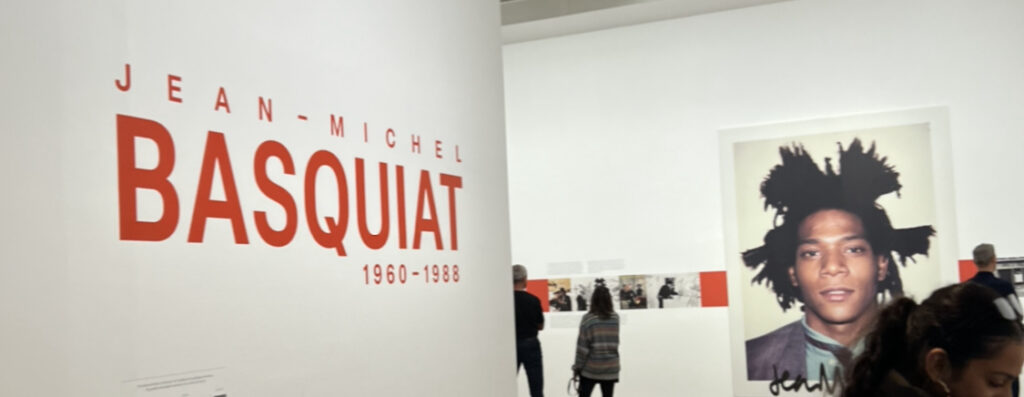
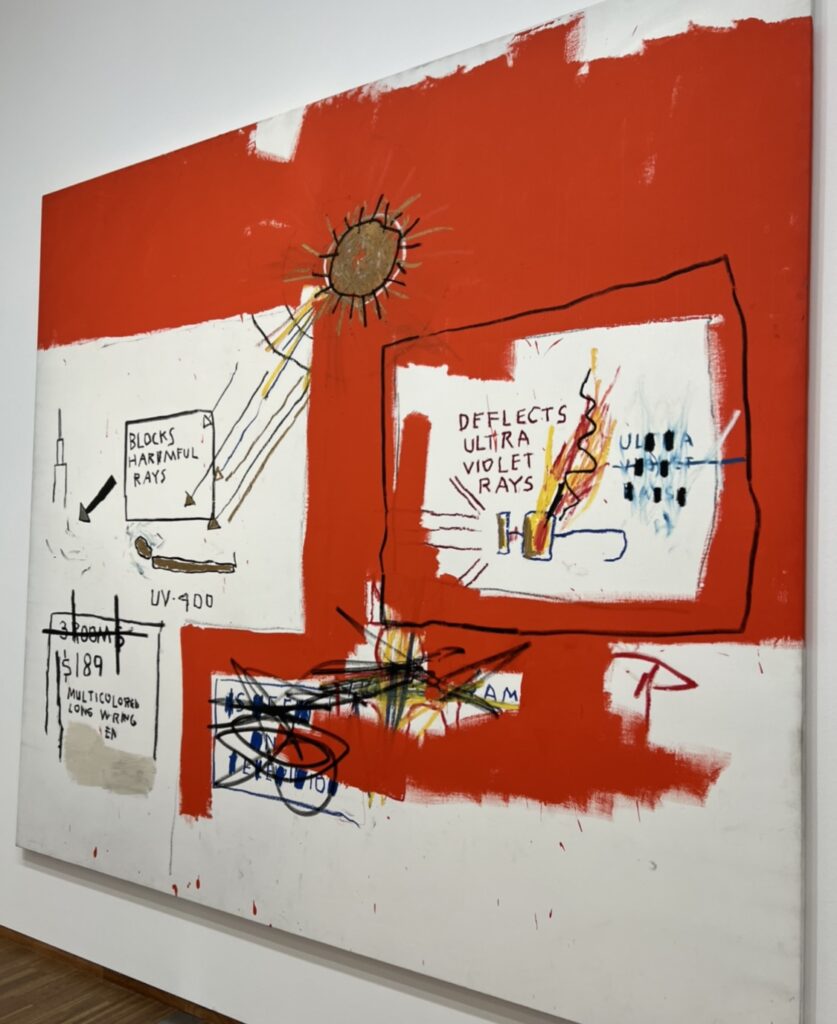
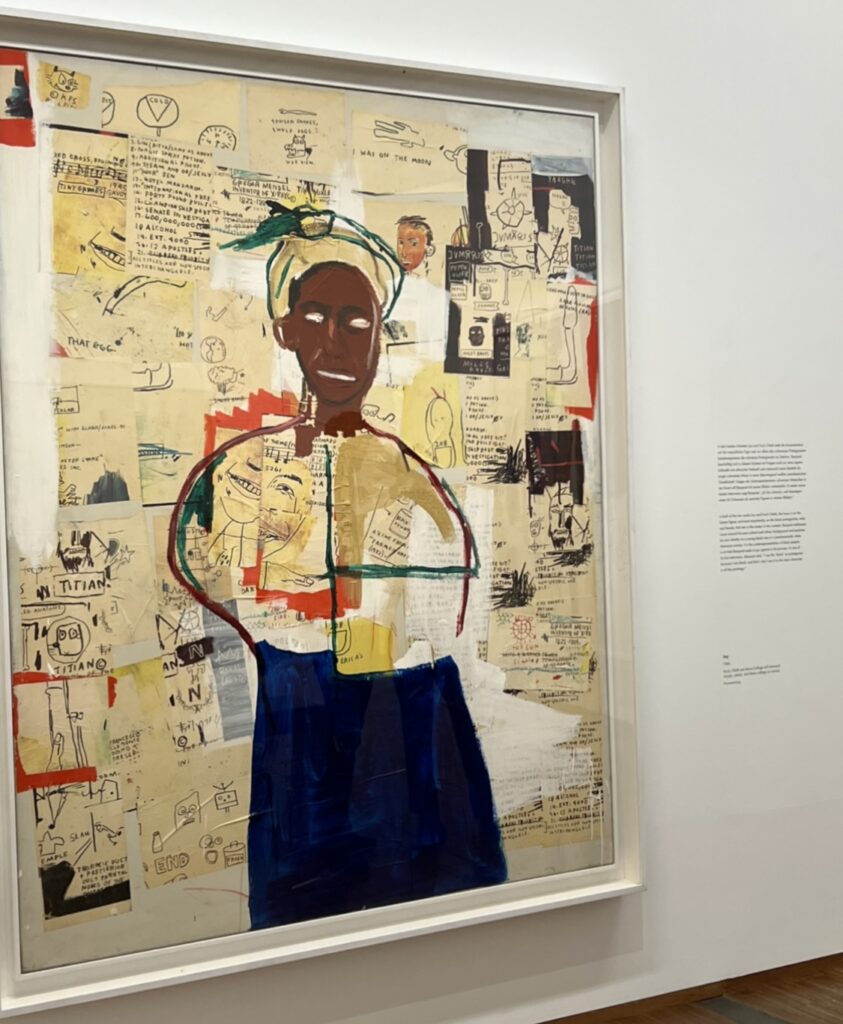
On my first day in Vienna, I decided to go to the Albertina Museum, as that one was the most recommended by everyone that had already been to this city before; When I walked into the museum, I understood why my boss told me “If you don’t go to Albertina, it’s like you didn’t see the heart of the art world in Vienna” when I walked into the museum I saw pieces by Claude Monet, Pablo Picasso, Paul Cezanne, and many more renowned artists. But the piece that stood out to me was not a piece by any of them; it was a piece(or rather the entire art show) by the artist Jean Michael Basquiat. The day we reached Vienna was the opening of a part of the Albertina Museum with a whole collection of pieces by him entitled “Basquiat: The Retrospective,” which precisely encapsulated fifty major works from renowned public and private collections where we could see his one of a kind visual language and with that decode the substance behind his artistic ideas; they also had a room that played a short documentary film about him, explaining the background and core moments of his life that shaped him to be the artist he once was.
I thought to myself, how did I never hear of this artist? I kept hearing celebrities like him, and Andy Warhol mentored him at some point, but who is he? Why is everyone praising him so much? I started to walk around the gallery, and I realized how much of an impact his pieces are having on me, and when I wondered why, I realized that it was because of how abstract his works are, but they somehow made sense to me in my way. As I walked around and inspected his pieces, I often associated them with “doodles” and those pieces of paper you draw random sketches on in class when you are deconcentrated. But it made so much sense; he struggled with many mental health issues and would resort to art to release it and deal with his drug addiction and complicated past. And somehow, you could see all of that in his pieces, maybe not how he intended, because I couldn’t relate to issues close to his heart as I am different. But the general idea caught my attention and made me stare at his work for a long time. One thing that moved me is that the more I would look at the art piece, the more I would see some details, sometimes some words, sometimes an unfinished game of tic tac toe in the left top corner; these small details showed me that he was using lateral thinking and applying all these shifts of an idea on one canvas and the final product would be his entire thought process rather than one singular thing depicted, which moved me because in a way I felt like I was in his brain, or that the mix of thoughts and worries in my brain is human and normal.
I ended up coming two more times that week to revisit his gallery and spend time there, look at some pieces I liked closely, and admire the mix of colors he would use; I was moved by the randomness of choice of the colors and how his overall theme was very bold colors. After I came back home from the break, I couldn’t stop thinking about how much I valued him as an artist and how all he cared about was creating pieces that spoke to him, which moved me because until then, all I could think of when it came to art, is that when you display it, it is meant to send a message to the people coming to see it. Still, Basquiat’s original idea was to make art; it was that simple, and because of that, he didn’t feel restricted or cared too much about if people could make sense of his pieces, which is the confidence I felt like I always wanted and needed to progress further in my artistic expression. A few months later, I realized how much he had moved me, and I decided to tattoo his signature (the crown) to honor him and show all the impact his pieces, his art, his story, his journey, and his style have had on me.
The advise in this chapter is timeless. I believe we’ve heard some part of versions of this over the years in no matter what field we are in, creative or otherwise.
Having doubts about our self, our talents, and our work can sometimes be constructive. However for many (including myself), it is easy to let these thoughts affect the way we do our work. This sometimes leads to work that is not truly our own, is less ambitious or bold, or is of lower quality than if we had just followed our instincts.
The most potent of the fears talked about in the chapter, is perfection. To strive for perfect is to strive for nothing, since perfect does not exist, is subjective and is boring. Often, when seeking perfection we can fall into analysis paralysis, where they spend a great deal of time planning and theorizing how they should carve every detail before actually making the project. We forget that we can make changes after we’re done, and that new ideas and realizations emerge as a part of the making process. This compulsion to try to make our first attempt our final, actually ends up creating a lower quality piece. It also takes more time and is a lot less fun than just trying again and again, making changes along the way.
lots of lasers, nature/science -> data -> art, creating a conversation around complex and interesting phenomenon, computer science, minimum spanning trees, looking to the future.
Throughout the years, the concept of cinematography has continued to fascinate me every day. The art of cinema can manipulate minds in mysterious ways, as it urges the audience to feel with each films’ characters, whether they are delighted, devastated, or even perplexed. One of the creative films that move me is Damien Chazelle’s film “Whiplash”. As simple as it may seem on a screen, films tend to adhere to a specific set of laws that help entertain the audience. For instance, some films contain an archplot, which is a story built around an active protagonist, and others may contain an antiplot. An antiplot is a plot that throws away all the main rules of storytelling and twists each story into its own, as it ridicules the very idea of formal principles. The film “Whiplash” essentially fascinates me as I feel like it contains both an archplot and an antiplot at the same time. The archplot is Andrew’s (the drummer’s) story and the trials and tribulations that he faces at the hands of his mentor. The movie then doesn’t follow a traditional storytelling method, as it feels almost backward but still moves in a forward fashion simultaneously.
In addition, Chazelle studies the psychology of color in films before deciding on the scene of the set. The use of color as a scene to adhere to the character portrays a specific image in the viewer’s mind for the rest of the film. I believe his great amount of care and use of color is what fascinates and moves me throughout the film. For instance, he makes sense that the background or undertone of the scene is yellow, orange, or green. These undertones change and develop throughout the film. For instance, the color orange may be used to show courage, confidence, friendliness, and success, but at the same time, it may show ignorance or sluggishness. An orange undertone is found many times throughout the film to represent the constant changes of emotions that Andrew goes through while facing immense amounts of pressure from himself and his mentor. We can view the fears that Andrew, as an artist, faces such as fears of self-doubt and his worth. Chazelle tends to portray the image of the “starving artist” in a couple of his films. The fears and emotions that these artists and creators face allow viewers and individuals to connect with Chazelle’s characters in a profound way.
Chazelle also uses a specific type of technique to film the changing scenes throughout the ending. This technique is called a whip pan or swish pan, and it is an intentional camera rotation on the x-axis that is so fast it creates an often disorienting blur effect. He also uses this technique in several other of his notorious films such as La La Land and Babylon. Throughout the film Whiplash, Chazelle uses several schematics such as changes in lighting, sounds, music, and color to sway the audience in a different direction to feel with the main character and react to his emotions.
The art of cinematography captivates me in many ways, as it provides an endless number of new topics and ideas to learn about, whether it be the angles of a camera or the color scheme of a film. Damien Chazelle’s film “Whiplash” has specific techniques and well-thought-through tactics that move me throughout the film. Additionally, some films tend to just have a simple and overlying feeling which allows you to flow with the film. Some of these cannot be explained why, but it’s more of a superficial level; for instance, through similar emotions and experiences.
In Chapter 3, the authors talk about the different types of fears that the authors encounter and some tactics to get over the fears. Bayles and Orlando point out that artists are constantly faced with self-doubt and fear of not being enough. They highlight the paradox that while fear is a natural part of the creative process, it can also hinder artistic expression if not managed effectively.
Additionally, they discuss the topic of “blank canvas syndrome”, which is faced when artists run out of ideas and are blocked for a period of time. Usually, artists do so as they focus on the final product of their creation and not on the creating process. I believe that if we were to enjoy and focus more throughout creating, then the final outcome would always be good enough for us.
The authors also mention several other topics such as fear of rejection, fear of not living up to your own potential, and the pressure to gain recognition. Additionally, they emphasize that fear is part of the artistic journey and that artists must confront and embrace their fears to continue evolving. Artists and creators have to push through their fears to begin their creating process, regardless of what they think of themselves or what others may think of them.
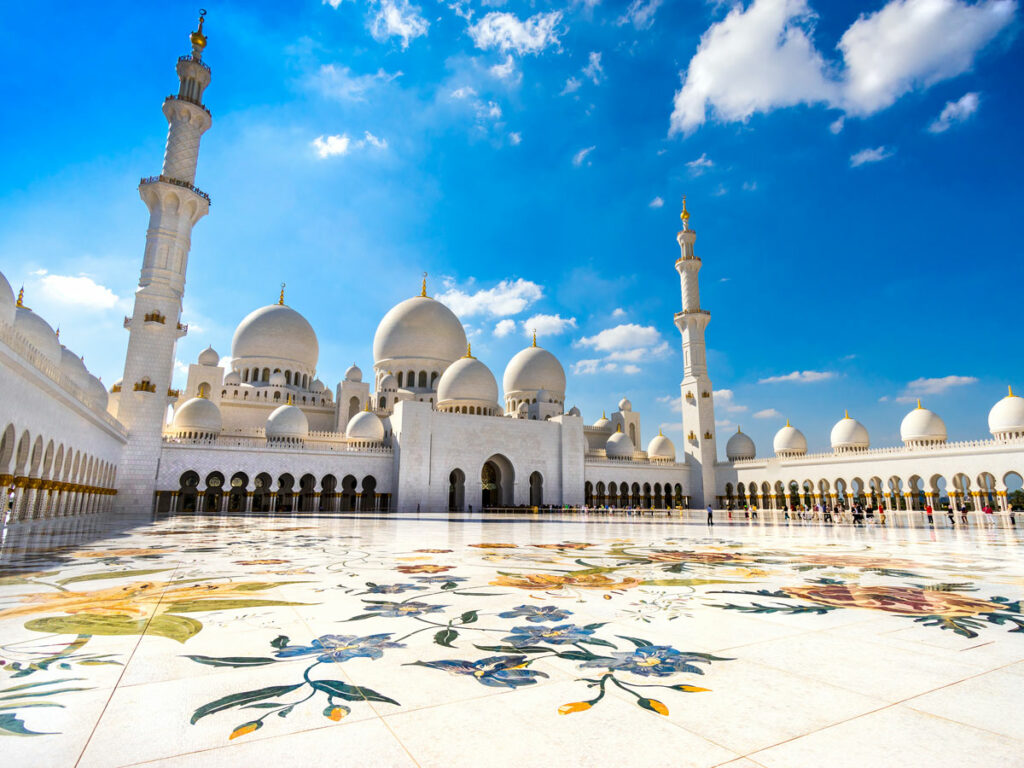
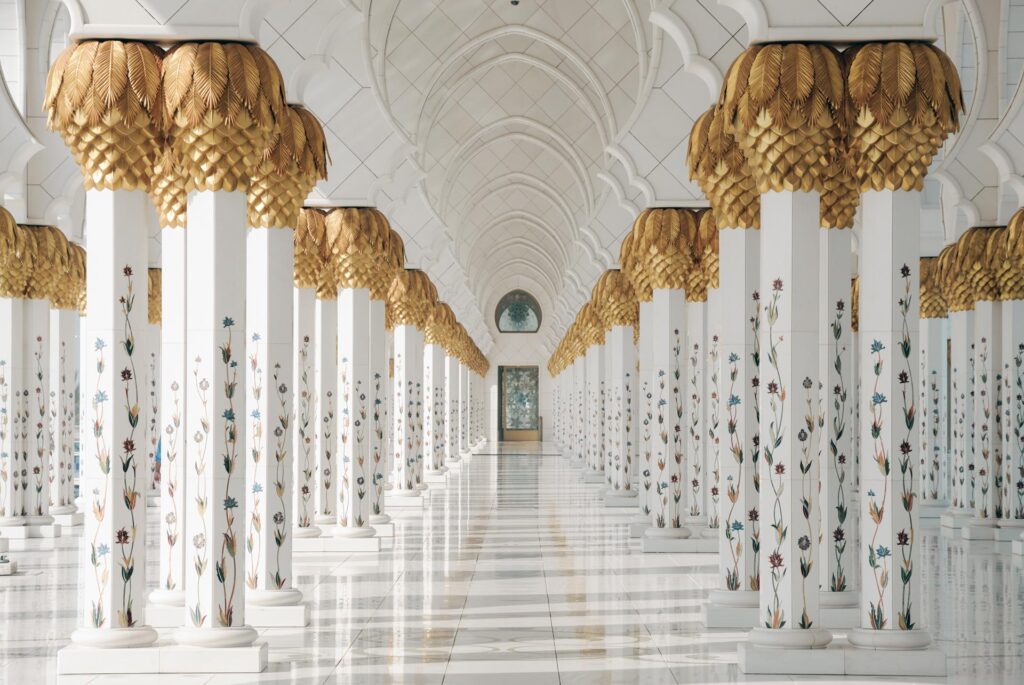
For this assignment, I picked the Sheikh Zayed mosque as my art piece. Although it may not be a conventional piece of art such as a painting, I find it to have moved me deeply just as any other piece of art would. I have lived in Abu Dhabi my entire life, and this mosque has served as my go-to for nearly all significant religious occasions.
The grave of the late Sheikh Zayed Al Nahyan resides within the gardens of the mosque. In my opinion, he was a great leader who pioneered the development of the UAE. He is a man I deeply respect, so having his resting place within the mosque makes it have an important place in my heart.
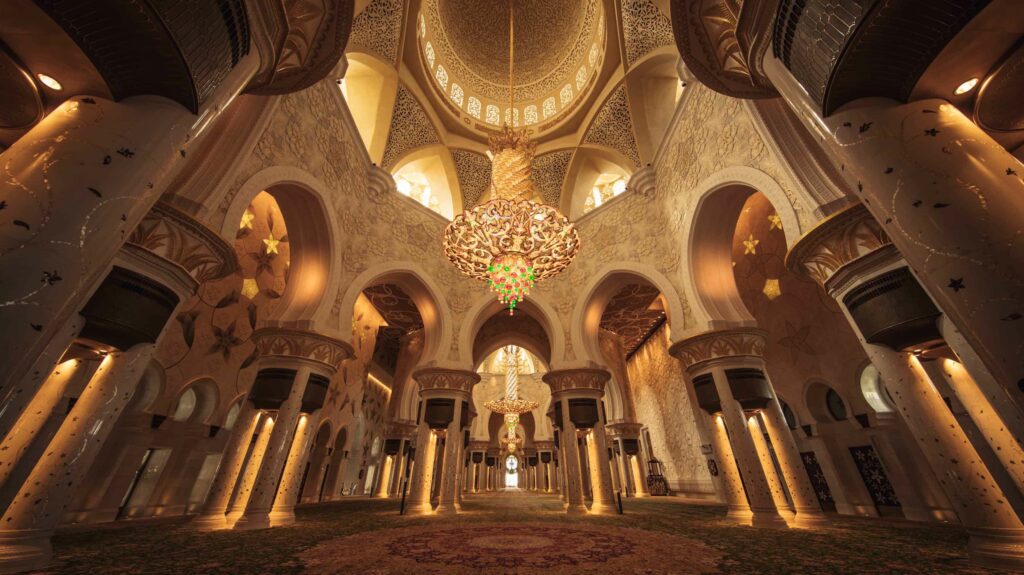
Sheikh Zayed Mosque in Abu Dhabi, United Arab Emirates
One of the reasons the mosque has had an impact on me is because of the sheer beauty of its interior and exterior. The pristine white marble on the floors and walls creates a sense of purity and tranquillity. Coupled with this, the golden palm and colourful flower designs create a unique visual image of elegance and nature coming together. This results in a profound sense of calm enveloping me as I enter the mosque. It’s almost as if I’ve entered another world where there are no problems and only peace.
As I enter the mosque, I am greeted by massive crystal chandeliers, a wall covered in the names of God, and the lingering scent of incense. The Imam of the mosque is always a clear and expressive reciter, I find it easy to enter a meditative state. When put together, these elements contribute to an atmosphere of utter serenity and devotion.
It is not only the architecture that has made an impression on me, my personal connection with the mosque stems from my own journey of self-discovery and faith. The Sheikh Zayed Mosque holds personal significance for me because of the memories I’ve made within its sacred walls. I recall many different years of me praying the Ramadan and Eid prayers there. This mosque has been a constant presence in my spiritual development from the beginning to the present day, always accompanying me on my journey of self-development.
When I see this mosque in the distance while driving by, I feel at home, not just physically, but also emotionally. I think that the many memories I have had in the mosque have contributed to this feeling of attachment and belonging to this place. In addition, many people travel long distances from all around the world to visit this magnificent mosque; I am grateful for the ability to visit this mosque at any time because I live only ten minutes away.
The Sheikh Zayed Mosque moves me deeply for a variety of reasons, including its design and architecture, my personal memories of the mosque, and its cultural significance. It is a testament to the harmonious blend of art and religion, and it has left a lasting mark on my soul.
I resonated with all the fear described in the chapter and believed that we should all learn to learn from our works. I also think that all the fears stems from our lack of confidence for the self. The masters are also humans, and hence they had feel the same struggles as well. Moreover, it is very easy to believe that somebody’s work involves talent and “magic” that you do not understand because their thought process are different or they have had different experiences in life. It is always helpful to embrace your uniqueness. I also noticed that this book is different from Lateral Thinking in that the latter sort of instruct us how to be creative while Art & Fear encourages us to produce instinctively and discover the best work.
All the artists working in the collective have some background in science: they use scientific knowledge, research, phenomena and concepts as inspiration for their work
They’re using science as a creative material
They work with projections, audio visual set ups and other installations among other types of work
They play on different scales to make big events personal for audience to help them develop a stronger and direct connection with the work
The reason they like science as foundation for their art is because although it is very real, the product seems abstract, giving it a very artistic touch
Loved all their projects from the GW170817 which stands for Gravitational Waves August 17,2017 which used pre-recorded 30 minute data to generate visuals , solaris which uses real time data and creates sound from touch data, and Satellarium which uses satellites
Working as a collective helps because when we explain to each other, the information bounces back in a different way as it could trigger something else in their mind and we could get new ideas. Also if working alone, could get stuck on your own vision but with a group, they can confront you early on so you don’t get stuck inside your interpretation solely.
Also compromising is very important in a collective effort because getting specific would probably close doors than open them.
Since you have to present your work to others, you have to think of people you’re going to present to so opinion of your teammates also matters when they first see your work because they’re the audience at that point
Sometimes even using simple techniques works, no need to overcomplicate things
The writer eloquently emphasizes the profound role of imperfection in art, acting as a catalyst for self-discovery and creative exploration. I agree that unreal expectations and fears often impede artists’ progress. The essence of art truly lies in embracing imperfection, allowing for continuous learning, evolution, and refinement of one’s craft. Striving for unattainable perfection stifles genuine exploration and hampers the willingness to take risks. Instead, by embracing imperfections, artists can foster experimentation, growth, and the freedom to make mistakes that ultimately lead to breakthroughs.
I can relate to this notion from my personal experience. When faced with writing my study abroad application essay, I initially felt overwhelmed by the pressure to come up with a “genius” idea. However, I realized that this pursuit of perfection was hindering my progress. In a last-minute decision, I set aside the desire for flawlessness and simply began writing whatever came to mind. Surprisingly, this approach allowed me to produce a genuine and compelling essay, rather than being paralyzed by the pursuit of an unattainable ideal.
The writer also highlights the fears of inadequacy and self-doubt that artists often experience, especially when comparing themselves to others. I firmly believe that embracing one’s unique voice and focusing on personal creative processes are essential to transcend these fears. It is crucial to recognize that there is no magical ingredient possessed exclusively by other artists. While talent may provide a head start, it is sustained growth, dedication, and relentless development that truly shape an artist’s journey. Success in art is not bestowed upon a select few; it is the outcome of perseverance and hard work.
The notion that artworks hold valuable lessons resonates deeply with me. By objectively examining our own work, we gain valuable insights and identify areas for improvement. Engaging with our art and reflecting on the process enables us to uncover new directions and refine our techniques. This concept aligns seamlessly with the principles of lateral thinking, which we have explored in class.