Midterm Paper – Basquiat: The Retrospective

Having lived in Serbia for some time and considering myself a traveler, I never really went to neighboring countries because they were “too close for a vacation” and reminded me too much of what Serbia offers. Because of that, I always put Vienna, Austria, on a waiting list for my travel plans; Until Sophomore fall break, I decided it was time as I was missing the European cold and the lifestyle there. So I convinced my friends, and we booked the tickets to Vienna; on the plane there, all I could think about was all the museums the city has to offer, all the parks, and the art communities that spend time there, and I knew I would enjoy myself in the next ten days. 

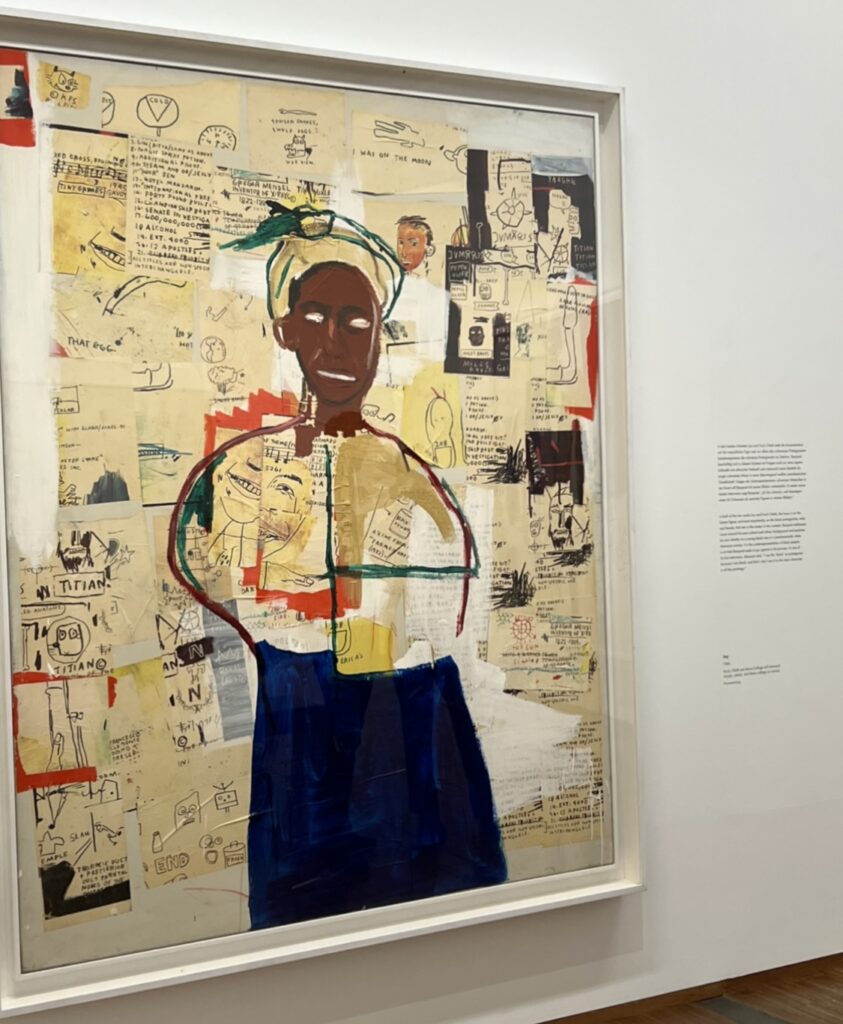
On my first day in Vienna, I decided to go to the Albertina Museum, as that one was the most recommended by everyone that had already been to this city before; When I walked into the museum, I understood why my boss told me “If you don’t go to Albertina, it’s like you didn’t see the heart of the art world in Vienna” when I walked into the museum  I saw pieces by Claude Monet, Pablo Picasso, Paul Cezanne, and many more renowned artists. But the piece that stood out to me was not a piece by any of them; it was a piece(or rather the entire art show) by the artist Jean Michael Basquiat. The day we reached Vienna was the opening of a part of the Albertina Museum with a whole collection of pieces by him entitled “Basquiat: The Retrospective,” which precisely encapsulated fifty major works from renowned public and private collections where we could see his one of a kind visual language and with that decode the substance behind his artistic ideas; they also had a room that played a short documentary film about him, explaining the background and core moments of his life that shaped him to be the artist he once was. 
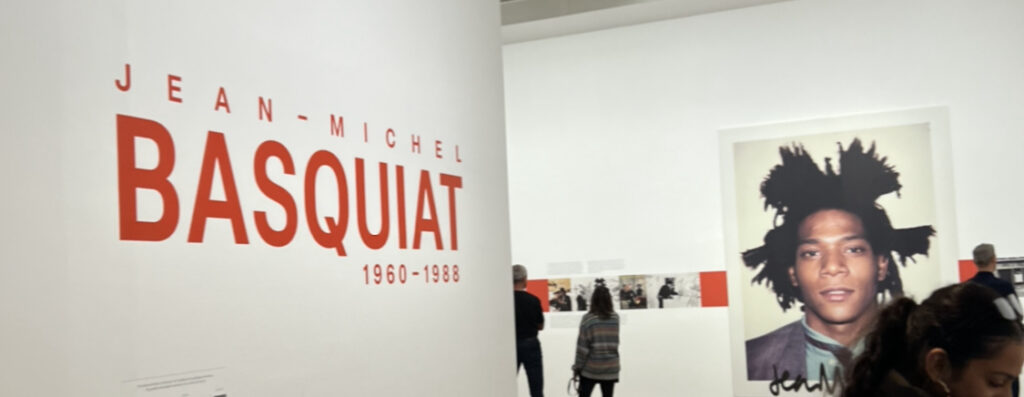
I thought to myself, how did I never hear of this artist? I kept hearing celebrities like him, and Andy Warhol mentored him at some point, but who is he? Why is everyone praising him so much? I started to walk around the gallery, and I realized how much of an impact his pieces are having on me, and when I wondered why, I realized that it was because of how abstract his works are, but they somehow made sense to me in my way. As I walked around and inspected his pieces, I often associated them with “doodles” and those pieces of paper you draw random sketches on in class when you are deconcentrated. But it made so much sense; he struggled with many mental health issues and would resort to art to release it and deal with his drug addiction and complicated past. And somehow, you could see all of that in his pieces, maybe not how he intended, because I couldn’t relate to issues close to his heart as I am different. But the general idea caught my attention and made me stare at his work for a long time. One thing that moved me is that the more I would look at the art piece, the more I would see some details, sometimes some words, sometimes an unfinished game of tic tac toe in the left top corner; these small details showed me that he was using lateral thinking and applying all these shifts of an idea on one canvas and the final product would be his entire thought process rather than one singular thing depicted, which moved me because in a way I felt like I was in his brain, or that the mix of thoughts and worries in my brain is human and normal. 
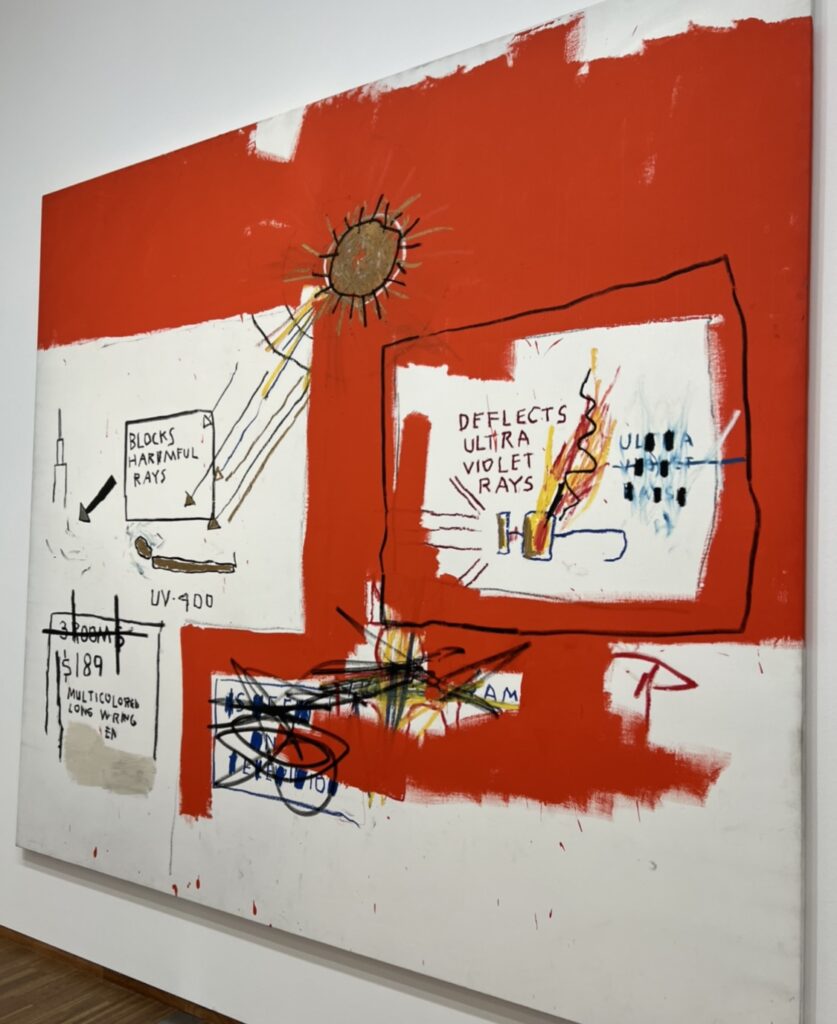
I ended up coming two more times that week to revisit his gallery and spend time there, look at some pieces I liked closely, and admire the mix of colors he would use; I was moved by the randomness of choice of the colors and how his overall theme was very bold colors. After I came back home from the break, I couldn’t stop thinking about how much I valued him as an artist and how all he cared about was creating pieces that spoke to him, which moved me because until then, all I could think of when it came to art, is that when you display it, it is meant to send a message to the people coming to see it. Still, Basquiat’s original idea was to make art; it was that simple, and because of that, he didn’t feel restricted or cared too much about if people could make sense of his pieces, which is the confidence I felt like I always wanted and needed to progress further in my artistic expression.  A few months later, I realized how much he had moved me, and I decided to tattoo his signature (the crown) to honor him and show all the impact his pieces, his art, his story, his journey, and his style have had on me. 

Creative project – Make Anything – Sara

I was so excited about this project because whenever we are given a theme and I come up with a making assignment through it, I tend to disregard some very fun or nice ideas. After all, they are so far reached from the theme. Therefore this would not be an issue here and now for this project.

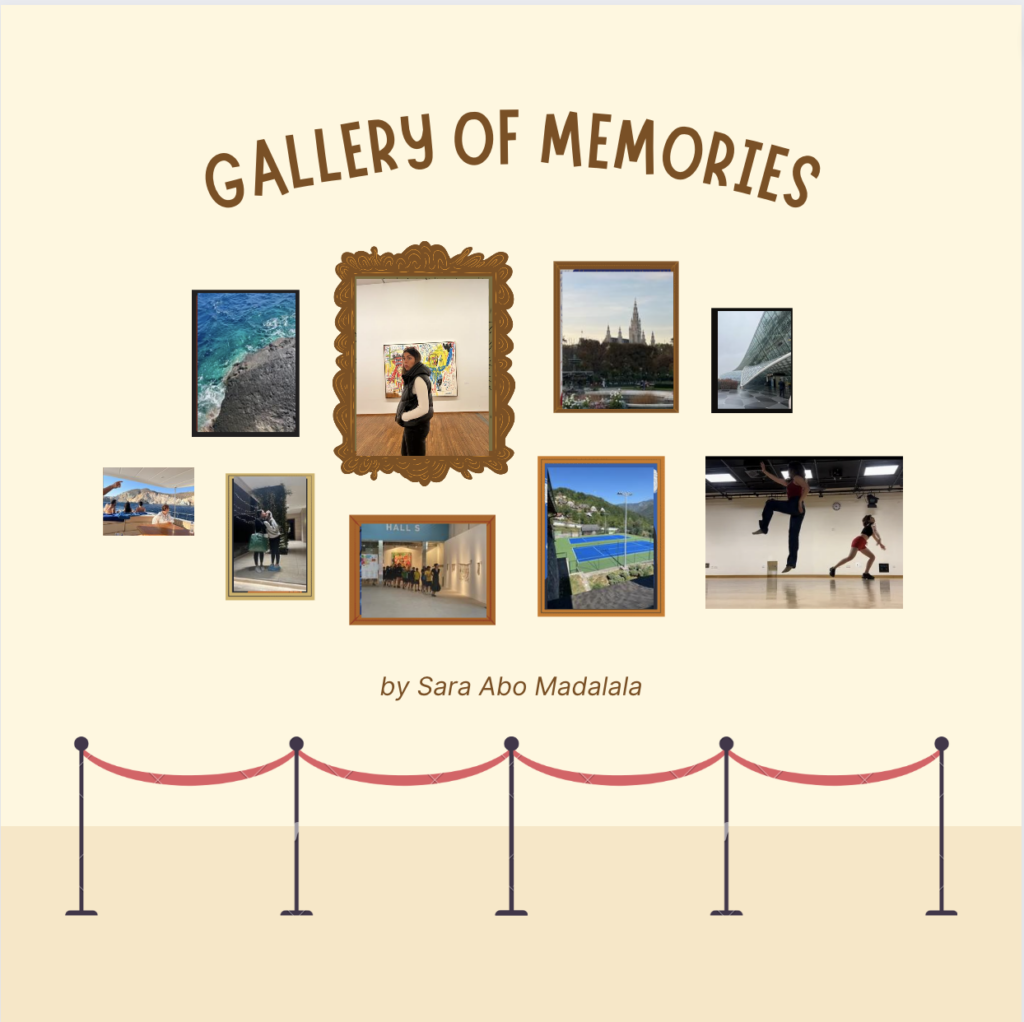
However, silly me thought that no constraints would be easy; narrowing down my ideas and deciding what I wanted to do for this project was hard. After much thought and excitement throughout yesterday, I decided I needed to stop overthinking and create what I wanted to create. I decided to create my photo gallery with some of my favorite photos with so many amazing stories behind them; I would call it the Gallery of Memories.

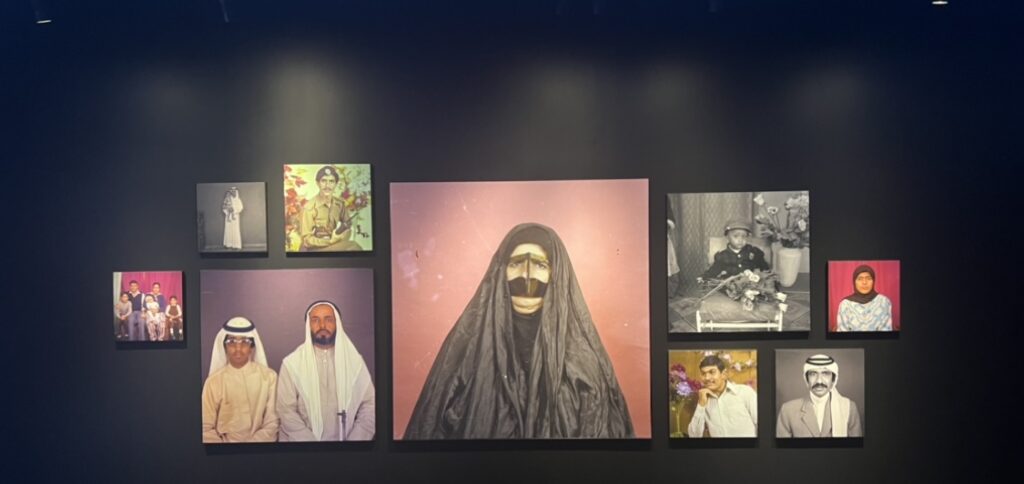
I got inspired by the showing of a photography exhibition in Manarat al Saadiyat called “The Shot,” which was a collection of archives of photos, if I remember correctly, one of the biggest archives of the MENA region. I worked at the showcasing and opening of the showing, and spending 8-10 hours looking at the images on display, I began to wonder about the story behind these photos and why the photographers felt compelled to take an image at that instance.

The quote “A picture is worth a thousand words” is not strange to us, which is why I enjoyed that exhibit, and I always daydreamed of showcasing random but meaningful captures for me.

My initial idea came from when I was browsing images on my phone in the subway, and I remembered this part of the showing:

I could feel the expression beaming through these images and stories being painted in front of me about these characters the more I looked at them, and I remembered how compelled I was to meet these people and ask them about the meaning of these photos, despite not having answers, I found a love for capturing moments and stories. This installation is what inspired this, which is my version of the exhibition:

Although these pictures might not make sense to most people, they make a lot of sense to me; despite how confusing the content of the image is or how simple it might look, these pictures have so much of who Sara is and things that have essentially shaped her to become the person she is today.

Game time: One of these pictures hung up on today’s display at the gallery of memories is the reason behind one of my tattoos, care to guess which photo?

Creative project – Sara

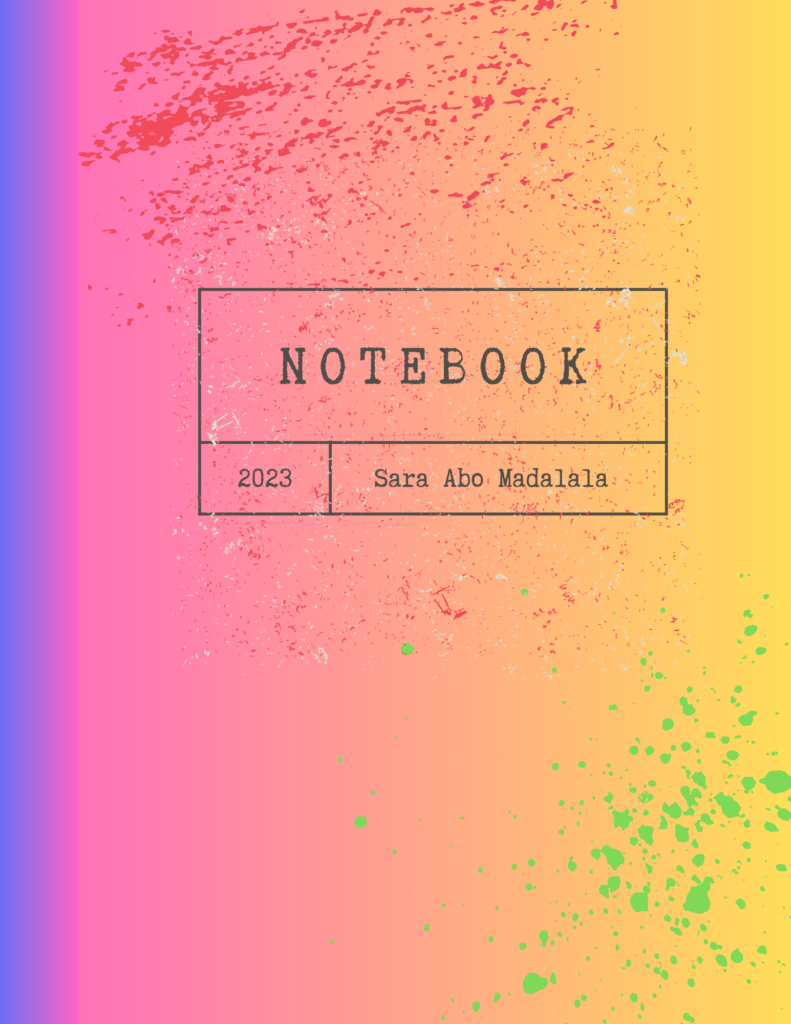
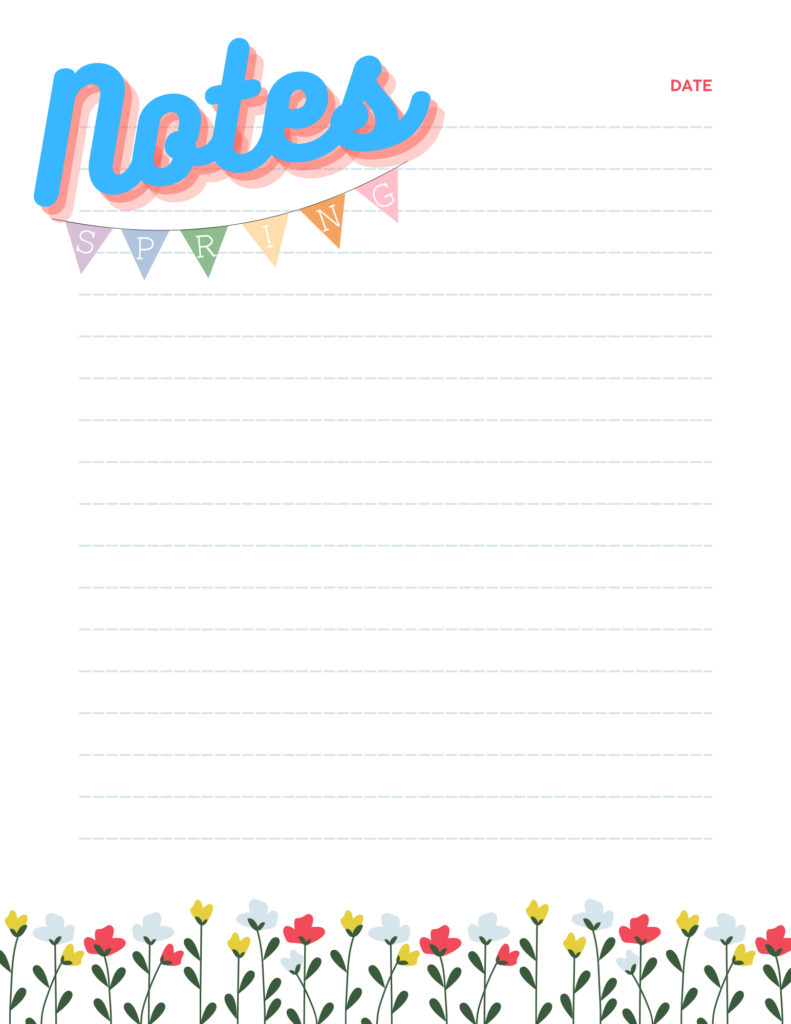
For this project, I was a bit stuck, I didn’t know what to create that would be needed to be created, but then I thought, why to create it for the world? Why do I not create something that I personally need? I struggle with dyslexia (sometimes it confusing and hard), but for some reason, colored papers during exams help me perform better (weird, I know, but stay with me), so I decided to create a notebook for notetaking that would have multicolored pages, something so simple, yet something that would vastly impact me and improve my life.

The way I wanted to design it went in a few ways; first, I thought maybe all the pages should be the same color. After I did that, I noticed it didn’t make the impact I wanted it to have because, in our notebooks, the pages are all the same color; white. Then I thought of using two colors and having them go in a pattern, but then I realized I would be more focused on correctly guessing the next color simply because I already knew it and wanted to be right. After many attempts to create this notebook, I decided it should have as many pale/pastel-colored pages as possible and some white pages at some point for a change.

While doing my creative project and seeing it come together, I was not satisfied with the results, so I decided to change it up and make each page of the notebook have a different theme to it and be able to “enter a new world” every time that I want to use a new page, which makes me feel like my initial idea/thought process was completed and fulfilled, this is the final product:

Art and Fear – The Nature of the Problem – Sara

“The best thing you can do is make art you care about – and lots of it!”(p.6)

I liked this chapter of the book, and the beginning of it makes me want to read the rest of the book. These few pages trying to tell us that someone must be an artist to believe in themselves and accept how much they have done regarding their art practice. The author shows us the importance of believing in yourself, putting effort and hard work into your pieces, and accepting the level of artist that you are at now.

One thing that stuck with me was that he mentioned how talent does not play as big of a role for an artist as we think. Still, it is rather a bonus inherited by chance, but what makes a good artist is his hard work, effort, expression, and determination. This is something I fully stand for, as I think many people give up at the beginning of their creative journeys because they do not “have what it takes to be an artist,” what they tend to misunderstand is that this “it” is effort, patience and lots of hard work, it’s the journey the artist goes on, how he progresses his work and his practice.

This chapter is a good way to start this book called “Art and Fear,” I have felt before that I do not have what it takes because I would see people around me, around my age, sometimes even way younger, that I deemed more talented than me. But art is an outlet, and I have seen my progression in my techniques and pieces after not giving up and continuing the hard work. I think this applies not only to art but to anything someone would want to pursue; Do you get a love for football but never played? Apply this strategy. Do you want to code websites but don’t even know how to code? Apply this strategy. Do you have any other interests you want to pursue but think it is too late, or you are not talented enough? Apply this strategy.

Innovation and Suspended Judgement – Sara – Lateral Thinking – Bono

“In practice, backwards thinking is however more concerned with explaining an effect whereas forward thinking is more concerned with bringing about an effect.” (p.93), I think in this scenario, both of these ways of thinking are equally crucial to the innovative side of your brain when it comes to coming up with new ideas, i think it is both crucial to move forward, but also understand how you even got this far. When you are stuck, you go backwards in order to understand how you got stuck where you are now and be able to keep moving foward with your innovations.

“Being effective means being right only at the end” (p.95) When brainstorming and coming up with new ideas, the author suggests that using lateral thinking throughout the process is crucial and that at the end we use our vertical thinking and make sure that what we suggested works and is doable.

I think the author in these chapters wants us to understand the importance of innovation (what is it consisted of) and encourage us to not judge ourselves nor our ideas when we are becoming creative but instead build on them, and see what could be achieved based on what was thought. Despite him agreeing that one would need to judge the end of their project, he heavily discourages us to start rationalizing and treating our creativity like we are in classroom where we are constantly expected to say the correct thing or correct answer, because in creativity, there are no correct answers as long as the final product is achievable or at least, attempted.

Robert Seidel – In-class visit – Rough notes

  • Visual artist, amazing transitions, and sounds to pair the movement with the music. Very in sync
  • Very detail-oriented (Color, shape, sounds, movement)
  • The art piece is done sometimes a few instances before his show starts, and he might modify them based on the reactions of people there. (V exciting and rare to hear about this type of art, as usual, with things exhibited, they don’t tend to change.)

Why ?- Continued

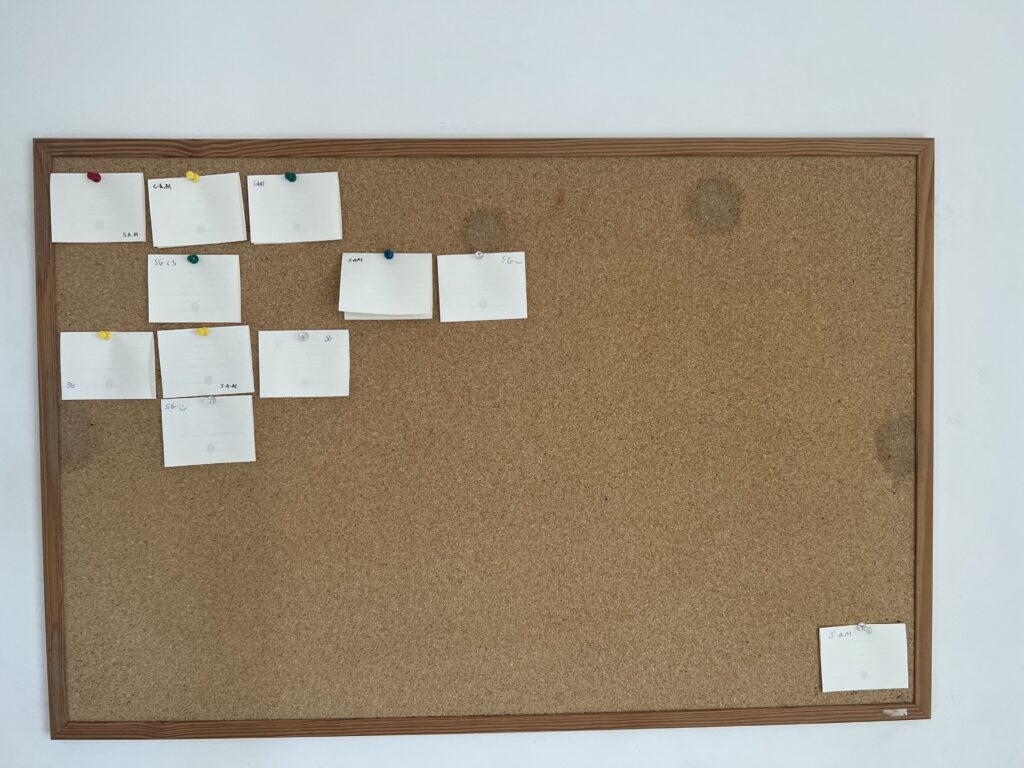
For my extension on our “Why?” assignment, my initial plan before creating a Berlin diary was to create a wall/hanger with “funny sentences” said throughout the trip and stay by my friends and me so that I could specifically remember the laughter and the good memories in general.

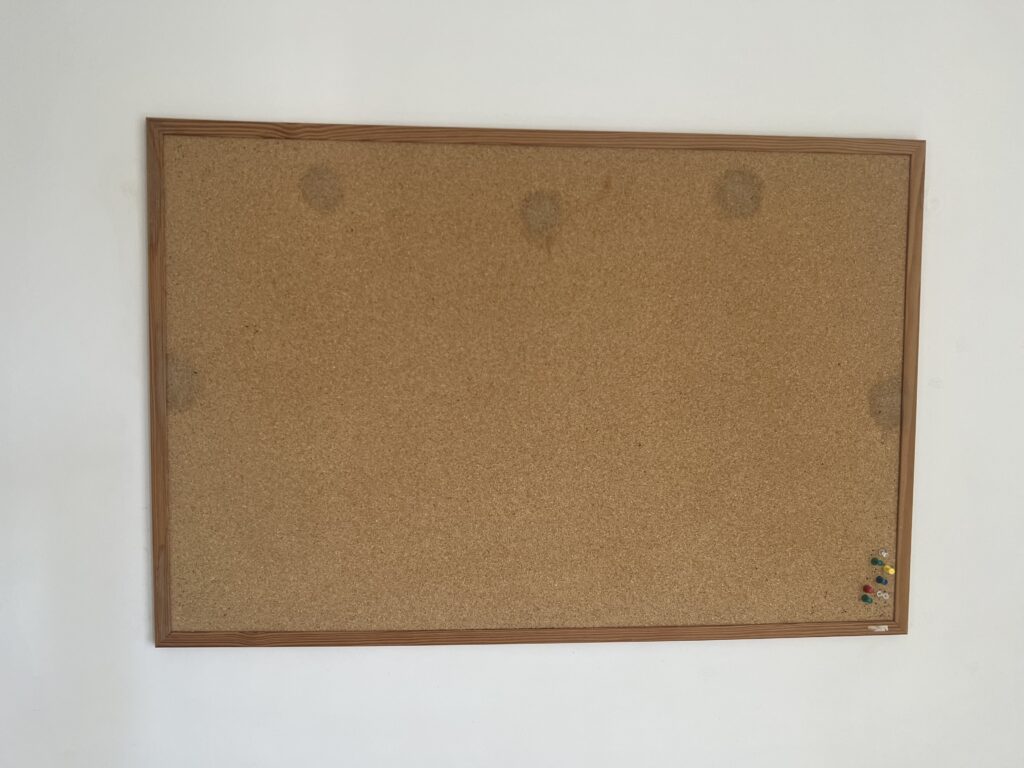
I got inspired to create this tradition in our suite as well as have an empty wall that felt like it needed more life and something going around it, which meant that I needed to bring some life and meaning to my dear blank board:

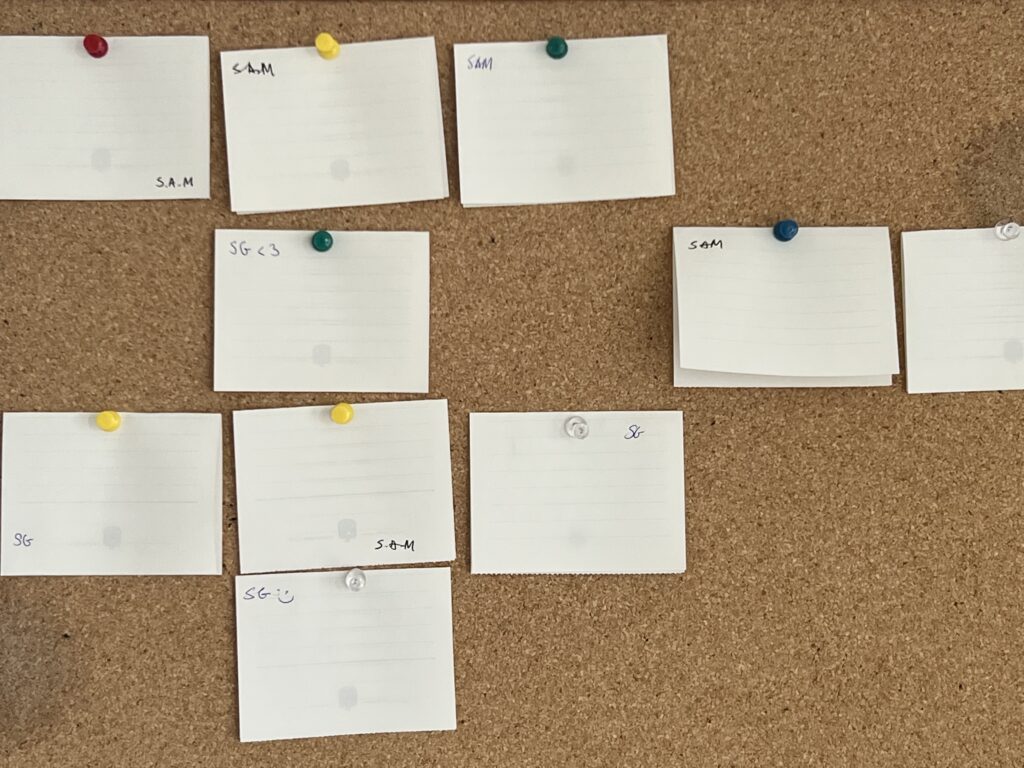
So now, every time someone says something funny when we are out, we write it on our notes app; when we get back to our dorm, we take a piece of paper, write down the funny thing on it, and then write the initial of the person that said it. Our wall/hanger stays in the kitchen, so we can access it whenever and add/remove things at any moment.

I chose simplicity as creativity should not always be complex; it can also be this fun and silly idea you have with your roommate now and then and do it out of pure joy and entertainment. But then, looking back at it, on June 10th, this little silly idea we had will have a sentimental and nostalgic value.

Just do not get too caught up in this little tradition, as it can cloud your thoughts all day with the pressure for you to write something down each day, but it’s okay; some days are less funny than other days, and some days are less adventurous, and that is okay. 🙂

This is how full the wall has gotten over this weekend:

Lateral Thinking – Chapter 1 – Reflection

Reading this chapter, De Bono has made me reflect on how I remember and build upon things. I like how he shows us through a series of examples/mind games why lateral thinking is essential to unlocking our whole creative selves.

Since everything is coded, stored, and perfectly filled in our mind, it does give us difficulty to grow a thought horizontally; the more I thought of the outcome of today’s “making assignment,” the more I understood De Bono’s examples. Asking why frustrates me sometimes and comes off as annoying, but if I hadn’t done that, the outcome of my making project would be pretty predictable to most people, and I wouldn’t have reached the topic of “memories” from the word “sleep.”

I found it interesting the assembling the geometric pieces into a big one played out and how humans tend to go for the simplest, most straightforward way of solving a problem. (very technical and lacks that sense of creativity), but solving that arrangement of blocks into a geometric shape, using lateral thinking, makes us come up with innovative, new, and fresh solutions to our dilemma. (seeing the parallelogram instead of a square, even though the square is a correct answer and more straightforward initially) This, again, shows the importance of lateral thinking on human development and how crucial creativity is for the progression of humans in many fields, not just the arts.

So far, I enjoy this book, as it emphasizes the importance of lateral thinking and creativity within everyone, not just “artists,” but shows us examples and moments where creativity would be essential in our everyday lives in human society. Additionally, we see how, even with problem-solving, creativity is much appreciated 🙂

But Why?

Why do we sleep? To get some rest.

But why do we rest? To be ready for the next day.

Why do we need to be ready for the next day? To hop on a new adventure.

But why would be hop on a new adventure? To learn about life and make memories.

But why do we make memories? To never forget it.

This is the thought process I had when I was questioning why I chose “sleep” as a topic of inspiration; four “why”s later, we are talking about never forgetting memories.

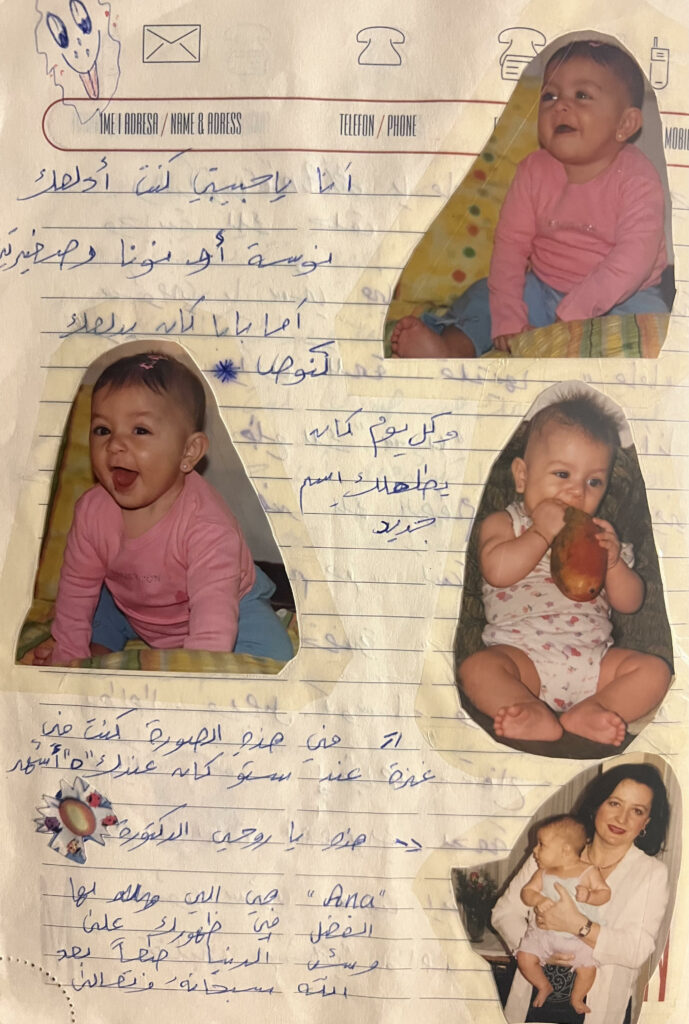
For this assignment, I then got inspired by a diary my mom made of me when I was young of a bunch of random memories of me that she did not want to forget.

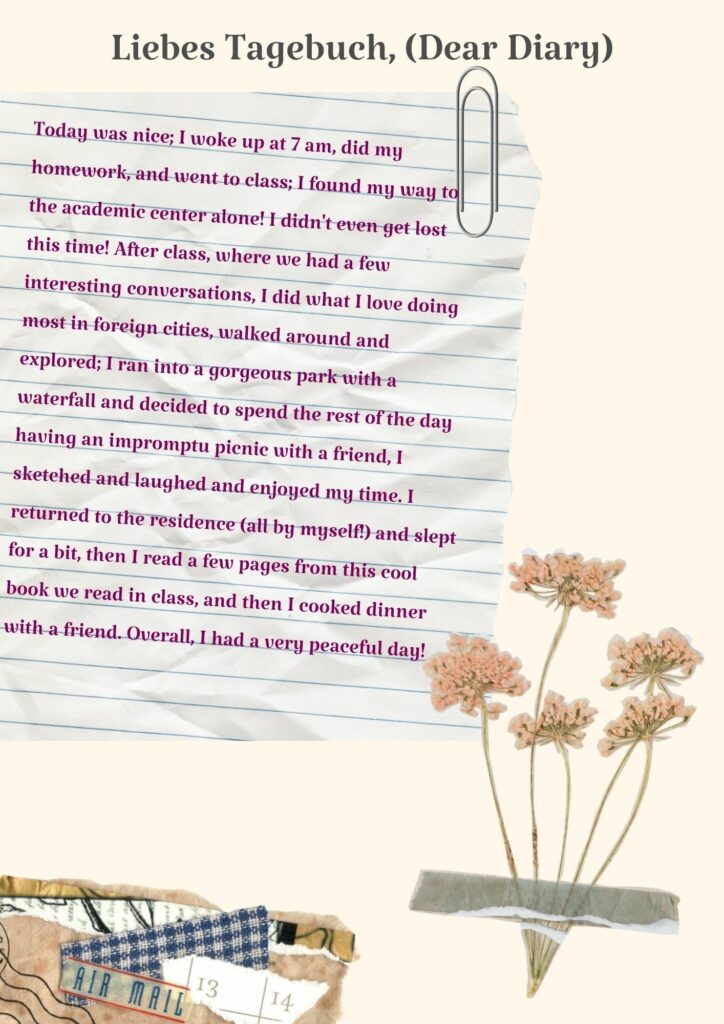
That inspired me to start a scrapbook about my time in Berlin and my daily adventures here so that when I read it a few years later, I wouldn’t have forgotten anything, even though I slept the day before reading it or not.

Lateral Thinking – Reading Response

In this brief reading, one quote specifically stood out for me:

”Lateral thinking is generative. Vertical thinking is selective”(p.12)

I really liked this quote because I believe it perfectly encapsulates the concept of a creative process. For instance when I am choreographing a new dance recital, I start playing the song I want to dance to, and throw a series of dance moves and see what feels like the best option, I move fast, then slow, then add a jump or two, maybe even a twirl. All these moves, would come from lateral thinking, me trying to generate different ways or ideas to fill the times of the music and making it seem good. After I generate all these different dance steps and ideas, I like to turn on my vertical thinking and see how I can combine these dance moves, and turn them into a proper dance choreography. In my head, both the “rational” and “creative” are crucial for my final piece, for my final goal. Which is why, It really stood out to me what the author said in the mentioned quote. I also fully agree with him about how these two ways of thinking complement each-other and therefore, we are unable to reach our final goal, which is the project completion, without the two.

This also pulls me towards the Ted Talk we watched with kermit the frog where he used the term “Controlled Chaos”, I think that the complement between The two ways of thinking, is in a way, a controlled chaos as well.