De Bono’s emphasis on the need to foster an environment conducive to lateral thinking is interesting to me. Looking back on my own education, I can see how De Bono’s claim that an emphasis on vertical thought makes it difficult to develop lateral thinking is supported by my own experience. I often felt like there was little place for creative expression or asking challenging questions in the classrooms I attended which limited my creativity in general.
I agree with what De Bono said, that humor can strike unpredictably. From my own observations, I’ve learned that the most successful jokes and humorous remarks are those that present an unusual viewpoint on a common situation. It seems that in those circumstances, I use lateral thinking instinctively to generate funny thoughts. These examples show the value of lateral thinking even in things such as humor.
The prompt was to pick a topic and ask why? Then make something out of it. I started with why is the sky blue which lead me down a rabbit hole that led to the point of absurdity. However, I was still clueless on how to actually make something out of this ridiculous line of questioning, after a bit of thinking, I decided to zoom out a bit to think of the bigger picture. It struck me that I could make the whole line of questioning a part of the thing I was going to make. So I naturally ended up using p5js because it allows me to easily translate a thought in my head to an experience on the screen. I basically put all the line of questioning I thought of as a series of responses in p5js and I left 2 options that were identical – why? As the user picks either option the text starts shaking more to give the effect of the person answering getting more annoyed by the incessant questioning. It reaches a point where the person answering refuses to give an answer.
Here is my line of questioning:
The sky is blue.
Because of the way Earth’s atmosphere scatters sunlight.
Due to the composition of gases and particles present in the atmosphere.
Because of natural processes and human activities.
Because they interact with the environment and produce certain byproducts.
Because that’s just how things work in our complex world.
Because it’s a product of countless interactions and variables.
Because the universe is vast and diverse, leading to infinite possibilities.
In the introduction to Lateral Thinking, de Bono discusses the need to go beyond traditional thinking methods and embrace lateral thinking as a tool for creativity and problem-solving. He highlights the limitations of vertical thinking and encourages us to break away from the constraints to explore alternative perspectives.
He makes it clear that lateral thinking is not a random or chaotic process but a structured approach that can be learned and cultivated. Additionally, De Bono highlights the importance of creating an environment conducive to lateral thinking. He states that educational systems prioritize vertical thinking when we should be encouraging lateral thinking.
This thought process inspired me to come up with my creation: a “cheque” that represent the connection between note-taking and making money in the future. In this connection, note taking is like writing a personal cheque to ourselves, with the amount reflecting the average worth of a degree per class. The idea is that taking notes is similar to investing in our future, just like writing a cheque for our own benefit.
Why do we need to get places? To get around the city
Why do we live in a city? Because we are students
Why are we students? Because we go to university
Why do we go to university? To get a degree
Why do we need a degree? To work and be successful
Why do we need to be successful and work? To live a happy and fulfilling life
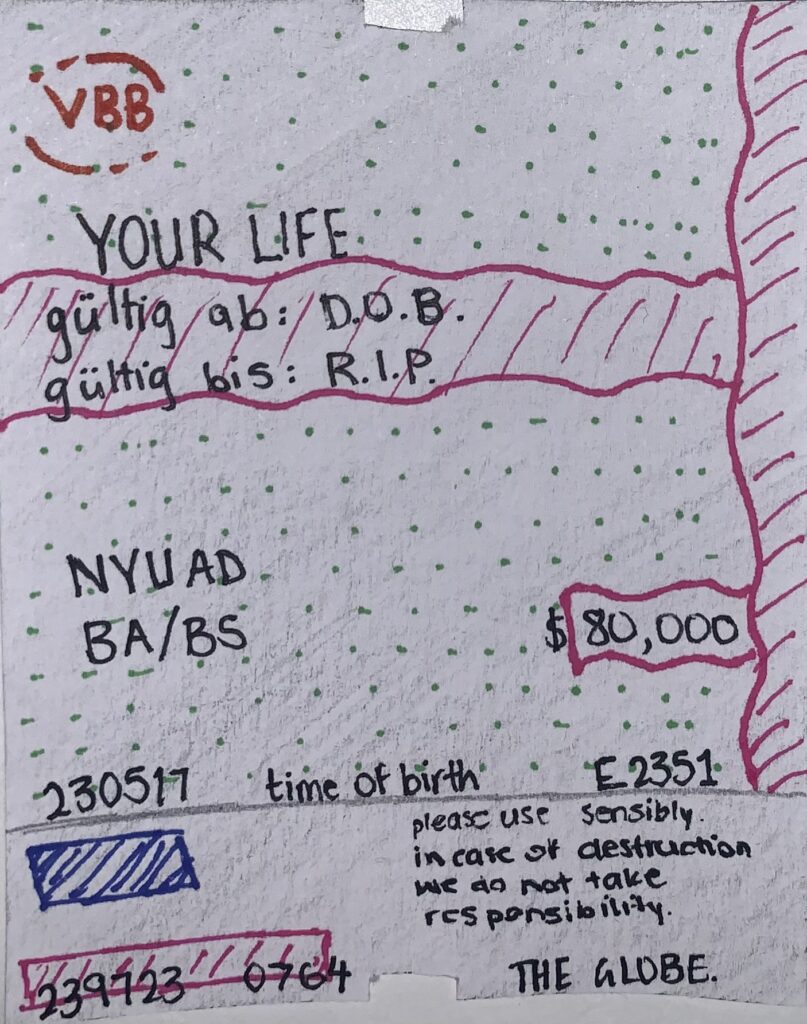
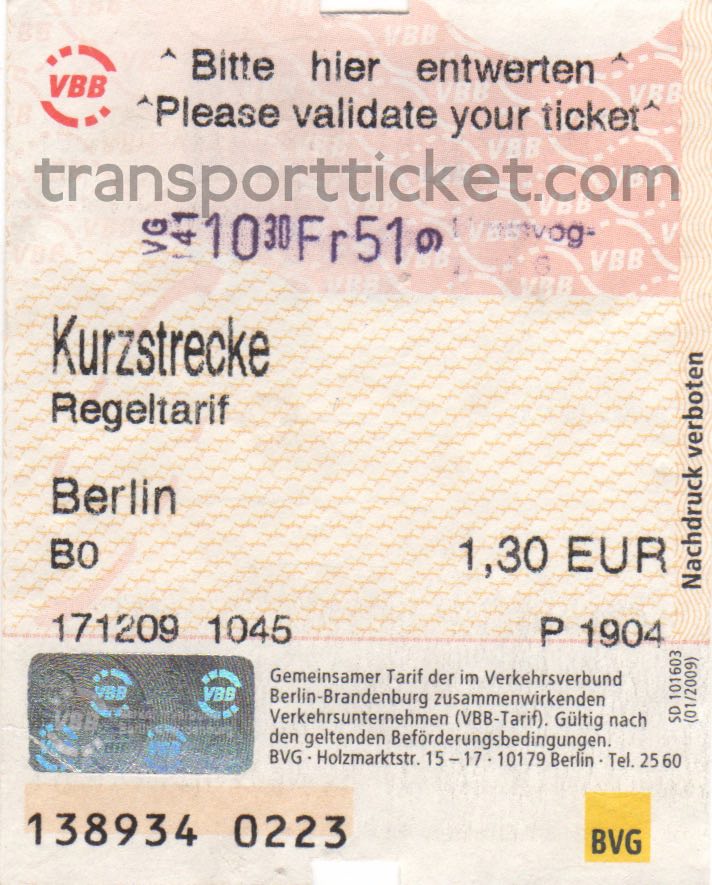
For my third making project, I decided to go with cars as my topic. Then I began the thought process of my “why” questions, which led me to university, work, and success. I eventually decided to create a replica of the public transport ticket but as our ticket to university and life. Our issuing date to life is our date of birth and the end date is our death day. I then decided to write NYUAD as the location in which we attain a Bachelor of Arts or a Bachelor of Science which is around $80,000. For the rest of the details, the time we are issued our ticket to life is our time of birth which we are then allowed to explore the world and live as we please.
The globe is our terrain and we may go and investigate the world around us with its many areas, terrains, and cultures. Through the use of transportation, we lead ourselves down a path to explore ourselves through school, university, work, and travel.
In this assignment, I have to consider a topic and question its original intuitive logic through the lateral purpose of “why”. The intention of this kind of “why” is to create discomfort with any explanation or established assumptions through vertical thinking. The result of this chain of why’s should be counterintuitive from the starting logic.
When I was returning to the dorm passing through the Gedenkstätte Berliner Mauer, this topic suddenly flashed into my mind:
Physical Borders
Why do countries have physical borders? To completely separate different kinds of people and control their flow.
Why do they want to completely separate them? They want to control the mixing and interaction between people.
Why do they want to control this? Because different countries have different laws and regulations.
Why they have different laws and regulations? Because their societies are formed with different cultures, social norms, ideologies, values, and histories.
Why is different cultures, social norms and stuff a problem? Because these are difficult to change which make people put barriers without thinking but just assuming the negative effects of difference.
Why do people tends to avoid the negative effects of difference? Because firstly-perceived differences are often superficial and stereotypical. They just represents tendencies.
Why are firstly-perceived differences superficial and stereotypical? Because direct interaction between the two sides are limited.
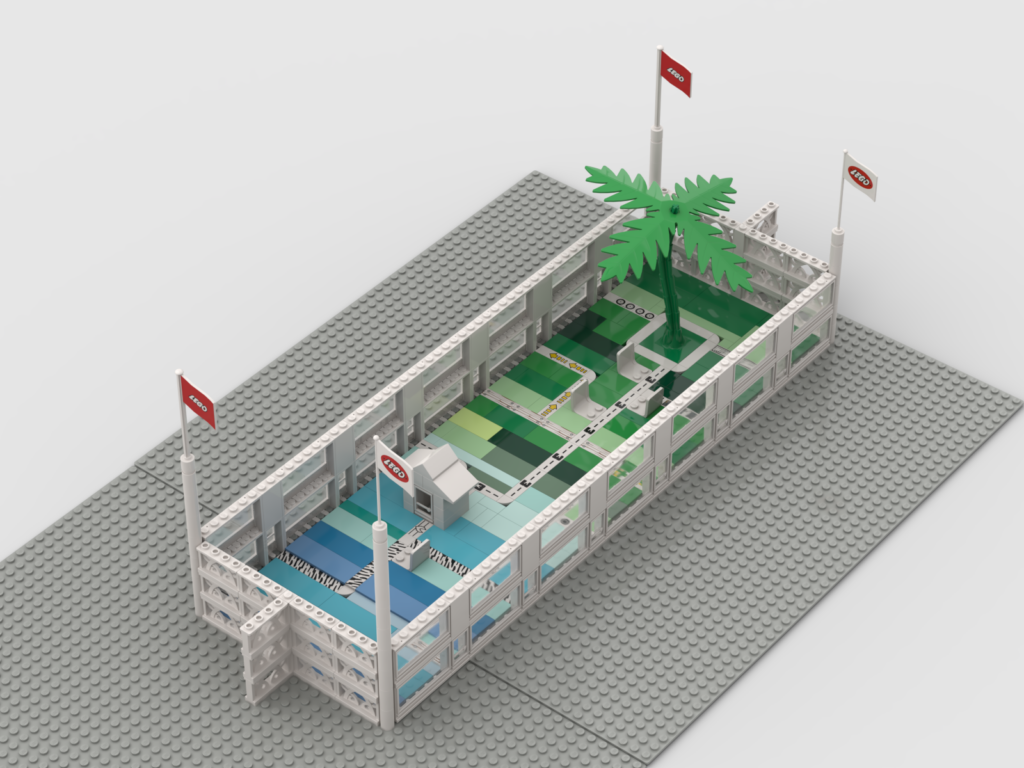
At this level of questioning, since the two sides of such physical borders are usually limited in interactions, which gives rise to a vicious circle pointing back to points 5 and 6, instead of creating a drastic line separating the two, why don’t we create a wide area of conversation, tolerance, and exhibition between the two while still maintaining some control? We can see the effects of the lateral purpose of “why” here. We started from physical borders but went down to human interaction. Moreover The facilitating nature of this structure is counterintuitive from the separation nature of traditional physical borders people would assume.Using BrickLink studio, a virtual LEGO designing software that can produce real-looking images, I can render my idea generally using this LEGO model.
The gradually mixing color of the tiles symbolizes the communication between the two. The red and white LEGO flags are used to represent country flags. The walls are made of glass and glass doors are placed densely, providing easy means of seeing through and passing the border. I used trees, houses and chairs to symbolize the facilities that can be established in between this space. Between the walls, people of either sides can engage in recreational activities, relaxing, commerce, reading, concerts, public events, speeches, sports and so much more…Especially events that are both competing and uniting like sports, an inspiration I got from the border volleyball between US and Mexico border residents.
I wish that someday in the future, when the gigantic metal and concrete cage walls between countries that are interested in establishing these jarring structures all come down, the world can unite and celebrate its diversity under the leaves, roofs, and cheer of these redesigned borders, and all of us can play volleyball with our friends on the other side, across the long-gone walls replaced by only markings or volleyball nets just like what the Berlin Wall is now.
In this chapter, the author explored the reasons behind the need for lateral thinking and also pointed out why creativity, humor and insight cannot be easily trained. He first mentioned the self-coding / pattern making and self-organizing nature of our mind and then used the resulting jelly model of our memory surface to visualize our brains’ processing of new information. We have a tendency to fit them to existing patterns. Humor and Insights, however, are basically restructuring the patterns. However, they are sudden and cannot be predicted. For my personal experiences, the sense of humor comes to me like an electric shock when I see something that I can make humor on. This points to his description of the inherent disadvantages of this system caused by the great advantages of it which makes us tend toward using and relying on it. Lateral thinking can tackle especially three of them: it can help escaping cliche patterns, remixing information into ideas, and restructuring. The use of random stimulation can be effective on our self maximizing memory surface as it creates new patterns actively. Disruption and provocation can help dividing and diverging existing patterns.
As Elon Musk has put it beautifully, humanity is in decline! Not because of rising ocean levels, ever more frequent extreme heat, and complete destruction of biodiversity. But because birth control and abortion have made smart people have fewer babies! The United Nations projects that the human population will continue to increase at a fast pace until the end of the century, driven by fertility rates in Africa and Asia. But can we trust that these newborns will be smart like Elon Musk, who is very smart and not just extremely lucky? Of course not!
Live Forever Lab believes in change and smart people. Are you a special millionaire with some money to spare? Invest in our potions and add some more years to your life.
Don’t believe it when they say you rely on privilege and centuries-old wealth and land inequality. You are special. We are special.
One of my 5 alternatives projects to the topic of ‘space’ was a collection of sounds of different spaces or places, specifically the sound of silence in different places. Every room and street has a different sound of silence, and I wanted to create a catalogue of that. Most of the sounds were recorded between 6 and 7 am. The world wasn’t as quiet as I had expected, but I realized that these sounds can just as well serve as an “Audio Tour” of the little pocket of the world around me. These sounds have very few voices, and are very representative of the ‘background’ of these places. If you could hear a picture of an empty place, I believe this would be it. We often tune out these sounds, but here the background is the centerpiece.
In the 20 sounds below, I take you from my room to the trains, and then on a short tour of the streets around our housing at NYU Berlin. After each sound clip, I’ll try to provide a description of what I heard (I was initially just expecting to record silence, and only later realized that there were so many details to listen for). I’d recommend wearing headphones. If you hear something interesting, comment below!
1.Bedroom:
The room was quite isolated from the sounds outside, since my window was closed
2. Kitchen:
There’s a faint sound from the electronics (like the microwave). You can also faintly hear the birds chirping outside.
3. Bathroom:
There a droning sound that was also audible in the Kitchen. Here we hear it much better, with some faint chirping from the birds outside.
4. Silent Study Room:
We move out of my room and go into a “Silent Study room”. The room is dark. You can hear my clothes and a few creaks from my shoes. The birds are much more audible now.
5. Group Study Room:
Notice how although the room is virtually the same as the silent study room, the ambiance is very different. Other than the change in the background, you can hear the birds much more clearly, there’s a slight breeze coming from the windows, you also hear the occasional car moving on the road outside.
6. Moving outside the building:
As soon as we go outside the building, we are hit with cold breeze and the sound of birds. Midway through the clip, an engine sound emerges, which might be from a truck engine starting nearby.
7. Park:
We move from the building to the nearby park. It’s early morning, so there are birds everywhere. You can hear an assortment of chirps. I hear a crow there somewhere. There’s the sound of a vehicle moving on the road nearby. My shoes make a sound on the gravel.
8. Coffee Point:
At this point, I’m craving a coffee. So we move to the nearby coffee place. The background is slightly different from the other closed room’s we’ve been to. There’s a faint sound from the owner talking to a customer.
9. Police Station:
It’s time to make our way to the trains. We pass by the police station on the way. Here, we can hear my footsteps, some faint chattering of people, the sound of my clothes, and some wind towards the end.
10. Checkpoint Charlie Train Station:
We finally enter the train station. It’s a little windy. There are a few people walking. A train was leaving right as we enter. The sound of my footsteps is clear. There’s the sound of some liquid dripping nearby towards the end.
11. Train Incoming!
Our train is finally here! It’s the U6. You can hear the sound of the wind as it pushes it out of the way, the sound of the wheels on the tracks, and the sound of doors opening at the end.
12. Inside the U6:
Inside the U6, we hear the train accelerating and you can feel the floor moving. There’s a small ‘alarm’-type sound. You’ll hear the announcements on the speakers. See if you can find me clearing my throat.
13. Leaving the U6:
We’re out of the train now, at Stadtmitte station. The sound of the train leaving is similar to the train arriving, but it’s distinctive feature is the fading away at the end.
14. Stadtmitte Station:
Stadtmitte station is quiet compared to Checkpoint charlie. See if you can hear me moving. Here, the mechanical sounds of the station are easier to isolate.
15. Back at Checkpoint Charlie:
We’re back at Checkpoint charlie. There’s a lot of wind coming through the entrance. You can hear the train leaving during the beginning, and the footsteps of people.
16. Walking to get some groceries:
Now we’re walking towards Rossman, a grocery store to get some food. You can hear my footsteps clearly here, the birds are back, the traffic from the road ahead is audible. There’s a little construction work happening.
17. At the Rossman:
Now we’re outside the Rossman. You can hear me say that it’s closed under my breath (of course it is, it’s 6am). The traffic is very audible.
18. Birds and Critters:
On the same road, we find a patch of grass and trees with a lot of birds. The sound of pigeons should be easy to make out. There are other critters too. As soon as I stopped recording, a fat mouse appeared out of the bushes with a huge piece of bread in it’s mouse. We stared at each other for a few seconds and then it squeaked away….
19. El Gino:
Now we’re at the pizza place near the housing.You can hear the cars and the birds. There’s a traffic light nearby, you can here it’s ticking over the background of traffic.
20. Back home?
We make our way back home and try to tap our cards on the sensor to get into the building. But it doesn’t work! I try a couple times till a guard let’s me in and tell me the sensors start working at 8am, so our cards don’t work early in the morning.
I really don’t have much to say about yesterday’s visit. The artist some interesting ideas about thinking about your goal and working for it. I liked the list of questions he answers before doing something, and I took away some points from it, like always finding a way to motivate yourself, doing the things you enjoy, and always thinking outside the box to create something new. I also liked his idea of finding our own definitions for artists and content creators and choosing whichever we prefer. And looking for inspirations from different things in our surrounding. However, most of his ideas were really centered around music, so I couldn’t relate well. Overall, the visit was somewhat insightful, but I believe that Marcus could have done better to make his talk more interesting.